Analyst Says Trump's Midterm Rallies Serve to Fill a 'Limitless Void'
Key Takeaways
- •President Trump is spending the final days before the midterm elections campaigning in Republican-leaning states, where voters will decide control of the House and Senate for the remainder of his term.
- •Michael A. Cohen, director of the International Affairs Program at The New School, argued that the rallies serve primarily to provide the president with personal validation rather than to advance electoral strategy.
- •At a Texas rally, Trump claimed the United States was making large sums of money from the war in Iran and said he was considering renaming the Strait of Hormuz, a critical global oil shipping chokepoint, after himself.
- •Cohen asserted that the White House has put forward no messaging aimed at voters outside Trump's base, with the president focused on his ego, vanity projects, and political rivals instead of issues Americans care about.
- •The upcoming midterm results will provide the first nationwide electoral test of Trump's current term and of the gap between his rally-stage messaging and the broader electorate, according to the two commentators.
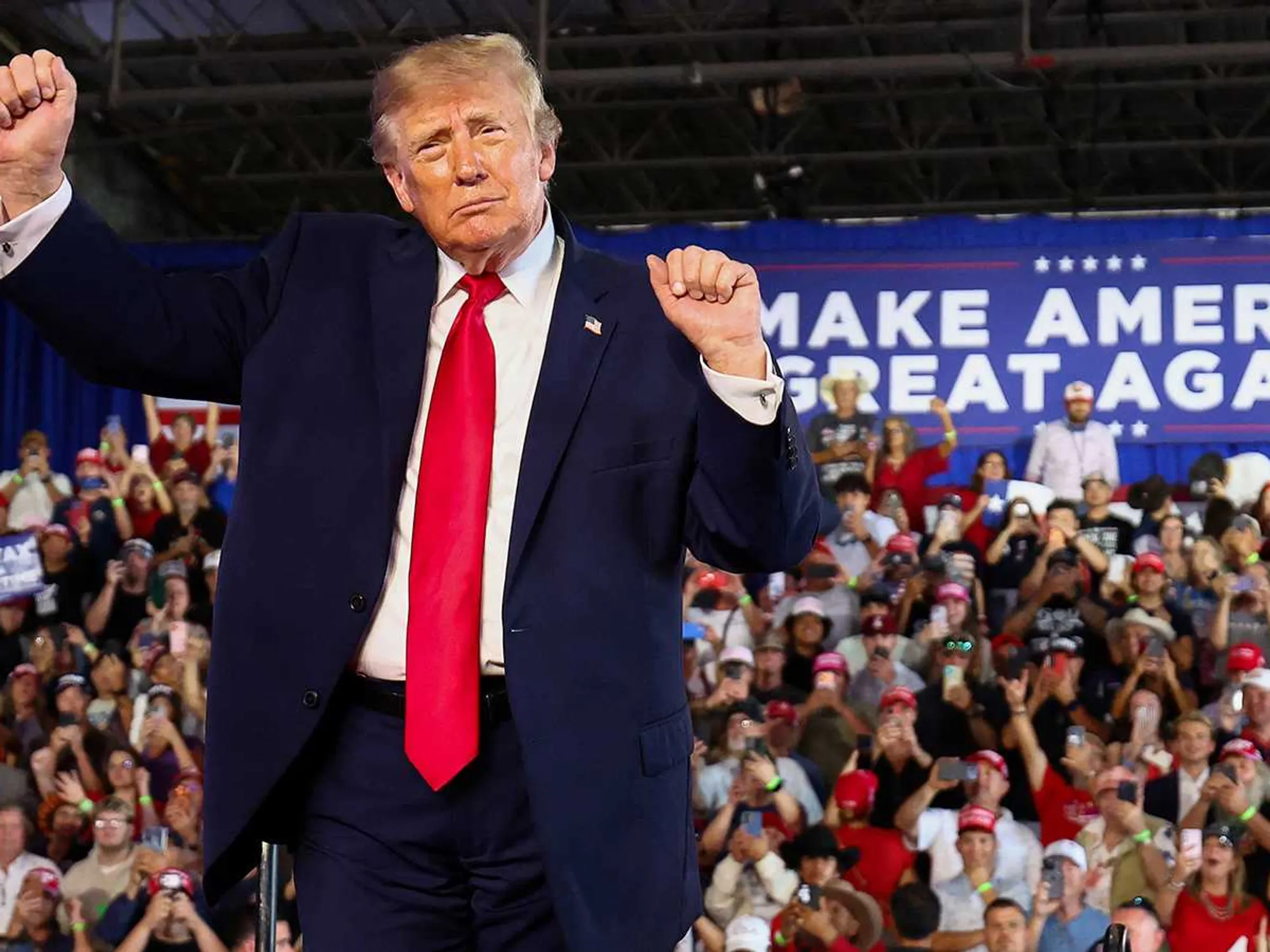
With six days remaining until the midterm election, President Donald Trump has been traveling to Republican-leaning states in an effort to rally what remains of his base of supporters. Midterm elections fall at the halfway point of a president's term, and the results will decide control of the House and Senate for the remainder of it — which is why presidents of both parties have historically spent the closing stretch of these campaigns in friendly territory. But according to one political expert, a central function of those rallies has less to do with electoral strategy and more to do with filling what he described as a void in the president's soul.
Michael A. Cohen, director of the International Affairs Program at The New School, discussed Trump's slipping popularity — and what he characterized as the president's delusions — with The New Republic's Greg Sargent on Wednesday morning's "Daily Blast" podcast.
On Tuesday, Trump appeared in Texas, which Sargent described as "deep, deep red territory."
"It's obvious this is just playing triage," Cohen said of the GOP's last-minute scramble to shore up what remains of Trump's support.
The rally appearances, however, have also laid bare the extent of the president's personal detachment, the two commentators argued.
At the Texas event, Trump claimed the United States was making huge sums of money from the war in Iran — a claim that appeared to fall flat with much of the audience, judging by the smattering of applause. He then said he was considering renaming the Strait of Hormuz after himself as a mark of American dominance. The strait, which links the Persian Gulf to the Gulf of Oman, is one of the world's most heavily used chokepoints for global oil shipments, giving the waterway a significance that extends well beyond rally rhetoric.
"So, putting aside the crazy details here, the bigger message that Trump is sending with this is that everything he's doing with the war in Iran is a world historical success that's making everyone rich," Sargent said. "He's scribbling new names on his little globe and that displays genuine American dominance. He really thinks this is all perceived as success. As has success. As success for our country. It's delusional in that sense."
Cohen did offer one lighter observation: at least Trump is no longer talking about Sen. Jon Husted's posterior.
"What has been obvious for at least the last two years is that Trump simply does not care about what Americans care about," Cohen continued. "He cares about his ego, he cares about his vanity projects like his ballroom and his arch and his golf course he wants to build in Washington D.C. He cares about going after his political rivals and his enemies and he wrote a 1300 word post Tuesday about Bill Maher. I mean, this is not a guy who has his finger on the pulse of the country."
What is more striking, Cohen said, is that Trump is attempting to turn the presidency itself into a personal vehicle for filling his own emptiness.
"What I am struck by is he doesn't even seem to care. This is basically what he's turned the presidency into, sort of, an ego-stroking exercise, and that's all this is for him," Cohen added. "There's no message coming out of the White House that is actually intended to appeal to non-hardcore MAGA voters. That's where Trump is now and, I mean you see this in these clips. He's just — it's free association, but on topics that aren't even related to the issues that voters care about."
Sargent noted that when Trump hears crowds cheering his new names on maps or his war in Iran, "he thinks that that's what America thinks."
"A good part of the reason that he ran again is to go to these rallies and to get validation from his audiences," Cohen said. "That's what motivates him more than anything else. That's why he does so many of these events. Because they are validating and affirming to him and they are ways of filling the limitless void that's missing in his soul. So, I think that's one part of what is going on here. That he is, again, he is just trying to stroke his ego." With Election Day now days away, Tuesday's results in House and Senate races will provide the first nationwide electoral test of his current term — and of the gap between the president's rally-stage messaging and the broader electorate that Cohen and Sargent describe.

