Trump’s Pressure Campaign Against the Media Raises First Amendment Concerns
Key Takeaways
- •President Trump has used federal oversight bodies, White House staff, and personal lawsuits to rebuke, exclude, and penalize news organizations that challenge him, according to the Times report.
- •The White House barred The Associated Press from the Oval Office and Air Force One after the wire service declined to use "Gulf of America," and aides linked the ban to AP's refusal to license a 2024 photo of Trump.
- •After Trump and the first lady demanded ABC fire Jimmy Kimmel over a joke, the FCC began an early review of ABC station licenses years before they were due to expire.
- •Trump's lawsuits against outlets including The New York Times, The Wall Street Journal, and the BBC have frequently failed in court but impose significant financial and reputational costs.
- •The United States has fallen to 64th place in Reporters Without Borders' press freedom index, its lowest ranking since the index began in 2002.
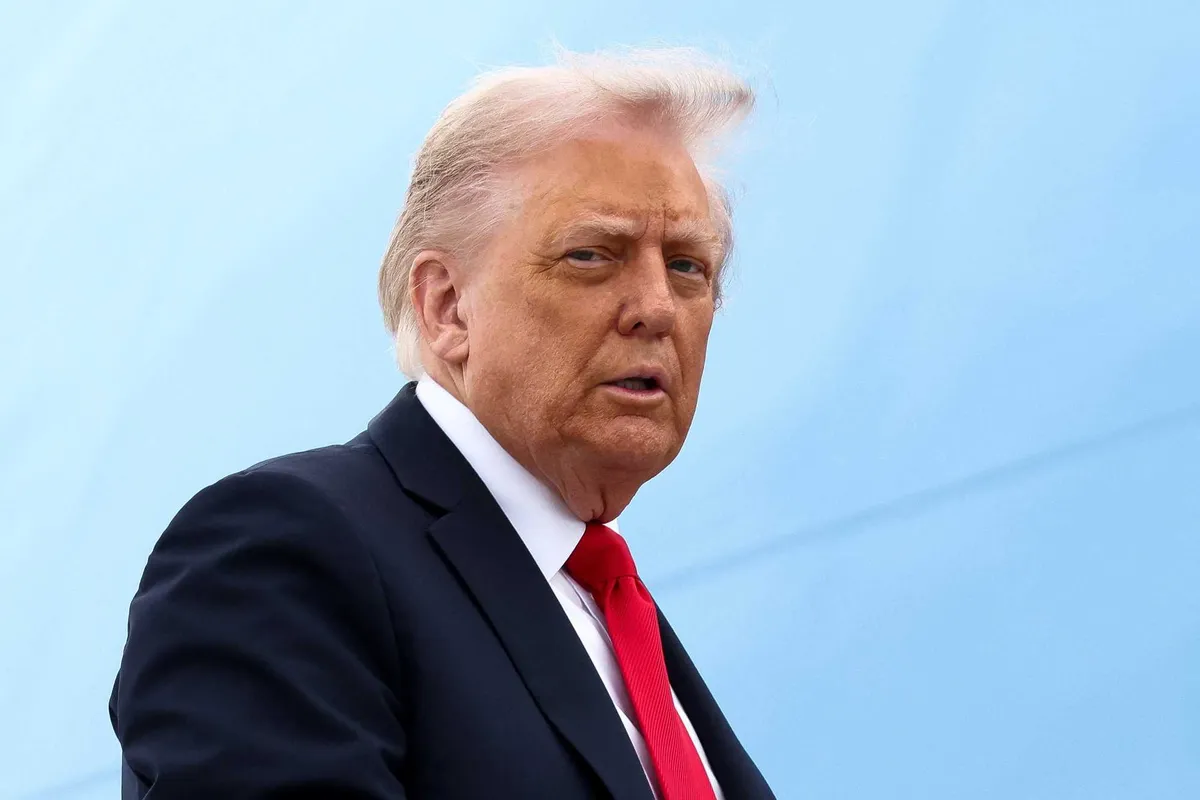
New York Times reporters Jim Rutenberg and Maggie Haberman, co-author of “Regime Change,” report that President Donald Trump is using substantial political and governmental power to pressure the U.S. media and restrict free speech. The administration has been open about its approach, they write.
Brendan Carr, chairman of the Federal Communications Commission and one of the most aggressive supporters of Trump’s efforts, has said that the president is “reshaping the media landscape,” according to The New York Times. Referring to major broadcast networks, Carr told CNBC last year that “for years government officials just allowed those entities, with executives sitting in Hollywood and New York, to dictate the political narrative.” Trump, Carr added, has “fundamentally changed the game.”
Critics argue that the change has primarily involved limiting the media’s ability to report the news independently.
“There’s not a week that goes by where they’re not taking a new step to curtail press freedom in the country,” said Clayton Weimers, executive director of the North America division of Reporters Without Borders. “We have measured a substantial diminishment of press freedoms.”
Trump has used federal oversight bodies and members of his own staff to rebuke, exclude and penalize news organizations that challenge him. Soon after his inauguration, the White House barred The Associated Press from the Oval Office and Air Force One because the wire service declined to use Trump’s preferred name, the Gulf of America, for the Gulf of Mexico.
The Associated Press had also refused to give Trump the rights to its photograph showing him bloodied and raising his fist after he was shot in Butler, Pa., in 2024. “At a private lunch with Mr. Trump and network anchors last year, White House aides tied the A.P. ban to the denial of the rights to the photo, according to two people briefed on the event,” The Times reported.
Trump has also targeted comedians he dislikes by pressuring their employers. In April, after Trump and the first lady demanded that ABC fire late-night host Jimmy Kimmel over a joke, the FCC began an early review of the federal licenses required for ABC stations to operate, years before those licenses were due to expire.
In addition to using government authority, Trump has deployed his own lawyers to take organizations to court, regardless of whether the lawsuits ultimately succeed. The Times reports that the president and his administration have frequently lost when challenged in court, facing strongly worded rulings affirming First Amendment rights. Winning, however, is not necessarily the primary objective, according to the report. The lawsuits can still impose significant costs.
“Still, even the path to legal victory can have severe financial and reputational costs for those he views as adversaries, which have included The New York Times, The Wall Street Journal and the BBC,” the newspaper reported. “And each time the president assails what has long been considered protected speech, media analysts say, he is eroding norms and undercutting the role of an independent press.”
The Times also reported that Trump has been candid about seeking to cause pain, even when the effect is temporary. After filing an unsuccessful libel suit against former Times reporter Timothy L. O’Brien, whose book “TrumpNation” estimated that Trump was worth far less than he claimed, the president said he was pleased to have forced the publisher to spend money: “I did it to make his life miserable, which I’m happy about.”
According to The Times, Trump’s willingness to use government power while imposing potentially bankruptcy-level legal costs on media organizations is having measurable consequences. Reporters Without Borders maintains an index measuring press freedom in 180 countries, including government threats, subpoenas and the retaliatory use of regulations against journalists. The United States now ranks 64th, its lowest position since the organization began the index in 2002—just above Panama and below Botswana. Similar trends appear in indexes maintained by the Freedom of the Press Foundation and Sweden’s V-Dem Institute.
Reporters Without Borders’ index is available at The Freedom of the Press Foundation maintains its press freedom tracker at while the V-Dem Institute’s 2026 Democracy Report is available at
Trump’s team has not apologized for its stated goal of exerting firmer control over the national information environment. White House communications director Steven Cheung has called the effort “Full Spectrum Dominance” in a social media post on X: https://x.com/StevenCheung47/status/2016917181649363299.
The Times concluded that there is no guarantee another American president will draw a lesson from Trump’s example. The original report was published by Alternet at https://www.alternet.org/trump-media-first-amendment/.

