Trump Reportedly Weighs Ending US-Iran War Without Nuclear Deal If Hormuz Reopens
Key Takeaways
- •President Trump has privately suggested he would consider ending the US-Iran war without a nuclear deal if Tehran fully reopens the Strait of Hormuz, according to a Wall Street Journal report citing US officials.
- •Iran has demanded billions of dollars in compensation, an end to the US naval blockade, sanctions relief, access to frozen assets, and a full withdrawal of American military forces from the region as conditions for reopening Hormuz.
- •Oman has continued its role as a discreet intermediary between Iran and the United States, with Iranian Foreign Minister Abbas Araqchi stating that a shipping-lane agreement is in its final stages.
- •Trump reportedly believes earlier US strikes severely damaged Iran's nuclear facilities and that Tehran may be unable to rebuild its program during his presidency, relying on intelligence monitoring and the threat of further military action as deterrence.
- •Brent crude oil closed at $83.55 per barrel on Friday, and Gulf stock market trading remained subdued as participants awaited details of the Oman-Iran arrangement.
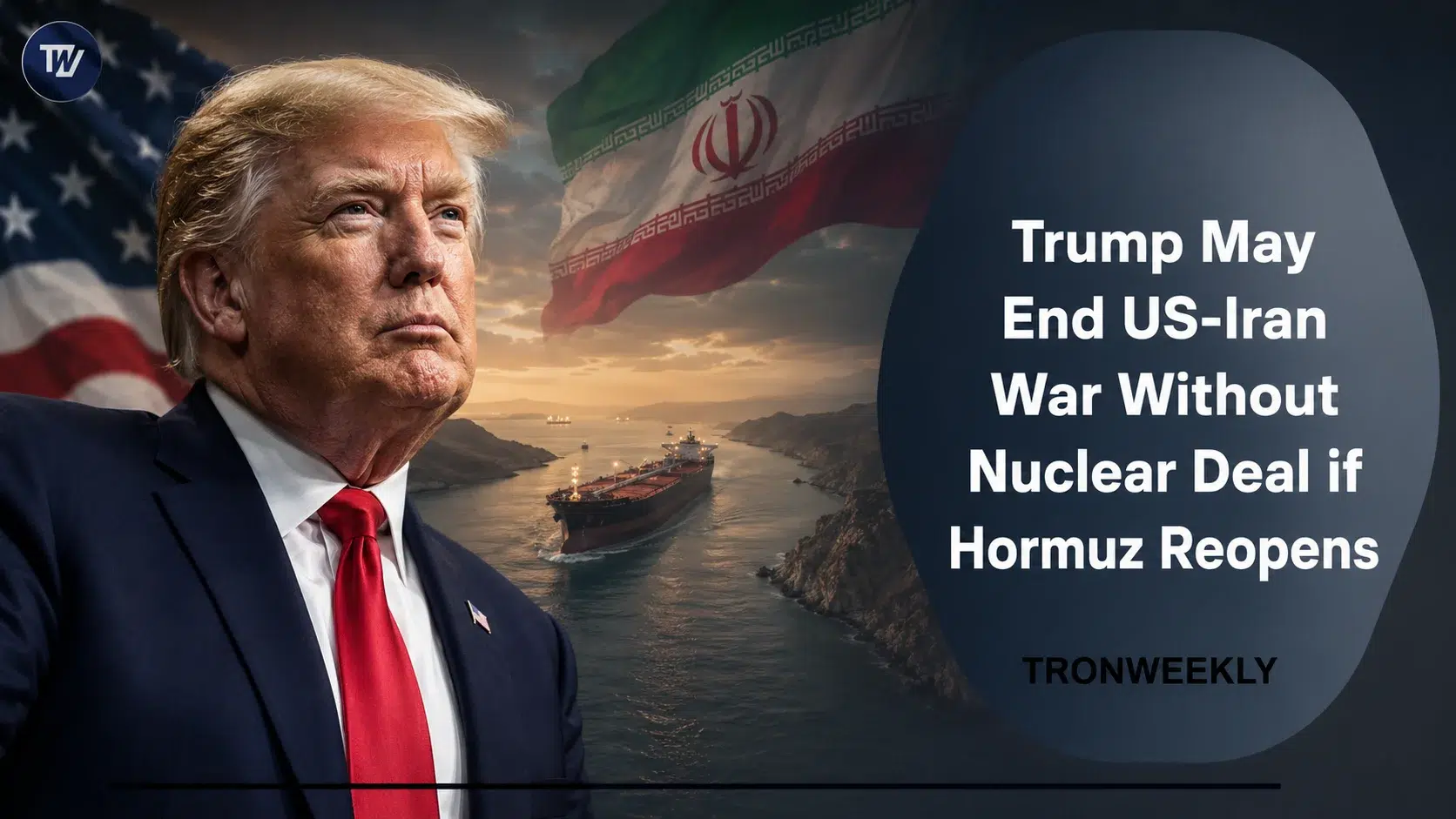
President Donald Trump has privately discussed the possibility of ending the US-Iran war without securing a nuclear agreement, according to a report by The Wall Street Journal on August 9. The president would consider taking that step if Tehran fully reopened the Strait of Hormuz, a condition that has become central to ongoing diplomatic efforts to halt hostilities. The Strait of Hormuz is one of the world's most critical oil shipping chokepoints, through which roughly a fifth of global oil consumption normally transits, making its status pivotal to energy markets worldwide.
The Journal report, which cited US officials familiar with the private discussions, noted that the White House has not announced any nuclear policy change. The reported option remains an internal consideration rather than a formal strategy.
BREAKING: President Trump has been floating the idea privately to senior aides that he's willing to "walk away" from the Iran War without a nuclear deal should Iran fully reopen the Strait of Hormuz, per WSJ. Details include: 1. This objective reportedly became "more difficult"… — The Kobeissi Letter (@KobeissiLetter) August 9, 2026
Iran's Conditions for Reopening Hormuz
Iran has tied a lasting reopening of the Strait of Hormuz to compensation, sanctions relief, and broader security demands. According to the Journal, Tehran is seeking billions of dollars in US payments, an end to the American naval blockade, and the complete withdrawal of US military forces from the region.
Reuters reported that Iranian Foreign Minister Abbas Araqchi demanded compensation for American attacks. Mohammad Baqer Zolqadr, secretary of Iran's top security body, requested sanctions relief and access to frozen Iranian assets. He also called for an end to US military pressure on Iran and its allies, adding further conditions to the diplomatic efforts aimed at ending the conflict.
The White House outlined its public position on July 28, stating that Iran could not be permitted to obtain a nuclear weapon. The administration also warned that US forces could strike additional sites if diplomatic efforts failed. That position has not been publicly reversed.
Diplomatic Channels and the Role of Oman
Tehran has maintained its discussions with Oman separately from any broader settlement with Washington. Oman has historically served as a discreet intermediary between Iran and the United States, a role it has played in previous episodes of tension between the two nations. Araqchi said a shipping-lane agreement was in its final stages but cautioned that it would not automatically result in the reopening of Hormuz. He noted that Iran and the United States were exchanging messages only through intermediaries.
According to the Journal, Trump believes that earlier US strikes significantly damaged Iran's main nuclear facilities. He reportedly told aides that Tehran may be unable to rebuild its nuclear program during his presidency. The president expects US intelligence to detect any renewed nuclear work and believes further military action could serve as a deterrent.
Market Reactions and Broader Implications
Markets continue to closely monitor whether commercial shipping through Hormuz can resume normally. Reuters reported that trading across the Gulf's stock markets was subdued on Sunday, with market participants awaiting details of the Oman-Iran arrangement. On Friday, Brent crude oil closed at $83.55 per barrel, up $1.06, or 1.3%.
Bitcoin traded at $65,147 on Sunday, though no evidence directly linked the price movement to the Journal report. With US markets closed, assessing any immediate reaction proved difficult. Nevertheless, the US-Iran conflict has influenced the outlook for cryptocurrencies through its effects on oil prices, inflation expectations, and broader geopolitical risk.
The reports place Hormuz at the center of ongoing diplomatic efforts between the two nations. Any potential agreement would depend on published terms, restored shipping access, and mutual concessions. Without these elements, the conditions necessary to end the US-Iran war remain unresolved.

