Trump Administration's Human Rights Overhaul Is 'Through the Looking Glass,' Legal Scholars Argue
Key Takeaways
- •The State Department allocated more than $175 million from its human rights fund to conservative causes on Sept. 30, the final day of the U.S. federal fiscal year.
- •The funded initiatives include support for allegedly persecuted white South Africans, efforts to counter 'democratic backsliding' among European allies, and opposition to Brazilian judicial institutions accused of censoring conservatives.
- •The administration's revised Country Reports on Human Rights Practices now emphasize 'hate speech' restrictions in democracies such as France, Canada and Germany while reducing attention to torture, political repression and violence against women.
- •According to the scholars, the El Salvador report claims there are no credible reports of significant human rights abuses there, a characterization they describe as demonstrably false.
- •Domestically, Trump's 2025 executive order against diversity, equity and inclusion initiatives led to the dismantling of federal DEI programs, restrictions on federal contractors, and investigations of institutions that maintained diversity efforts.
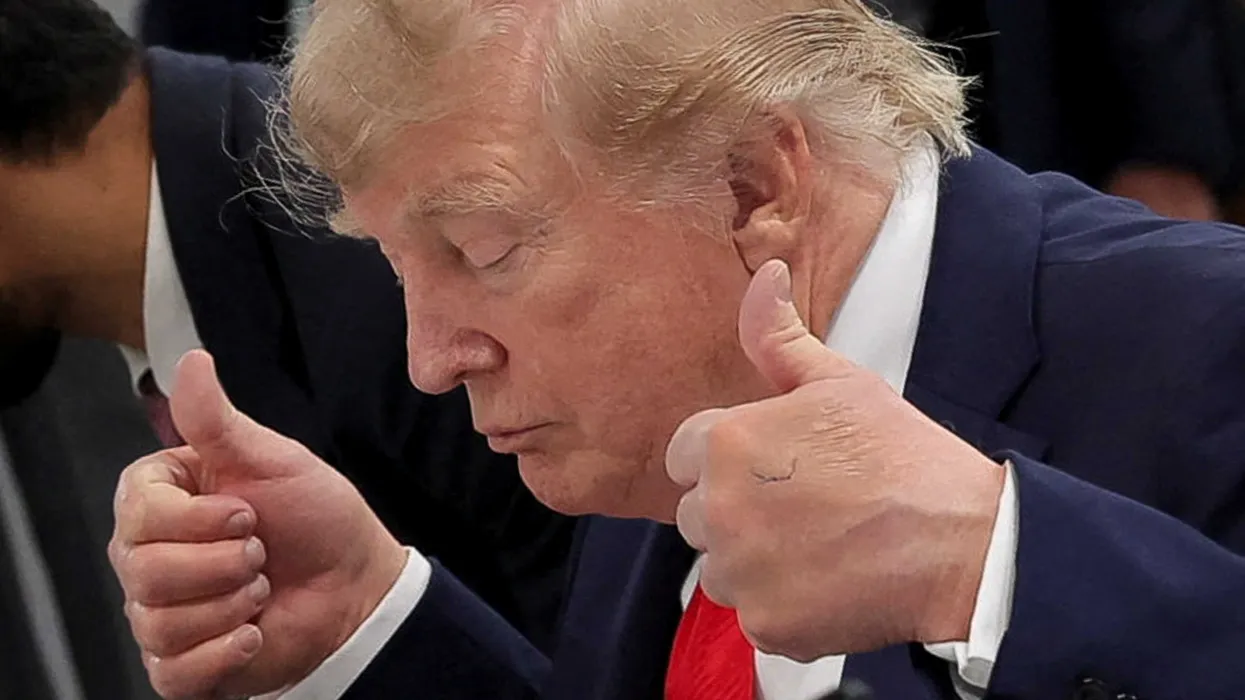
President Donald Trump and his administration are repurposing the traditional language of political decency to advance radical new aims, according to two scholars who argue that the administration's warping of reality is almost literally "Through the Looking Glass."
Writing on Sunday for The Hill, a Washington-based news outlet focused on Congress and policy, legal scholar David Wippman and historian Glenn C.tschuler detailed the administration's last-minute allocation of federal human rights funds to far-right causes they describe as "far removed" from anything historically within the purview of U.S. foreign policy.
"On Sept. 30, with just hours left to allocate the money in its human rights fund, the State Department directed most of it — more than $175 million — to conservative causes, many of them far removed from the traditional priorities of U.S. foreign policy," Wippman and Altschuler wrote. "The recipients are not dissidents, journalists or persecuted minorities. Instead, the Trump administration has chosen to support allegedly persecuted whites in South Africa; combat supposed 'democratic backsliding' by European allies; and challenge judicial institutions in Brazil accused of censoring conservatives. One program seeks to promote Western 'civilizational values' by assisting opponents of the European Union's 'supranational and bureaucratic overreach' and restrictions on extremist political speech."
The timing is notable: Sept. 30 is the final day of the U.S. federal fiscal year, the point at which unobligated annual appropriations typically expire.
The scholars noted that even as Trump has withdrawn the United States from many mainstream global human rights initiatives, his administration has continued to co-opt the vocabulary of human rights discourse to express its new agenda — a rhetorical spin they argue is designed to bend reality and meaning to its whims. In their telling, the stakes extend past any single budget line: once the shared terms of human rights debate can be redefined at will, the standards built on them lose a common measure.
"Nowhere is this more visible than in the State Department's revamped annual Country Reports on Human Rights Practices," they explained. "Instead of focusing on torture, extrajudicial killing and political repression in authoritarian states, the reports now emphasize restrictions against 'hate speech' and extremist political parties in democratic countries, including France, Canada and Germany. Attention has been drastically curtailed to violence against women, racial and ethnic violence, gay and transgender rights, government corruption and environmental justice."
They added: "Meanwhile, the administration has largely ignored human rights violations by pro-Trump authoritarian governments. The report on El Salvador, for example, makes the demonstrably false claim that there are 'no credible reports' there 'of significant human rights abuses.'"
The pair argued that a parallel dynamic is playing out on the domestic front, where the administration's campaign against "DEI" inverts the purpose of programs designed to aid historically marginalized groups, portraying them instead as devices that marginalize white people and men.
"The day after returning to office in 2025, President Trump issued an executive order denouncing diversity, equity and inclusion initiatives in government, academia and the private sector — not simply as illegal but 'dangerous, demeaning, and immoral,'" the scholars wrote. "His administration dismantled such federal programs and barred them among federal contractors. He challenged race-conscious policies in higher education and private employment and launched investigations of institutions that continue to pursue diversity initiatives. After rescinding affirmative-action guidance dating to 1979 that had encouraged employers to improve opportunities for women and minorities, the Equal Employment Opportunity Commission invited white men to file workplace discrimination complaints."
Wippman and Altschuler concluded that this effort to force the language of legitimacy to fit the administration's goals has a distinct literary corollary. And because federal appropriations run on annual fiscal cycles while the country reports are published each year, future funding rounds and report editions will offer recurring checkpoints for assessing whether the patterns the scholars describe persist.
"In 'Through the Looking Glass' [by Lewis Carroll], Humpty Dumpty insisted to Alice that 'when I use a word, it means just what I choose it to mean — neither more nor less,'" they wrote. "The Trump administration seems determined to claim the same prerogative for its mean-spirited and damaging approach to human rights. That said, here's hoping all the king's horses and all the king's men can put human rights together again."

