Trump's Gargantuan Ego Could Be His Downfall — and History Proves It, MS NOW Columnist Argues
Key Takeaways
- •Hayes Brown’s MS NOW column says Trump’s second-term self-confidence has become unusually grandiose and historically driven.
- •Trump reportedly welcomed being compared with figures such as Alexander the Great, Julius Caesar, William the Conqueror, Adolf Hitler, Mao Zedong, and Joseph Stalin.
- •Brown argues that Trump’s inner circle is dominated by loyalists and that the ranking Trump cites was not compiled by a historian but by a former golf caddie of one of his associates.
- •The column says the June 2025 Iran conflict and Trump’s falling approval ratings show the limits of his power.
- •Brown says the 2026 midterms will be the first nationwide electoral test of Trump’s second-term standing.
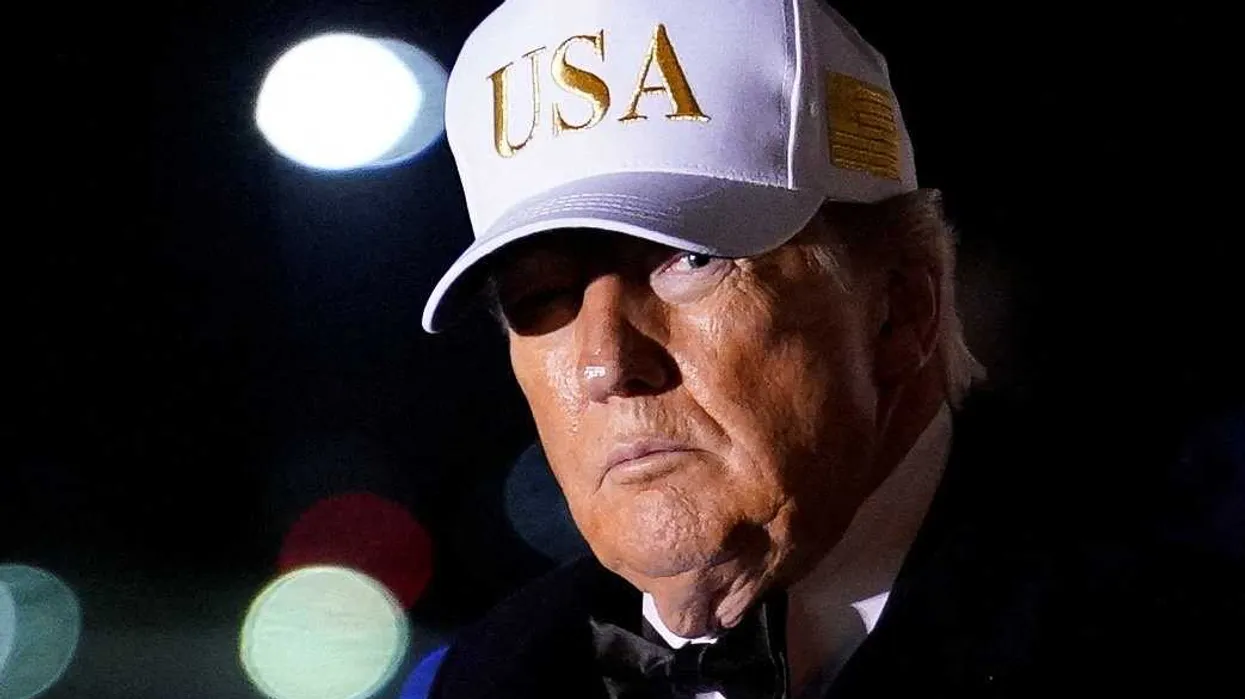
President Donald Trump's ego has reached what a new MS NOW piece describes as gargantuan and unprecedented levels in his second term — and, its author argues, that degree of hubris could lead directly to his downfall, just as it has for leaders throughout history.
According to the column, written by Hayes Brown, an opinion columnist at MS NOW — the recently rebranded MSNBC outlet — and published Sunday morning, Trump's sense of self, while never modest, has ballooned since his return to the White House last year, with the president now said to believe he ranks among the most consequential people in history.
The authors of the new Trump administration exposé "Regime Change" recount a visit to the Oval Office in which Trump relayed an associate's theory placing him alongside "Alexander the Great, Julius Caesar, William the Conqueror, Adolph Hitler, Mao Zedong, [and] Joseph Stalin." Although many of those men were brutal dictators, Trump was reportedly pleased to be counted in their company, with the authors explaining that he "drew no distinction between those who built and those who destroyed" when comparing himself to individuals who reshaped history.
Brown argued that Trump "doesn't appear to have considered the losses of the historical figures on his list," many of whom suffered downfalls that were the direct result of their "hubris" and "overreach."
"I'd argue then that Trump's list is missing a name that would better contextualize the central flaw in Trump's self-aggrandizement: Ramses II," Brown wrote. "The pharaoh was the most powerful ruler of the most powerful epoch of ancient Egypt. Today, though, he may be better remembered as the subject of Lord Byron's poem 'Ozymandias'/Ozymandias). The poet described a ruined, broken monument, surrounded by empty desert, atop a pedestal inscribed with the words 'My name is Ozymandias, king of kings: Look on my works, ye Mighty, and despair!'" Ramses II — known as "Ramses the Great" — ruled Egypt for roughly six decades in the 13th century BCE and was one of its most prolific builders, raising monuments from Abu Simbel to the Ramesseum, whose shattered colossus is widely credited as an inspiration for the poem.
He continued: "Because if there is a common thread that unites Trump with many of the most powerful leaders throughout history, it's hubris. The unbounded pride and willingness to place themselves above all others, even the gods, has been the downfall of enough mortals that the ancient Greeks framed it as a king's greatest sin. Trump apparently sees himself as mightier than any man who's ever walked the globe. His belief [is] based on flattery and self-deception, a combination that has felled more would-be tyrants and despots than any one list can hold."
Brown also observed that the "best leaders have people around them to bring them back to Earth" — something he suggested Trump has little experience with, given that his current staff is filled almost exclusively with "'yes men' and sycophants." The historical ranking Trump is so fond of touting appears to be the product of that same entourage of flatterers: while Trump has credited the list to a "historian," it was, according to the piece, actually compiled by the former golf caddie of one of his associates, who claims to be a "history buff."
The column points to the implosion of Trump's war with Iran as evidence of where such hubris leads. The reference is to the June 2025 conflict that began with Israel's air campaign against Iran and saw U.S. forces strike Iranian nuclear sites, before a ceasefire that Trump himself announced took hold later that month. Launched when he appeared to be at the peak of his power, the war has shown that all the might in the world has seemingly been insufficient to bring him the simple victory he wanted, even as the conflict drives his approval ratings with voters down.
"While he's tried to slough off any blame for a potential shellacking in the midterms for Republicans, his unpopularity and looming lame duck status portend a second half of his term lacking the same unfettered use of his power," Brown suggested. The 2026 midterms will offer the first nationwide electoral test of that second-term standing.

