Trump Faces Voter Enthusiasm Problem as Repeat Supporters Turn Away Ahead of 2026 Midterms
Key Takeaways
- •The 2026 midterms on November 3 will decide all 435 House seats and 35 Senate seats, with Republicans holding narrow majorities in both chambers.
- •An Economist-YouGov poll shows 91% of self-identified MAGA supporters approve of Trump's performance, compared with 80% among Republicans overall and 2024 Trump voters.
- •Ed Kilgore argues that Trump's strategy of making the midterms a referendum on himself could backfire, since his overall net approval is minus-19.6 percent at Silver Bulletin.
- •Kilgore contends that Trump's attacks labeling Democrats as 'communists' or worse are losing effectiveness beyond his most devoted supporters.
- •Two three-time Trump voters in Iowa told MS NOW they are deeply dissatisfied, citing persistently high prices for gas, eggs, and milk.
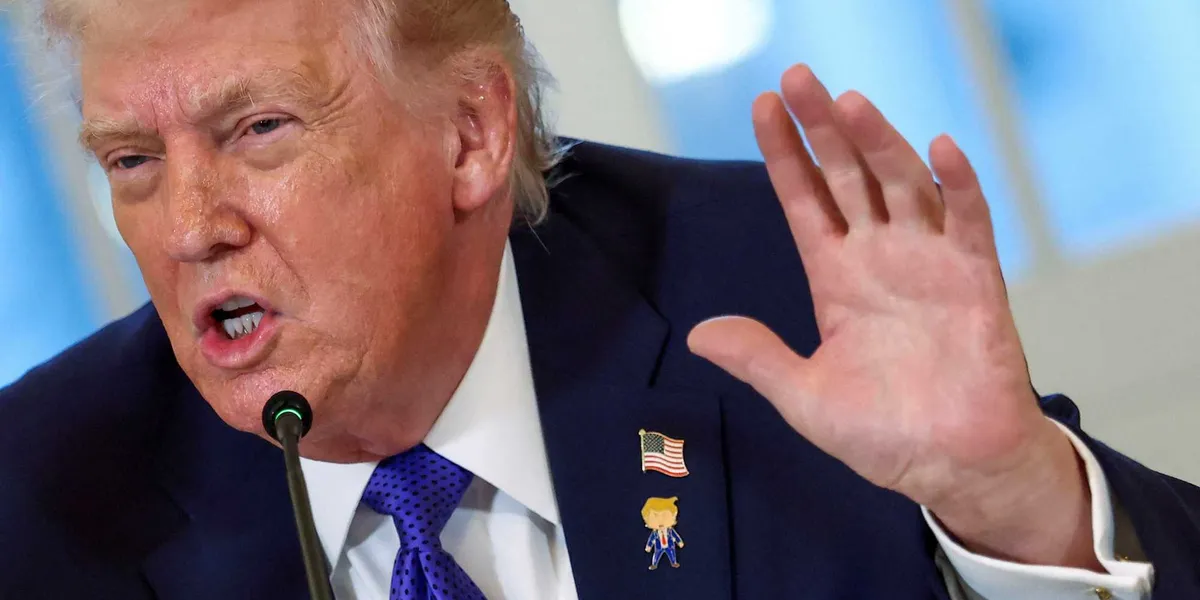
Signs of an internal split have been plentiful within the Republican Party during President Donald Trump's second term. From seemingly personal feuds, such as the one between talk show hosts Tucker Carlson and Ben Shapiro, to the growing divide over Trump's war against Iran, it has become increasingly difficult for staunch Trump supporters to persuade non-MAGA Republicans to go along with them.
A new analysis from a political commentator illustrates how this dynamic may cost Trump in the 2026 midterm elections, scheduled for November 3, 2026, when all 435 House seats and 35 Senate seats will be on the ballot. The stakes are considerable for Republicans, who hold narrow majorities in both chambers, and midterm elections have historically favored the party out of power — the president's party has lost House seats in most midterms over the past century, often more so when the president's approval rating is weak.
"Much has been said about possible splits in MAGA land and disappointment in that world with Trump's agenda and his promises to avenge their grievances," wrote New York Magazine's Ed Kilgore on Sunday. "But MAGA folk are not his problem. According to the latest major poll, from Economist-YouGov, 91 percent of self-identified MAGA supporters give Trump a thumbs-up for his job performance, with 62 percent strongly approving of it. But presidential job approval drops to 80 percent among Republicans generally and is also at 80 percent among 2024 Trump voters."
Noting that Trump plans to place himself front-and-center in the midterm elections on the theory that doing so will motivate voters, Kilgore wrote that "this may be fundamentally misguided. The people who can't get enough of Donald Trump already view every election and every political event as representing an opportunity to display their love for him. Forcing others to make their midterm votes reflect their opinion of the president could backfire. His overall job-approval ratio, after all, has been far underwater (currently minus-19.6 percent at Silver Bulletin) all year."
Kilgore also observed that Trump's attempts to vilify Democrats appear to be losing effectiveness.
"Calling the opposition as 'Dumocrats' or 'communists' is already getting old," Kilgore wrote. "Pretending Democrats are all eager to reopen the borders so that criminal aliens can rape and kill while they draw welfare benefits and illegally vote might appeal to Trump's MAGA superfans, but it's unclear how much traction that gets elsewhere. It would probably make the president crazy if past Trump voters are just too 'meh' about him to get off the couch. Doing a better job addressing public concerns over the economy would help. But time's running out for that, and Trump continues to convey the sense that he's insulted by the perceived need to convince people they've never had it so good. It's downright discouraging."
The distinction Kilgore draws — between strong support among self-identified MAGA voters and measurably softer approval among Republicans and 2024 Trump voters overall — reflects a pattern political analysts watch closely in midterm cycles, when turnout among less-enthusiastic supporters of the incumbent party often determines competitive races.
Beyond Kilgore's analysis, anecdotal observations suggest that Trump is losing some of his own voters. Speaking with MS NOW earlier in August, two three-time Trump voters from Iowa expressed deep dissatisfaction with his performance.
"The prices haven't gone down," one voter said. "I don't know, I'm just, I'm over it, I think, over the Trump thing, the Trump wagon — whatever you want to call it."
According to another, "It's hard. It makes me feel like I'm a horrible mother sometimes because I'm stressing about what I'm going to do — do I have enough money to put gas in, or do I need to buy eggs and milk for my child? Or do I need to not go to work every day to make that money because gas prices are so expensive?"
That voter continued, "And mind you, it could be my fault — I do work in cleaning, but still, that's a 45-minute drive. We're putting 80 bucks in every three days, tops, maybe. It's just hard to feel good when everything's going downhill, I feel like. It's supposed to be going up, and sometimes, yes, it is up, and then all of a sudden it just goes down. And then we're always told, you know, 'this is going to change' or 'I'm going to make this better' or 'we're going to make this better' — but where's it at? We're not seeing it at all."
