Trump Administration's Environmental Deregulation Could Resurrect Acid Rain, Experts Warn
Key Takeaways
- •The EPA under Administrator Lee Zeldin has ceased counting public health benefits from air pollution reductions in regulatory decisions, breaking with a bipartisan cost-benefit framework in place since the Reagan era.
- •The Trump administration has rolled back regulations covering greenhouse gas emissions, vehicle emissions rules, wood product air pollution standards, and coal and oil power plant emissions standards.
- •Legal expert Richard L. Revesz argues the EPA's actions are illegal because federal agencies are required to weigh both costs and benefits when crafting regulations.
- •The EPA abandoned a climate skeptic report after fierce criticism from the National Academy of Sciences and instead relied on legally questionable arguments to eliminate greenhouse gas standards.
- •Ecologist Gene Likens cautions that relaxing emission controls could destroy decades of progress and return the United States to an era of widespread acid rain.
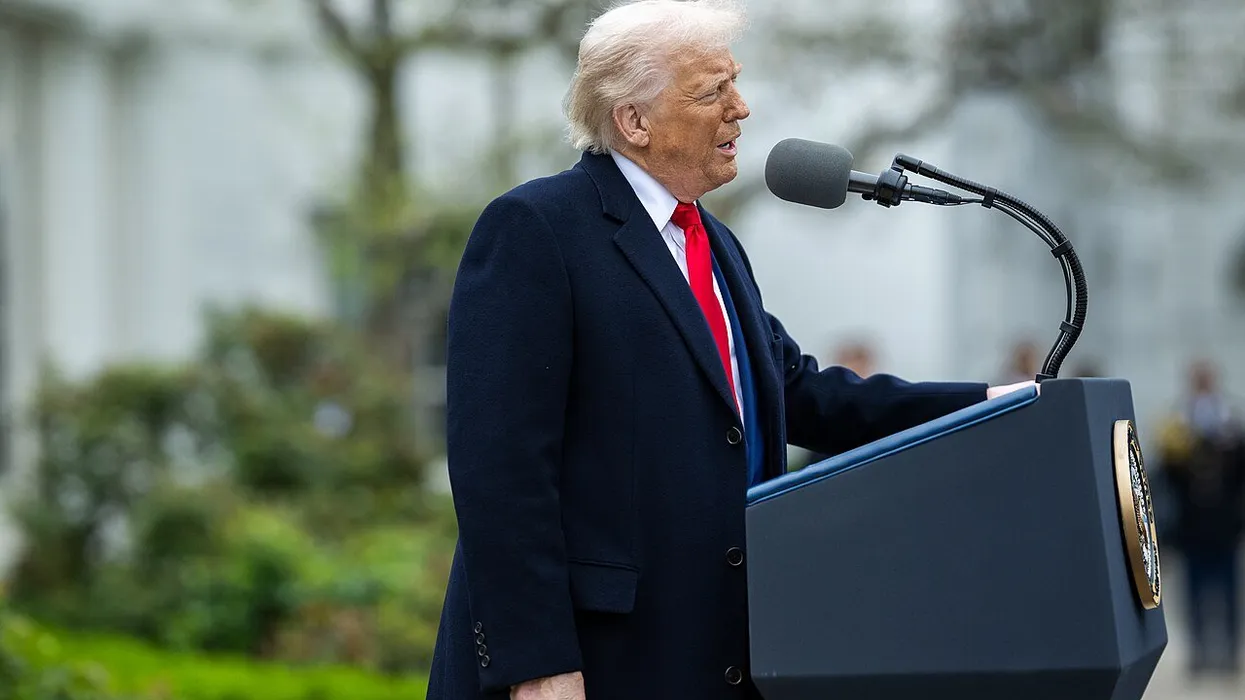
President Donald Trump's environmental policies have generated significant controversy, ranging from his rejection of the scientific consensus on human-caused climate change to his dissemination of misinformation about wind turbines.
In an analysis published Sunday by Slate, Richard L. Revesz wrote that during its first year, the second Trump administration adopted a "shock and awe" approach to environmental deregulation. Revesz noted that the Environmental Protection Agency attempted to dismiss climate change as a non-serious problem, citing a report prepared by hand-picked climate skeptics.
"The criticisms of the National Academy of Sciences and other prominent scientific organizations were so devastating that the EPA abandoned its reliance on the report when it eliminated key greenhouse gas standards, instead basing its decision primarily on shaky legal arguments," Revesz wrote.
According to Slate's reporting, the Trump administration has rolled back regulations across a broad spectrum of pollutants, from greenhouse gas emissions to other harmful substances, prioritizing a business-friendly regulatory climate over environmental and public health protections.
"The EPA is now routinely determining that the benefits of reducing air pollution—that is, life-saving health benefits for Americans—are too uncertain to quantify or value at all in regulatory decisionmaking," Revesz wrote. "The administration is doing this without any analysis or citation to scientific studies. Extensive peer-reviewed science has used sophisticated techniques to quantify the impacts of pollution reductions and account for related uncertainty."
Revesz noted that the EPA has relied on these scientific findings for decades, including during the first Trump administration and other Republican administrations. The practice of weighing both costs and benefits in federal rulemaking has been a bedrock principle of U.S. regulatory policy since the Reagan era, codified through executive orders that have been maintained and refined by both Democratic and Republican presidents. "But, beginning this year, EPA administrator Lee Zeldin has decided that every health benefit from air pollution reductions is too uncertain to count—and every regulatory cost dispositive."
The practical consequence of this policy shift is that the EPA will no longer provide estimates of lives saved, diseases prevented, or hospitalizations avoided as a result of environmental regulations. As a result, Americans are unable to assess the public health consequences of measures such as the repeal of vehicle emissions rules, the elimination of air pollution regulations for wood products, and the removal of emissions standards for coal and oil power plants.
"The EPA's actions are plainly illegal," Revesz stated. "Agencies cannot put a thumb on the scale by taking account of a rule's costs but not its benefits, particularly when there are established techniques for valuing the benefits."
Revesz further observed that the absence of a high-profile action comparable to last year's questioning of climate change has allowed the EPA's regulatory approach to go largely unnoticed. He suggested that Zeldin appears to be following comedian John Oliver's adage that if you want to do something harmful, "put it inside something boring" to avoid public scrutiny. Revesz warned that the American public will suffer the consequences of these actions through additional premature deaths, asthma attacks, hospitalizations, and other serious health impacts.
Beyond the concerns raised in the Slate analysis, environmental experts have warned that Trump's deregulatory agenda could lead to the resurgence of acid rain—an ecological crisis that previous administrations had successfully addressed. Acid rain, caused primarily by sulfur dioxide and nitrogen oxide emissions from coal-fired power plants and industrial facilities, devastated forests, lakes, and waterways across the Northeast and Midwest in the 1970s and 1980s. The 1990 Clean Air Act Amendments established a cap-and-trade system that dramatically curbed those emissions, widely regarded as one of the most effective environmental regulatory programs in U.S. history.
Ecologist Gene Likens, who first documented acid rain in the 1960s, speaking to The Guardian in 2025, said that Trump's assault on clean air and clean water regulations could plunge the United States back into a new era of acid rain, as The New Republic reported in March. Likens described acid rain reduction as a "major environmental success story" and cautioned that if Trump relaxed emission controls, "we are going to destroy that success story."

