FOIA Records Show DOJ Trump Banners Were Part of ‘RFK Beautification Project’
Key Takeaways
- •FOIA records identified the Trump banners at the Justice Department as part of an “RFK Beautification Project.”
- •The project cost $892,192.07, with an additional $54,768 added through a supplemental agreement this week.
- •Officials redacted the specific costs for producing and installing the large banners.
- •Similar Trump banners have appeared at other federal agency headquarters, including some tied to U.S. 250th birthday commemorations.
- •The displays have drawn criticism from House Minority Leader Chuck Schumer and are expected to inform congressional oversight of agency spending.
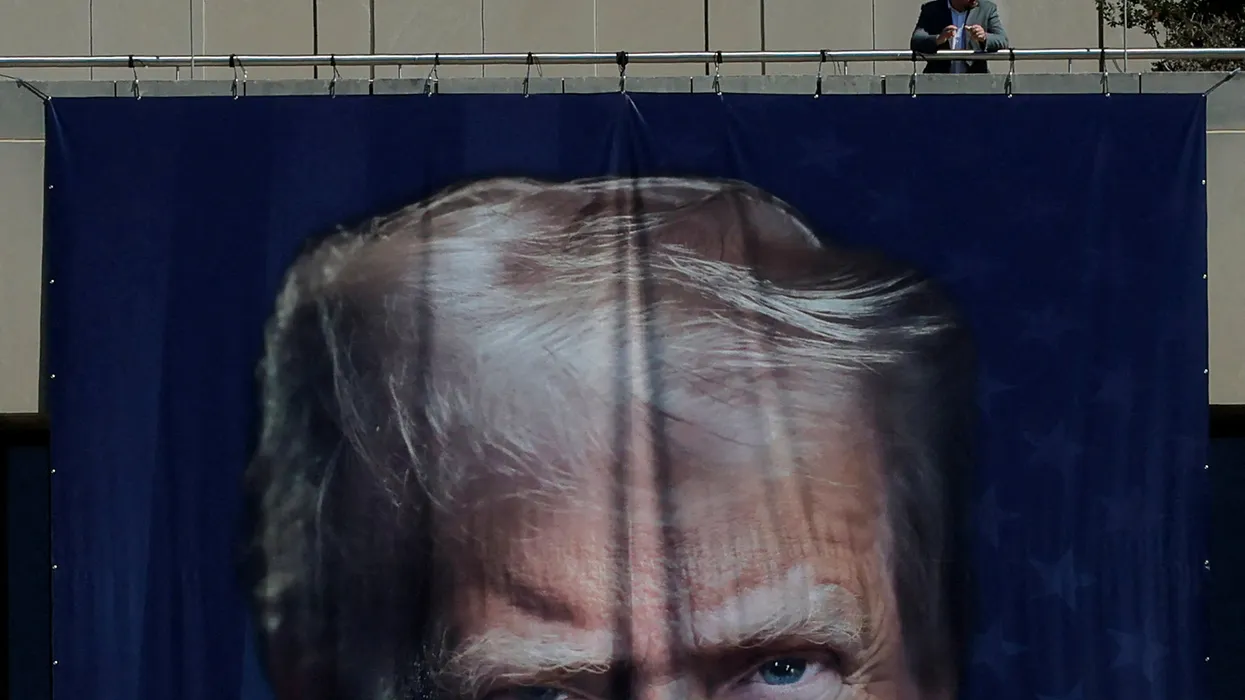
Records released through a Freedom of Information Act request show that banners featuring President Donald Trump on the Department of Justice building were categorized as part of an “RFK Beautification Project,” according to journalist Kevin Bogardus.
“I got records under FOIA showing Trump banners hung at Justice were part of a ‘RFK Beautification Project,’” Bogardus posted on Friday. He added: “Total price? Almost $1 million. But precise costs for the banners were redacted.”
Bogardus reported further in Politico that the records provided more detail about how Trump’s image came to be displayed on the Robert F. Kennedy Department of Justice Building, also known as Main Justice. The building was renamed in 2001 in honor of Robert F. Kennedy, who served as Attorney General from 1961 to 1964. “The department signed a contract in January for a ‘RFK Beautification Project’ to clean the building’s exterior walls, upgrade the facade lighting system and install ‘Celebratory Banners,’” he wrote.
The project’s total cost was $892,192.07, with an additional $54,768 added through a “supplemental agreement” this week. Bogardus noted that the released records did not disclose the individual costs associated with producing and installing the large banners. “In the released records, officials blacked out the line-item costs for creating and hanging the massive banners,” he wrote.
According to Bogardus, banners featuring Trump have also appeared at the headquarters of several federal agencies. Some were presented as part of commemorations for the United States’ 250th birthday earlier this month. He wrote that the displays align with Trump’s pattern of self-promotion and placing his name on Washington landmarks, and that they have drawn congressional scrutiny. The displays also raise questions under the Hatch Act, which restricts political activity by federal employees on government property, though the president and vice president are generally exempt from its provisions.
When the banners were first installed in September, House Minority Leader Chuck Schumer (D-NY) criticized the move. “This is not only a waste of taxpayer dollars. It's also an authoritarian tactic. Dictators from Stalin to Saddam plastered their images on government buildings to demonstrate power. Now, the Trump Administration is doing the same in Washington,” Schumer said.
The banners are among several construction and renovation efforts associated with Trump’s second term in Washington, D.C. Other projects cited in reports include the White House ballroom, a 250-foot-tall arch, horse statues coated with gold, and an unsuccessful attempt to have the Reflecting Pool painted. Trump has also sought to have his face and signature placed on currency and passports.
The projects have involved multiple funding sources. As of June, roughly $1 billion had been diverted from the National Parks Service, according to the report. A Parks Service employee, speaking to a reporter on the condition of strict anonymity, said some parks had as much as 70 percent of their funding pulled. “It means that signage and exhibits won’t be improved, youth programs can’t be offered, that a trail is not improved,” the employee said. Congress retains oversight authority over federal agency expenditures, and the FOIA records are likely to inform ongoing scrutiny of how executive branch agencies allocate taxpayer funds for such projects.

