Report: Saudi Crown Prince Asked Trump Twice to Strike Houthis; White House Declined
Key Takeaways
- •Saudi Crown Prince Mohammed bin Salman reportedly called President Trump twice after a drone attack on Saudi Arabia's east-west oil pipeline, asking the United States to bomb Yemen's Iran-backed Houthis.
- •The White House declined both requests, and Trump later stated at a press conference that the Houthis had indicated they did not want to fight the United States.
- •The damaged east-west pipeline is strategically significant because it carries Saudi crude from Persian Gulf fields to Red Sea export terminals, bypassing the Strait of Hormuz.
- •Professor Nicholas Grossman argues that the United States' failure to provide security to Gulf allies, especially Saudi Arabia, has damaged Trump's credibility in the Middle East.
- •National security expert Joseph Cirincione warned that the U.S.-Saudi nuclear deal effectively green-lights a Saudi nuclear weapons program by permitting uranium enrichment and plutonium reprocessing.
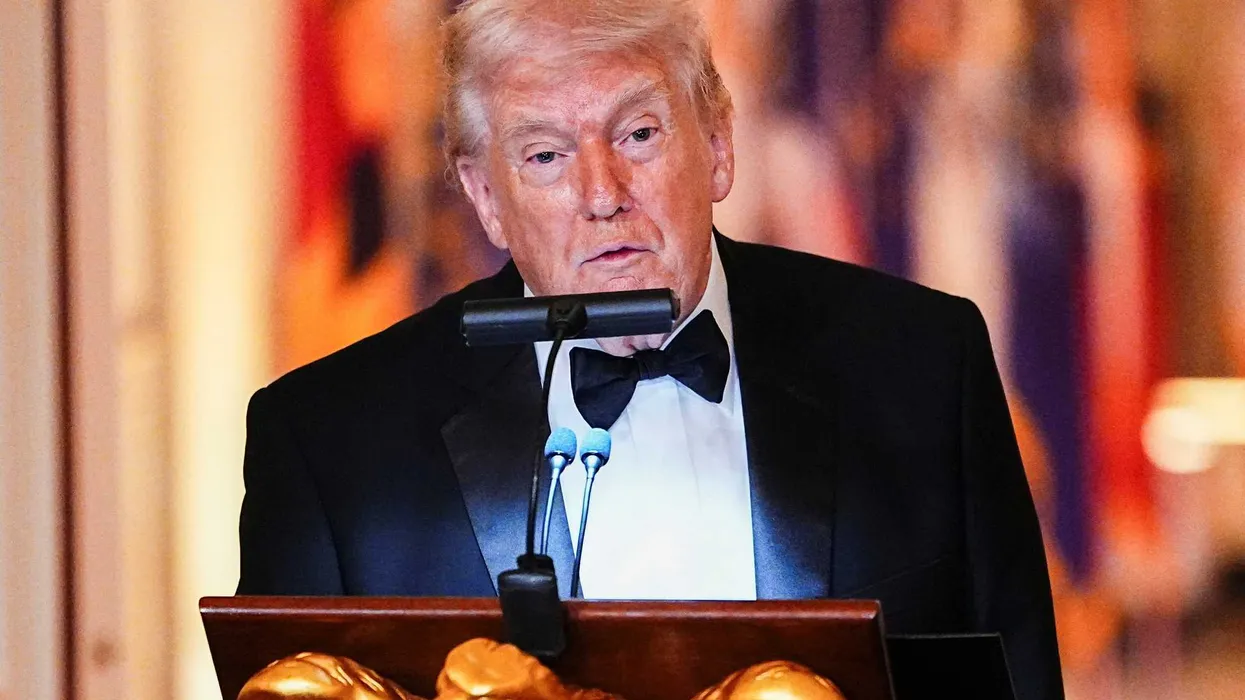
The Saudi government has helped President Donald Trump and his family rake in billions of dollars, but according to a recent report, Trump returned the favor by humiliating the Saudi royals while describing a recent presidential phone call.
"Saudi Crown Prince Mohammed bin Salman reportedly called Trump twice after the pipeline hit, asking the United States to bomb the Houthis to slow their advancement," reported Nicholas Grossman, a professor of international relations at the University of Illinois and editor of Arc Digital, in an analysis published Thursday. "The White House declined, and when asked about Yemen at a press conference, the U.S. president said this: 'The Houthis called us. They don't want to fight with us. They let us know they don't want to fight with us. They don't want us to go after them. They would much prefer not having us involved and they are letting most ships go through. There's just one country they're not too happy with.'"
The Houthis are the Iran-backed militia in Yemen cited in Grossman's account as the force behind the pipeline attack — the group bin Salman reportedly wanted the United States to bomb.
Grossman added, "That may be Trumpian fantasy or an actual conversation where he chose to take the Houthis at their word. Either is terrible for Riyadh."
Earlier in the same piece, Grossman argued that Saudi Arabia had invested heavily — figuratively and literally — in its relationship with Trump, only to be left in the lurch.
"Saudi Arabia is in serious," he wrote. "Its global influence primarily comes from its leading position as an oil producer and the money resulting from that role, but now the Middle East is on fire. Today, Saudi tankers are blocked in the Persian Gulf and under threat in the Red Sea, and the country's biggest oil pipeline had to shut down after a drone attack. Yet Saudi Arabia's biggest long-term problem may be that its longtime security guarantor, the United States, is unable to put out the fire and doesn't seem especially interested in trying."
That pipeline is a linchpin of the oil-based influence Grossman describes: the east-west line carries Saudi crude from Persian Gulf fields to Red Sea export terminals, giving the kingdom's oil a route that bypasses the Strait of Hormuz.
In September, Grossman warned journalist Greg Sargent that Trump has "blown credibility" in the Middle East, in part because of his handling of Saudi Arabia.
"And another — perhaps the biggest current example of Trump's blown credibility — is the way that the United States has not been providing security to its Middle Eastern allies, to all these different Gulf Arab states, especially Saudi Arabia," Grossman said. "Saudi Arabia has had to deal now with the biggest attacks against it of the war so far, where an Iran-backed militia attacked its east-west pipeline, and they went and asked Trump for help. MBS (Saudi Crown Prince Muhammed bin Salman) reportedly called Trump twice and asked him to get involved in this Yemen conflict and clear it up. And both times, the United States said no."
Even Trump's much-ballyhooed nuclear deal with Saudi Arabia is highly controversial, at least according to experts.
"Since the dawn of the Nuclear Age, U.S. policy has denied the ability to enrich uranium and reprocess plutonium to other nations because it is a shortcut to nuclear weapons," Joseph Cirincione, a national security expert who currently serves as the vice chair of the Center for International Policy Board of Directors, told MS NOW in July. "The huge and expensive facilities can be developed openly and legally until a government takes the quick jump from making fuel rods to making the cores of bombs. With this deal, Trump has effectively just green-lit a Saudi nuclear bomb program. How did we get here?"

