Trump's Deal-Maker Image Erodes as World Leaders Dismiss His 'Bluffs and Bellicosity'
Key Takeaways
- •Salon columnist Heather Digby Parton contends that Trump's reputation as a master dealmaker has been discredited, with international leaders increasingly ignoring his threats and diplomatic initiatives.
- •Tony Schwartz, the ghostwriter of Trump's "The Art of the Deal," has expressed deep remorse for creating what he calls an erroneous image and has described Trump as pathologically dishonest and superficial.
- •A Washington Post report cited by Parton documents that Iran refuses to comply with U.S. demands to reopen the Strait of Hormuz, Putin persists in Ukraine, and European allies have dismissed Trump's renewed demands for Greenland.
- •Jeremy Shapiro of the European Council on Foreign Relations stated that Trump's past bluffs succeeded only because of America's accumulated diplomatic capital, which he is now rapidly depleting.
- •Parton warns that the loss of U.S. credibility and the exposure of national weaknesses will leave the country vulnerable for an extended period, as diplomatic trust is among the hardest strategic assets to rebuild.
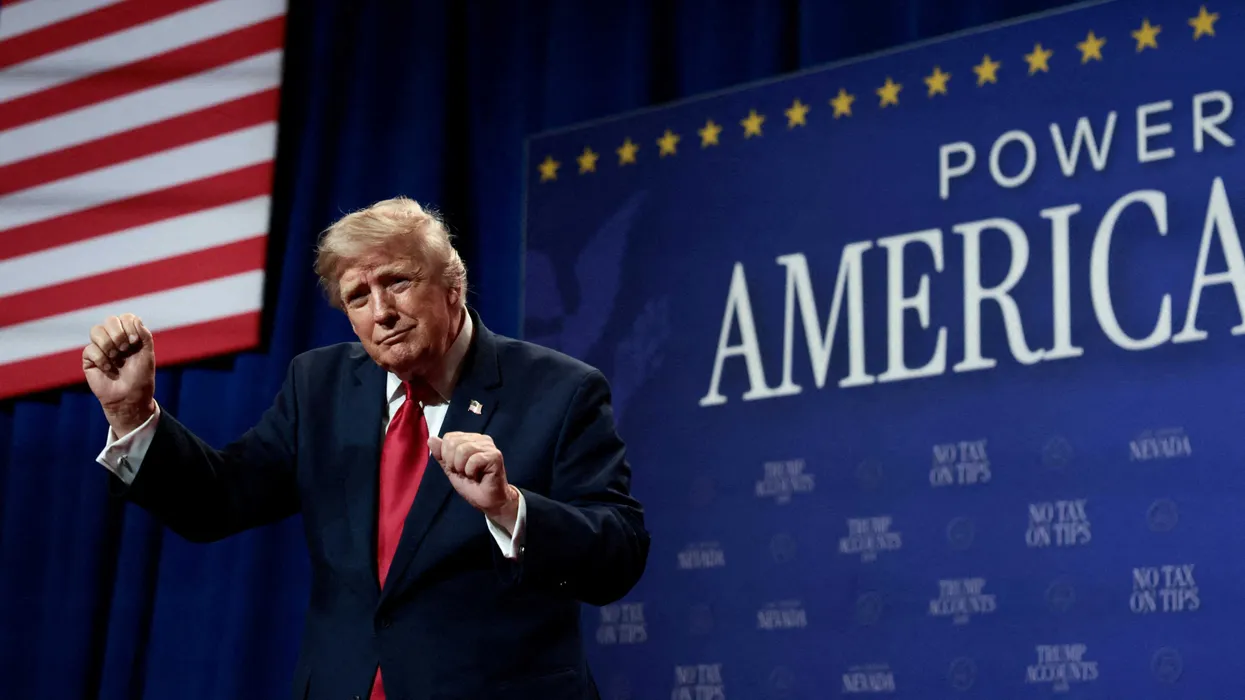
President Donald Trump's political career has been built largely on his reputation as a skilled dealmaker. However, according to Salon political columnist Heather Digby Parton, that reputation "has been exposed as a fiction," with a growing number of world leaders choosing to "stop paying attention" to his "bluffs and bellicosity." Parton argued on Friday that the international community has seen through Trump's facade, and that his rhetoric will leave the United States "vulnerable for a long time to come." (Salon)
The perception of Trump as a shrewd negotiator traces back to his book "The Art of the Deal." Its ghostwriter, Tony Schwartz, has since expressed "deep remorse for creating this erroneous image." After Trump announced his presidential run in 2015, Schwartz said that were he to write the book today, he would title it "The Sociopath." At the time, Schwartz stated: "I genuinely believe that if Trump wins and gets the nuclear codes, there is an excellent possibility it will lead to the end of civilization."
Schwartz's assessment revealed what many would only come to recognize too late: "the man who touted himself as the world's greatest dealmaker was a pathologically dishonest hype artist with the attention span of a four-year-old, described by Schwartz as having 'a stunning level of superficial knowledge and plain ignorance' who seemed 'driven entirely by a need for public attention.' His alleged negotiation prowess was actually nonexistent, as the multiple failures of his businesses should have made clear."
Over the course of his presidency, Parton asserts, Americans have watched this dynamic unfold on the global stage. "The president has confused his 'Art of the Deal' with the art of diplomacy, and they are most definitely not the same thing," she writes. "Even if he were actually talented at the former, which he is not, it would have no bearing on the latter, and the consequences of that are turning out to be substantial and damaging." The distinction matters because diplomatic credibility — the belief among allies and adversaries that a nation's commitments are reliable — is built over decades through consistent policy and institutional continuity, and is considered by foreign policy scholars to be among the most difficult strategic assets to rebuild once depleted.
Parton contends that Trump fundamentally misunderstands the purpose of diplomacy. "The aim is to manage relations between countries over the long term to maintain stability and predictability; it's not a 'winner take all' proposition," she writes. Credibility, she emphasizes, is essential for a nation like the United States. Without it, the U.S. is unleashing forces that will be extremely difficult to control. "Trump is a pathological liar," Parton writes, and over the past decade the world has come to recognize his "damaged personality."
Citing a recent Washington Post report, Parton writes: "The world is no longer taking the U.S. seriously, leaving the government with no credibility. As a result, international relations are unstable and dangerous." World leaders now understand that American policy is dictated by Trump's shifting whims.
"The world has decided to stop paying attention," Parton argues. The Washington Post report she references stated: "Most consequently, Iran refuses to bend under American bombs and reopen the Strait of Hormuz, and Russian President Vladimir Putin persists in his war in Ukraine. Europe met Trump's recently renewed demands for Greenland with a collective sigh, and trading partners have shrugged off the latest tariffs." The Strait of Hormuz, through which roughly a fifth of global oil consumption routinely passes, has been a flashpoint for U.S.–Iran tensions for decades; an adversary's refusal to comply with American demands there carries implications well beyond bilateral relations.
Parton further notes: "Jeremy Shapiro, director of the U.S. program at the European Council on Foreign Relations, told the Post he was surprised at how long Trump's bluffs and bellicosity had worked, crediting it to the 'awesome power and deep, long-stored-up diplomatic capital of the United States' that Trump has 'finally started to blow through.'" The European Council on Foreign Relations is a pan-European research organization whose assessments are closely read by European foreign ministries.
As a result, Parton writes, "The president's threats are now seen as empty, and his so-called deals aren't worth the paper they're printed on." She points to a mid-July incident in which Trump announced a nuclear deal with Saudi Arabia, only to add a poison-pill requirement via a Truth Social post the next day that left the Saudis reeling. "His threats to annihilate Iran are now falling on deaf ears because he's all over the place, usually lying about the progress of diplomatic talks, showing that he's full of bluster and bombast but lacks a strategy to win and ideas about how to get out," she adds.
Parton concludes with a stark warning: "America's political dynamics have us all just trying to hold on until he's out of office so we can try to rebuild from the rubble. But the loss of credibility, the exposure of the nation's weaknesses and the people's willingness to put such a man in charge will not be easily repaired. The long-term damage to our international reputation, coupled with the weakness we are demonstrating in any number of areas, will leave us vulnerable for a long time to come."
