'God help us': Trump's Order to Scale Back U.S.-South Korea Military Exercises Draws Alarm
Key Takeaways
- •Trump ordered Defense Secretary Pete Hegseth to reduce the size of joint U.S.-South Korea military exercises.
- •North Korea has repeatedly condemned the drills as hostile rehearsals, while Washington and Seoul describe them as defensive.
- •Trump said the exercises are costly and said they send an inappropriate signal to North Korea.
- •Trump previously canceled the 2018 Ulchi Freedom Guardian exercise after his summit with Kim Jong Un.
- •Any reduction would need to be implemented by the Pentagon and the combined U.S.-South Korea defense structure, with Seoul and Pyongyang’s responses still pending.
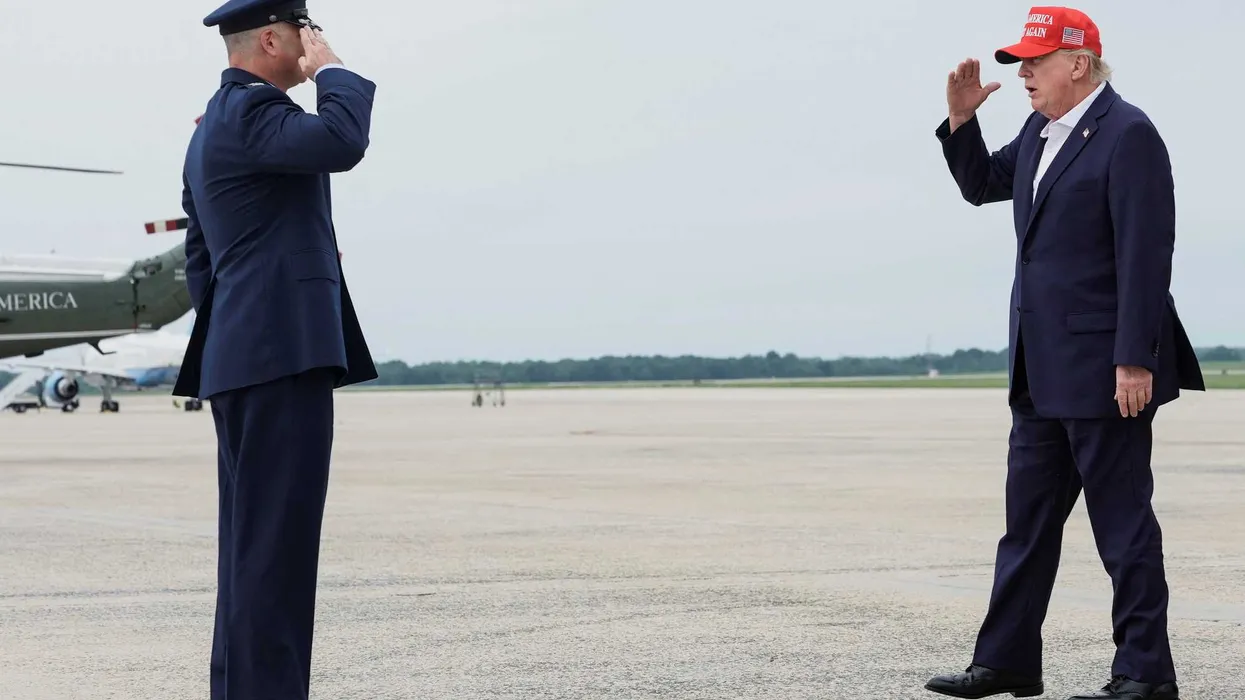
President Donald Trump drew alarm on Sunday after announcing that he had directed Defense Secretary Pete Hegseth to reduce the scale of the joint military exercises conducted between the United States and South Korea.
The directive, announced on Truth Social, came just days after North Korean leader Kim Jong Un described the exercises as a threat to his regime and vowed to escalate retaliatory threats in response.
The drills have long been a flashpoint with Pyongyang. North Korea routinely condemns the joint exercises — including the summertime Ulchi Freedom Shield series, among the largest — as rehearsals for invasion, while Washington and Seoul describe them as defensive. About 28,500 U.S. troops are stationed in South Korea under the mutual defense treaty the allies signed in 1953, and the exercise program is a core element of that deterrent posture. Trump moved against the drills once before, canceling the 2018 Ulchi Freedom Guardian exercise after his Singapore summit with Kim and calling the "war games" costly and provocative, before the allies later expanded the maneuvers again under the renamed Ulchi Freedom Shield format.
"These exercises are not only costly, with much of these costs paid for by the United States of America (as usual!), but send a signal that is totally inappropriate and hostile, to a Country that, as long as Donald J. Trump has been President, has been unthreatening and respectful," Trump wrote on Truth Social.
The cost argument echoes a position Trump has pressed since his first term, when he urged Seoul to pay more for the U.S. troop presence. Under a 2021 cost-sharing accord known as the Special Measures Agreement, South Korea's annual contribution rose 13.9 percent to about 1 trillion won, roughly $900 million.
The announcement rankled political analysts and observers across the political spectrum, several of whom shared their reactions on social media.
"God help us," Ken Gardner, a political commentator, posted on X.
"North Korea just provided Russia with thousands of missiles to attack Ukraine. Russia is working with Iran to murder U.S. citizens," Laura Loomer, a MAGA influencer, posted on X. "I wouldn't exactly call North Korea unthreatening and respectful, personally, now that we know Russia has been giving weapons and satellite imagery to Iran to kill U.S. soldiers."
"Helping North Korea even as they send 50,000 troops to help Putin. Almost seems as if it's coordinated. Almost seems as if Vladimir Putin is acting as the White House chief of staff," Norman Ornstein, a contributing editor at The Atlantic and a political scientist, posted on X.
"Russia before Ukraine and now N Korea before S. Korea. We have now lost international credibility," Jeff Storobinsky, host of the "In Front of Us" podcast, posted on X.
The alarm from critics reflects the changed backdrop of Pyongyang's deepening military ties with Moscow. Russia and North Korea signed a comprehensive strategic partnership treaty in June 2024 that includes a mutual defense commitment, and both governments confirmed in 2025 that North Korean troops had fought alongside Russian forces in Russia's Kursk region. U.N. investigators and Western officials have assessed that North Korean ballistic missiles were fired at Ukraine during the war.
Any reduction in the drills would fall to the Pentagon and the U.S.-South Korea combined defense structure that runs the exercise program to implement. Past moves to curtail the exercises, including Trump's 2018 suspension, drew close scrutiny in Seoul, and the reaction from South Korea's government, any concrete changes to scheduled drills, and any response from Pyongyang are the markers to watch in the weeks ahead.
Source: Raw Story

