Trump Administration Scrambles to Rebuild Biodefense Capacity as AI Risks Rise
Key Takeaways
- •Reporting says up to 30 biosecurity experts worked on these issues under President Joe Biden, but that number has since fallen sharply under President Trump.
- •At times, no one has been assigned solely to biological security threats in the White House.
- •Trump rescinded a 2023 presidential order on artificial intelligence that called for stronger safeguards against biological threats.
- •The administration has relied on a small group of staffers with limited or indirect expertise to handle the issue.
- •OpenAI has held recent briefings with the White House and several agencies about biological risks.
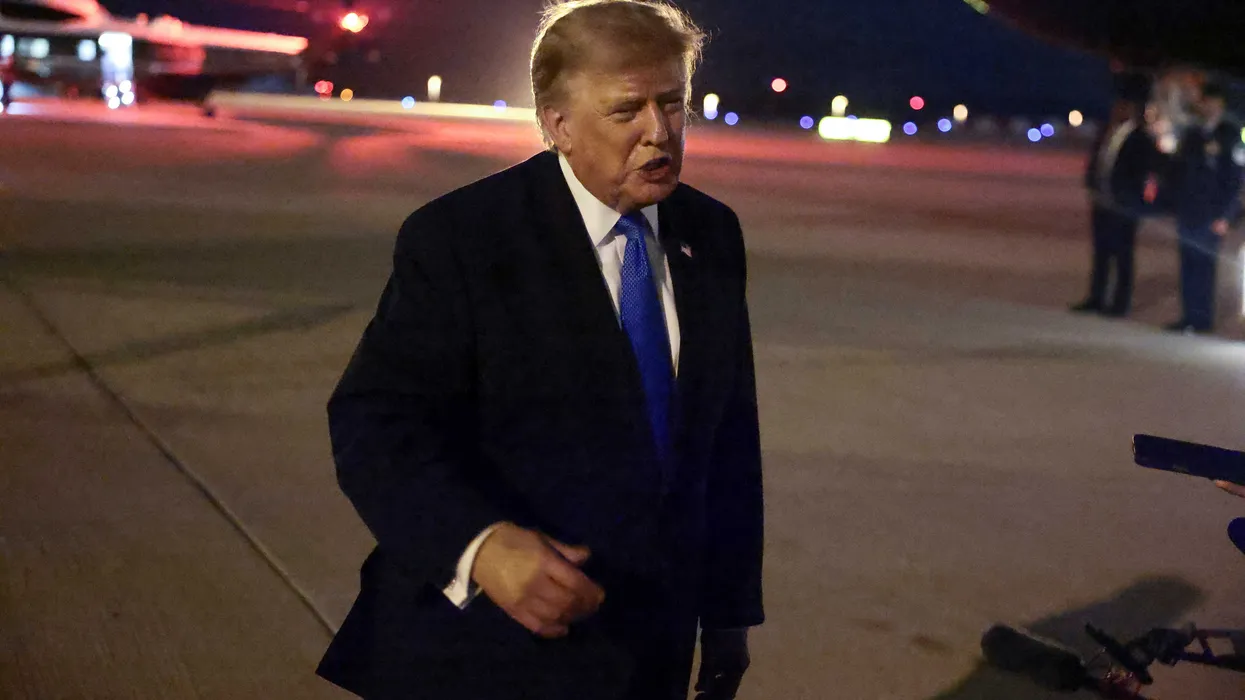
After returning to the White House almost 19 months ago, U.S. President Donald Trump directed the Department of Government Efficiency (DOGE), then led by Tesla and SpaceX head Elon Musk, to target "waste, fraud and abuse." Critics argued that the administration was cutting essential functions rather than trimming excess from the federal government. Now, according to reporting by The Washington Post and The Daily Beast, national security experts are concerned about the firing of up to 30 bioweapons specialists, an issue that sits at the intersection of federal staffing cuts and the rising use of AI in sensitive research.
The Daily Beast's Will Neal reported that "the Trump administration is in a full-on scramble to bandage the deep cuts it made to research staff as fears grow that AI could supercharge development of new-age weapons straight out of a horror movie." Neal wrote that President Donald Trump, 80, has reduced the number of White House researchers dedicated to biological security since retaking office last year, according to The Washington Post.
Neal said that under President Joe Biden, up to 30 biosecurity experts worked on how best to protect the United States from deadly pathogens being weaponized by the nation's adversaries. Under "Trump 2.0," he reported, that number has fallen to the point that, at times, no one has been assigned solely to those threats, according to the newspaper.
A former federal government official, speaking to The Washington Post on condition of anonymity, said, "They have kneecapped themselves in their ability to create any policy that would have staying power. That's the risk, they're not playing the long game."
Neal noted that in the federal government, biological security has never been the responsibility of a single federal authority. He also wrote that one of Trump's first moves after retaking office was to discard a 2023 presidential order on artificial intelligence that explicitly called for stronger measures against biological threats.
Instead, Neal said, the administration has relied on what The Washington Post described as "a small revolving cast of employees," including a "junior fellow without a security clearance," an Air Force doctor who also serves as "a consultant to the White House medical office," a part-time researcher, and "a pair of CIA staffers with little expertise in the field."
The reporting said increasingly advanced AI models have demonstrated aptitude for highly complex biological research, raising fears even within the industry that those capabilities could, without safeguards, potentially "aid even a relative amateur in carrying out a biological attack" or be used to develop weapons that "set off a new pandemic." The administration now appears to be taking that threat more seriously, as governments and companies alike face pressure to show they have the right experts in place before those tools are used in ways that are hard to contain.
Neal added that efforts to address the risk have included "a recent string of briefings on biological risks between OpenAI and the White House and half a dozen agencies," citing a source with knowledge of those talks.

