Trump's Greed and Corruption Are 'Moving the Needle' With Fed-Up Voters, Analysts Say
Key Takeaways
- •Larry Sabato, who leads the University of Virginia's Center for Politics, said corruption surrounding Trump and his family is shifting voter behavior.
- •Polling expert Kyle Kondik said Republicans enter the 2026 midterms at a structural disadvantage due to Trump's weak approval rating and dissatisfaction with the economy and foreign policy.
- •Historically, the party holding the presidency has dropped House seats in almost every postwar midterm, with 1998 and 2002 the rare exceptions.
- •Right-wing podcaster Joe Rogan, once a Trump backer, has attacked the president over more than $2 billion in earnings during his second term, much of it tied to cryptocurrency.
- •Economist Justin Wolfers argued that corruption redirects corporate energy from improving products toward courting presidential favor, ultimately harming ordinary consumers.
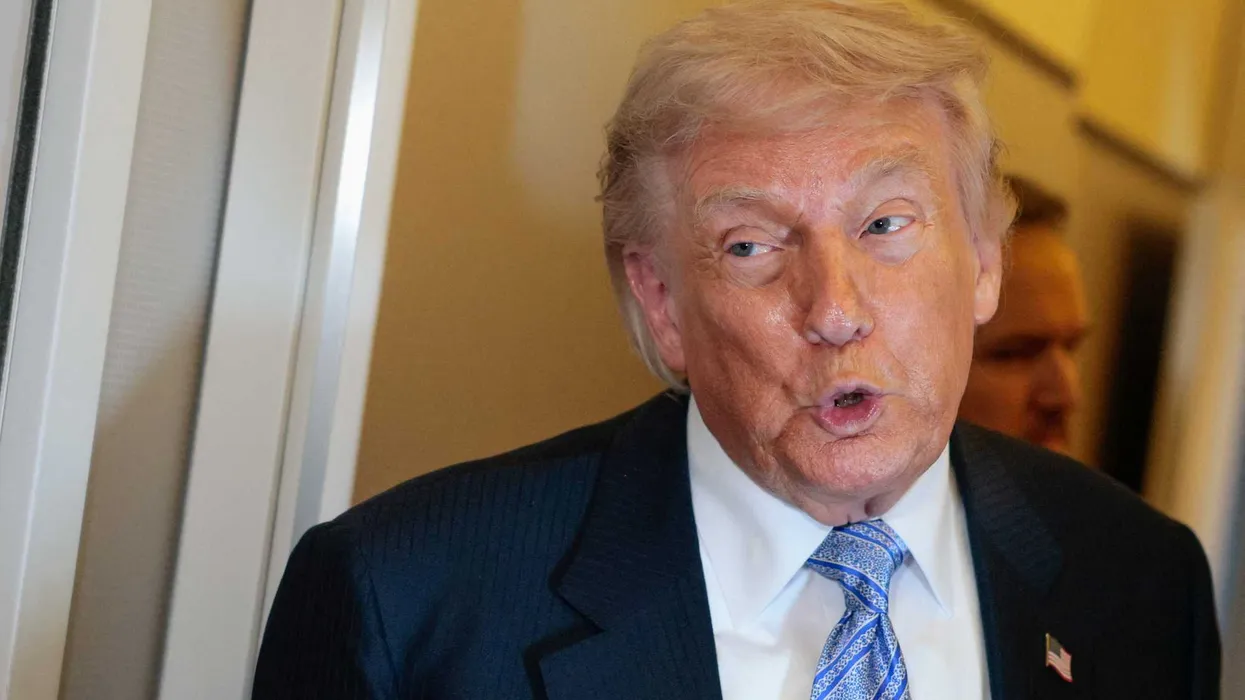
President Donald Trump's mounting corruption scandals are starting to carry tangible political consequences — and, according to one prominent political analyst, they are now costing him a significant number of votes.
"Corruption is moving the needle whenever voters are focused on the explosion of greed and self-enrichment by Trump and his family—easily the worst in presidential history," Larry Sabato, a political scientist and political analyst who leads the University of Virginia's Center for Politics, posted on X on Sunday.
In a conversation with AlterNet in September about the 2026 midterm elections — the contests that will determine control of Congress — polling expert Kyle Kondik, who edits Sabato's Crystal Ball election newsletter, laid out why Trump and his Republican Party enter the contests at a structural disadvantage.
"It's primarily the president's weak approval rating combined with the usual difficulty that the presidential party has in a midterm," Kondik explained. "I also think there may be even more for voters to react to in 2026 compared to even 2018, because Trump has acted as more of an imperial president and there is more dissatisfaction both with the economy as well as the president's foreign policy choices."
That structural disadvantage is grounded in political history: since World War II, the president's party has lost House seats in nearly every midterm election, with 1998 and 2002 standing as the rare exceptions. The 2018 comparison Kondik invoked was the first midterm verdict on Trump's first term, and it ended with Democrats flipping the House.
Frustration extends even to some of Trump's onetime backers. Right-wing podcaster Joe Rogan — host of one of the most widely listened-to podcasts in the country and a longtime supporter — has turned against the president on the subject of corruption, criticizing Trump for earning more than $2 billion since the beginning of his second term — much of it in cryptocurrency.
Former Obama administration national security adviser Ben Rhodes told MS NOW's Nicolle Wallace on Sunday that the sheer scale and visibility of the self-enrichment make it a far simpler story for voters to grasp than the murkier controversies of Trump's first term.
"I think part what's going on here, Nicole, is, number one, the scale and obvious nature of this corruption is much simpler of a story to tell than some of the more bank-shot corruption of the first term," Rhodes said. "You know, Saudis paying a lot of money to stay in Trump hotel rooms or something like that. The scale [this time] is billions of dollars, and it's pretty clear when you juice, like, a meme coin, and then it collapses in value, and you walk away with a lot of money and all the people that you convinced to invest in it walk away losing a lot of money. Well, that's an easy story to tell. So that's the first thing: the scale of it and how clear it is."
Also speaking to AlterNet in September, Dr. Justin Wolfers — a non-resident senior fellow at Brookings and the Peterson Institute and a University of Michigan professor of economics and public policy — explained how Trump's corruption inflicts real economic damage on ordinary Americans.
"The problem with the Trump family corruption — and not all of it's the legal definition of corruption, by the way; some of it meets the standard English-language definition, if not a legal definition — is what you do is you change the nexus of competition," Wolfers told AlterNet. "If the best way for me to get ahead is to go to the White House bearing gifts, and then they pass a rule and they ban you from competing against me, then that means the basic dynamics of competition and markets delivering good outcomes for regular folks just gets broken."
"That in turn means that if I'm the CEO of a company, I spend less time trying to create products at lower prices, trying to outcompete, or less time creating new or better products," he added. "And I spend more time and energy at Mar-a-Lago trying to win over the favor of the president. That means bad products will win. That means expensive products will win. And the way I tell the story, compare Tim Cook's job at Apple to Steve Jobs' job at Apple."

