Geriatric Neurologist Says Trump's Conduct May Involve More Than Cognitive Decline
Key Takeaways
- •Dr. Germaine Odenheimer, a geriatric neurologist and professor emeritus at the University of Oklahoma, said Trump's worsening conduct could reflect removed guardrails, brain changes, or a mix of both, and cannot automatically be attributed to dementia.
- •Steven Hassan argued that the healthier voices who once restrained Trump have been gradually stripped away over decades, leaving fewer checks on his statements and behavior.
- •Odenheimer suggested Trump's misspeaking and unsteady gait may result from medication rather than kidney failure, noting that older adults metabolize drugs differently and are more vulnerable to cognitive side effects, a concern reflected in the American Geriatrics Society's Beers Criteria.
- •The White House does not release Trump's full medical information, leaving his medications, laboratory results, and cognitive testing unknown, though the repetition of cognitive testing suggests someone is concerned.
- •Odenheimer said Trump could interfere if Democrats win back the House and Senate, a prediction Hassan endorsed.Overflow
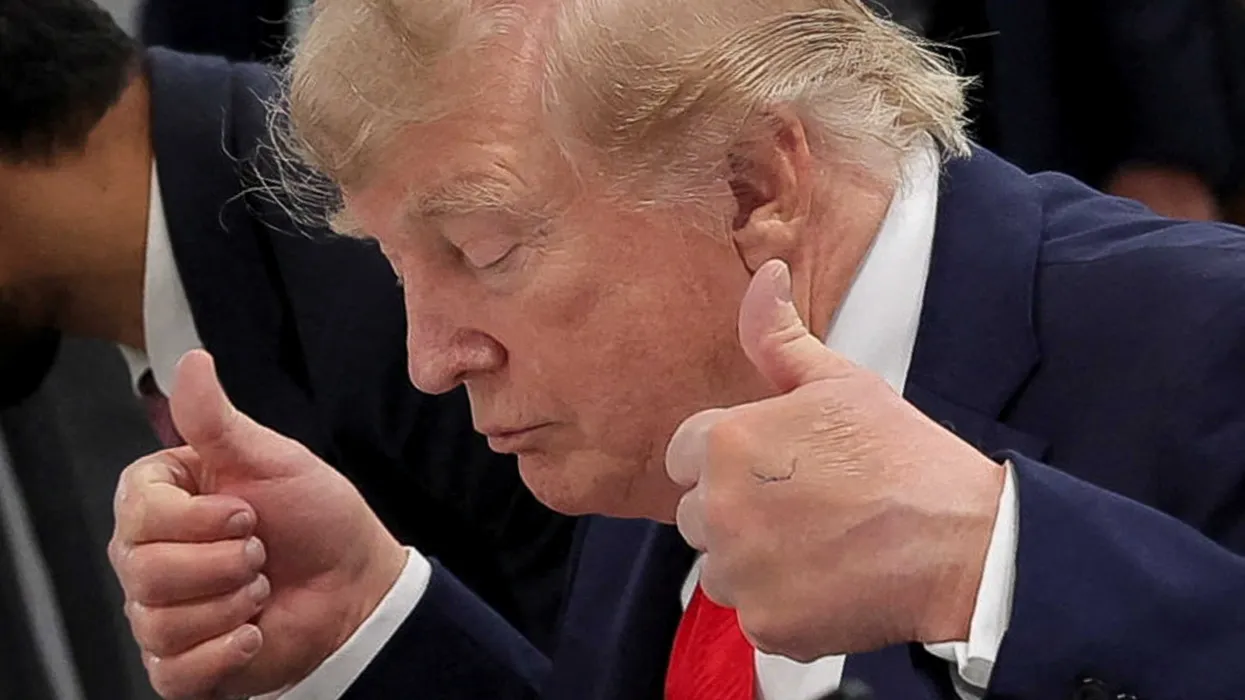
A geriatric neurologist says President Donald Trump's increasingly erratic conduct may not be fully explained by cognitive decline, pointing instead to the disappearance of guardrails around him and to medical factors that remain unknown because the White House does not release his full medical information.
Dr. Germaine Odenheimer, M.D., a geriatric neurologist and professor emeritus at the University of Oklahoma College of Medicine, made the remarks in a Monday conversation with cult expert Dr. Steven Hassan on his podcast, as reported by Alternet. Hassan, a mental health counselor and author of several books on coercive influence, has spent decades writing and advising on the subject, and the exchange paired that background with Odenheimer's clinical perspective on aging and the brain.
"Lying and behaving has been the same for a really long time," Hassan said. "The difference now is he doesn't have healthy, healthier people around him going, 'you can't say that' or 'you can't do that.'"
As an example, Hassan cited Trump's remark that he pays his "people" a lot of money and that they told him he "shouldn't say this, but I'm going to say it anyway." Trump made the comment during last month's GOP mini-convention in Dallas, shortly before he began "dunking on" Republican Senate candidate Ken Paxton.
Odenheimer said her concerns about Trump's cognitive abilities long predate the current moment, but that his difficulties now seem much worse and more obvious. She cautioned against assuming dementia.
"I've always been concerned about his cognitive abilities long before this," she said. "But they do seem to be much worse or much more obvious. People say, 'Well, then he's got dementia.' Well, that doesn't mean that he has dementia. He might. But they've also — the Supreme Court has taken all the guardrails away. So, he doesn't have anybody telling him what to do. So, we don't know how much of this increase in his, sort of, irrational, unhinged behavior is related to a change in his brain, which is possible. Or it's related to the fact that there are no guardrails anymore."
She added that a mixture of both explanations is also possible. What is certain, Hassan said, is that the guardrails have been "systematically disas over decades."
If Democrats take back the House and Senate, Odenheimer said it is entirely possible that Trump could "interfere." "You can count on it," Hassan cut in.
Hassan also noted Trump's comments from the midterm convention claiming he has been elected three times. Odenheimer connected the remark to the idea that a lie repeated often enough comes to be believed by the person telling it. Hassan said he recently spoke with a neurologist from UCLA who explained that neurons that "fire together, wire together." The adage is a popular summary of a principle first articulated by psychologist Donald Hebb in 1949: connections between neurons strengthen when they are repeatedly active at the same time, which is why repetition can make a claim feel familiar and true to the speaker as well as the audience.
"And it helped me understand the neurological basis for why repeating a lie over and over and over again starts getting believed," he said.
Odenheimer also observed that doctors exist in silos just as voters do, calling it one of her biggest concerns in medicine. She described patients who present with dementia but also have another disorder such as diabetes or thyroid problems; doctors would refer them to a dementia clinic, she said, when their impairment may actually stem from not following their health plan or medication directions.
On Trump specifically, she said people often point to his gaffes and misspeaking, but "he doesn't always do that. Which makes me think there's something that's making him worse, and that's usually a medication, or, you know, kidney failure or whatever. He's probably not in kidney failure. It's probably medication is most likely but he might be taking something that doesn't allow him to think as clearly and so he misspeaks."
Odenheimer said she watched Trump's GOP speech, which she described as incredibly long and rambling, but nothing stood out to her as a specific language-skill problem. Older adults, she noted, become more "susceptible to the cognitive changes of medications than we were when we were younger," and his unsteady gait could also stem from medication. The concern is well established in geriatrics: the American Geriatrics Society's Beers Criteria, a widely used reference that is updated periodically, flags classes of medication that can affect cognition, balance, and gait in older adults because aging bodies metabolize drugs differently.
But because the White House does not release all of his medical information, there is really no way of knowing. That gap is notable at a moment when modern presidents have customarily undergone annual physical exams and released summaries from the White House physician, making the depth of a sitting president's disclosed health record a recurring point of public interest.
"So, there are a lot of unknowns. We don't know what meds he's on. We don't know his laboratory study results. We don't know the results of his cognitive testing, but it is suggestive that if they keep repeating cognitive testing on him, somebody's worried about him," she said.
Until medications, lab results, or cognitive testing are made public, the question Odenheimer and Hassan keep returning to — how much of the behavior reflects a changing brain and how much reflects a changed environment — remains open, and any future disclosure would be the clearest place to look for answers.

