Trump hits 93-year approval low in longtime GOP stronghold of Kansas, CNN data analyst says
Key Takeaways
- •Trump's net approval in Kansas now stands at 15 points underwater, a 20-point decline from the plus-5 he held at the same point in his first term.
- •CNN's Harry Enten said Trump is 16 points less popular than any other Republican president at the same stage this century and the least popular since Herbert Hoover.
- •A New York Times/Siena University poll shows Democrat Adam Hamilton tied with Republican Sen. Roger Marshall at 45 percent, with Libertarian David Graham at 3 percent.
- •Senate Republicans are directing roughly $14 million into Kansas, an outlay signaling the party considers the seat genuinely in play.
- •Kansas has not elected a Democrat in 94 years and last saw its Senate seat change hands in 1932, though 17 states are now more Republican than Kansas, up from seven during the 2004 and 2008 cycles.
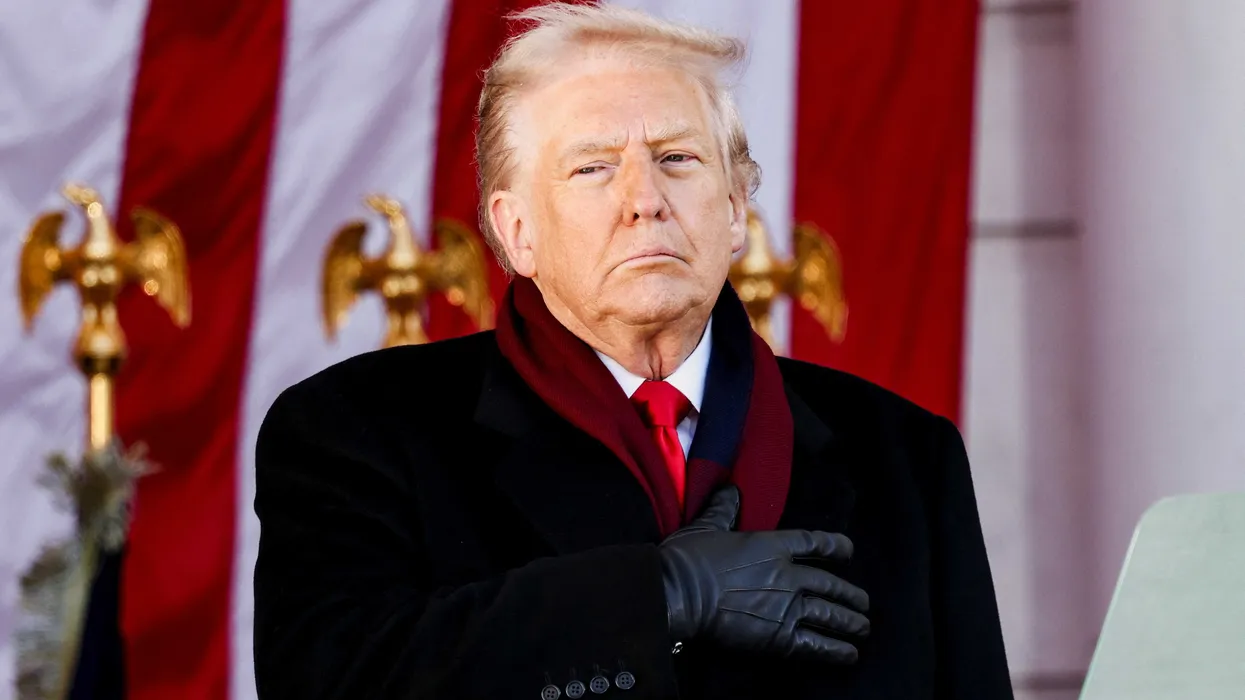
President Donald Trump's approval rating in Kansas, a longtime Republican stronghold, has fallen to a level not seen in roughly 93 years, and the GOP is now shifting PAC money to defend a Senate seat it has not lost since 1932.
CNN chief data analyst Harry Enten said Monday that Trump is now 15 points underwater in Kansas — net approval being the gap between the share of voters who approve of a president and the share who disapprove — a dramatic reversal from the same point in his first term, when his net approval rating in the state stood at plus 5, a 20-point swing away from the president.
Enten added that Trump is currently 16 points less popular than any other Republican president at the same stage of a presidency this century.
"I would say Donald Trump is probably at this point in his term the least popular Republican president since Herbert Hoover," Enten said. Hoover left office in 1933, after a presidency defined by the Great Depression, and the 1932 election that ended it swept Democrats into control of Congress — the same cycle in which Kansas' Senate seat last changed hands.
The numbers carry weight because Kansas has unexpectedly emerged as one of the most competitive Senate races in the country. A New York Times/Siena University poll released Friday showed Democratic candidate Adam Hamilton and Republican Sen. Roger Marshall tied at 45 percent, with Libertarian David Graham at 3 percent. Stakes like that travel well beyond state lines: Senate majorities are frequently decided by a seat or two, which is why both parties watch closely when deep-red states drift into play. The historic figures underscore how deep-red Kansas has long been: the state has not elected a Democrat in 94 years.
Hamilton, a longtime pastor who founded the Church of the Resurrection in the Kansas City area, also recorded a net favorability rating of plus 12 in the Times/Siena polling — the margin between voters viewing him favorably versus unfavorably — a figure Enten described as the strongest favorability rating among candidates tested in major Senate contests.
Republicans have responded by spending millions on a race that normally attracts far less attention. CNN anchor John Berman noted that Senate Republicans are directing roughly $14 million into Kansas to counter Hamilton. Party committees typically reserve their resources for seats they consider genuinely in play, so an outlay of that size is itself a measure of how seriously the race is now being taken.
Enten also observed that Kansas has gradually become less Republican relative to the rest of the country. Based on the average of the past two presidential elections, 17 states are now more Republican than Kansas. During the 2004 and 2008 election cycles, only seven were.
"It's still leaning Republican, but not anywhere near as Republican as it once was," Enten said.
Those shifts, combined with Trump's weak numbers and Hamilton's popularity, have produced an unusual situation in a state Republicans have dominated in Senate elections for generations.
"This to me is potentially a mathematical perfect storm," Enten said.
The result, he added, could be a Kansas Senate race unlike anything the state has seen in nearly a century. What to watch from here: whether subsequent polling bears out Friday's tie, and whether the multimillion-dollar Republican investment moves numbers in a contest that normally receives little national attention.
Primary source: Alternet · Referenced X post: https://x.com/BrittanyinTexas/status/2107126738694410504

