Trump's Hour-Long CNBC Call-In Raises Alarms Over Jensen Huang Reinstatement Comments
Key Takeaways
- •Trump spent roughly an hour of a CNBC call-in interview discussing Jensen Huang's reinstatement as Nvidia CEO but would not confirm or deny whether he demanded the move from the board.
- •Nvidia's board stated it received input from senior levels of the US government and was confident the reinstatement posed no national security risk, without naming the officials consulted.
- •Stephanie Ruhle described the situation as 'effectively state-run capitalism,' arguing that no free market system involves a president overriding a company's board to reinstate a CEO.
- •Trump warned that China could attempt to hire Huang, suggesting he might work for a company like Huawei and produce chips there, while calling Huang a 'genius' who 'went through hell.'
- •Trump dismissed reports that Huang had an affair with a spy in contact with China's top intelligence agency, saying 'who isn't in contact with them?'
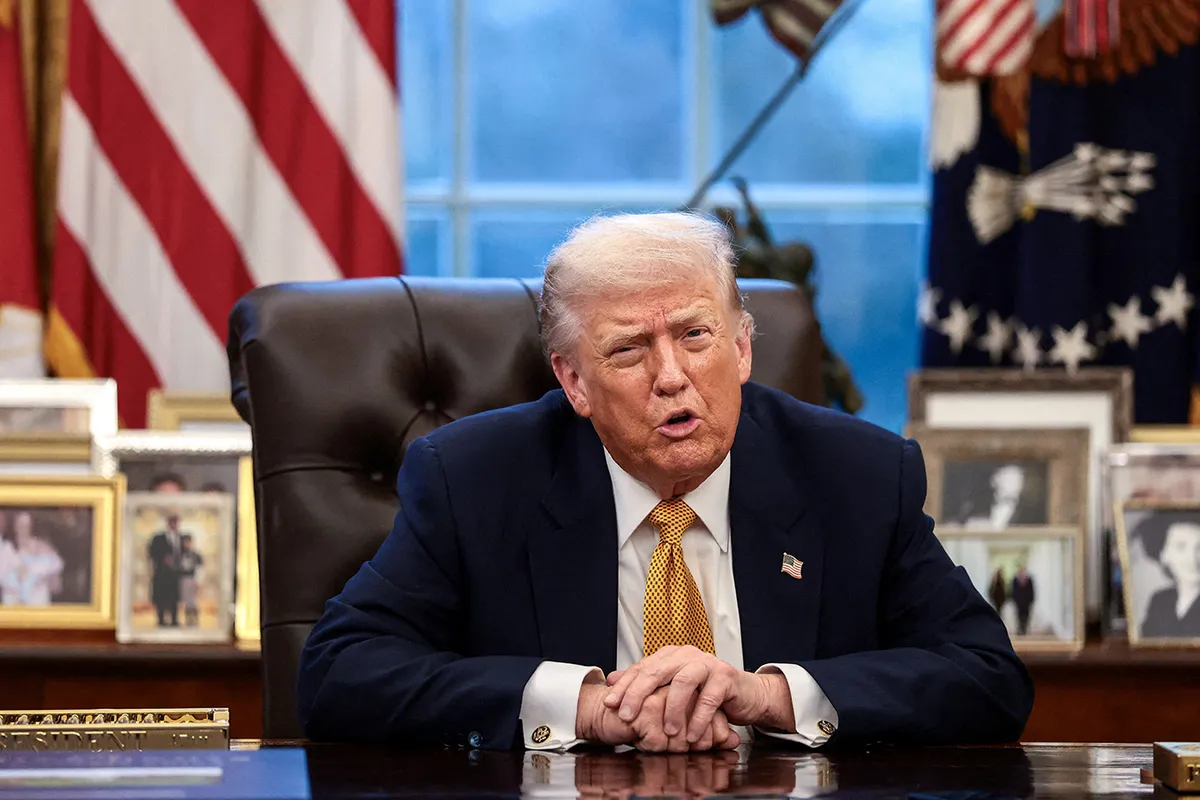
President Donald Trump devoted roughly an hour of a call-in interview with CNBC to the reinstatement of his friend Jensen Huang as chief executive of Nvidia, a freewheeling conversation that drew immediate reaction from journalists, including posts from Meredith McGraw and Josh Wingrove.
Huang co-founded Nvidia in 1993, and the company's chips anchor AI data centers worldwide — a position that has made Nvidia a focal point of the US-China technology rivalry hanging over this story.
Among the more startling comments, Trump would not confirm or deny whether he called the board meeting and demanded Huang's reinstatement. While dismissive of the affair reports (related coverage), he also said that he never asked China's Xi Jinping whether Huang was a Chinese spy.
CNN reporter Hadas Gold commented, "Trump is talking in this CNBC interview like HE reinstated Jensen Huang as CEO of Nvidia."
MS NOW's Stephanie Ruhle called the arrangement "effectively state-run capitalism."
"I am not familiar with any kind of free market capitalism, where a government, first of all, takes a stake in a company," she said. "The government then loses regulations so that company can do more business and make more money overseas with our adversary. And then when a CEO violates company policy and potentially our national security — I'm not familiar with any free market, capitalistic society where a president overrides a company's board of directors and insists that that CEO is reinstated."
Her critique points to a tension now running through the semiconductor sector: governments in Washington and Beijing treat advanced chips as strategic assets, while public-company boards have traditionally been the authority on a chief executive's fate.
She noted that the board's statement made clear that its discussions were with "some of the highest levels of our government," who claimed "that there has been no national security breach."
"They're basically covering their own tokens and saying, it's not us," said Ruhle. "The president told us this, and he told us this in this interview with CNBC. He says, indirectly and directly, I spoke to this board; it was my intervention. And he showed that there are two very separate sets of rules in this country. If you are one of a very small group of tech giants, you get to operate in a completely different set of rules. And this president has shown us the extreme lengths he will go to push the market higher."
She also said "this thing ain't over."
CNN's Natasha Bertrand quoted from one report: "In the process of reaching its decision, the Board received input from senior levels of the United States government, and based on that input, the Board is confident that Mr. Huang's reinstatement poses no national security risk." She posted her own one-word reaction: "wow." Contributing editor Jim Roberts reposted it, saying, "But her emails…"
The statement, as quoted, did not name which officials the board consulted, leaving open who inside the government weighed in — and whether that will ever be disclosed.
Political reporter Jake Lahut also remarked, "Another very odd comment from Trump in this CNBC call-in was about how he was worried China might hire Jensen Huang, who was born in Taiwan."
Trump said in the interview (video): "Jensen could take the next plane to China, and I can guarantee you they would give him whatever he wanted. And then they would automatically have all of the thing."
Huawei, the Chinese chipmaker he referenced, has long been subject to US export restrictions — part of a web of controls that limits where Nvidia's most advanced chips can be sold.
Trump described Huang as a "genius" and said the United States must "protest our geniuses" because "we don't have enough of them. And frankly, he went through hell." He said he does not think it is "bad" to speak to China, noting that he does it all the time.
"Then he later goes on in that same interview, saying he could see a scenario in which President Xi and China tried to hire Jensen Huang away, and Huang, because he was wronged by the United States, went and worked for a company like Huawei and produced chips there," said reporter Kristen Holmes. "I mean, this is so specific as President Trump kind of rattles through his stream of thought when it comes to Nvidia and the events that have played out over the last two weeks."
Holmes added that it is clear Trump is downplaying the reports that Huang had an affair with a spy who was in direct contact with the top Chinese spy agency. "And in fact, when asked about it directly, he says, 'Well, who isn't in contact with them? I'm in contact with them,'" she continued, noting that Trump played off the fact that he had just been in China and that China is "in everyone's business, including his."
"So who knows if this is actually a big deal or not," she said. "He has continued to downplay all of this as he has worked behind the scenes, as we know now, to try and get Jensen Huang reinstated. It is really quite something to see this intertwining right now of business and the administration."

