Trump Joins Allies in Claiming 2026 Midterms Were 'Rigged' After Democratic Sweep
Key Takeaways
- •President Donald Trump claimed on Truth Social that the 2026 midterm results could not be accurate, citing preelection polls, large early voting 'dumps,' and electronic voting machines.
- •On The Bulwark's 'MAGA Monday,' Sam Stein said the surveys' only real problem was severely undercounting the Democratic vote, and that a substantial blue wave would have materialized even without that error.
- •Will Sommer said Trump's focus on 'the machines' revives the unsubstantiated 2020 voting-equipment claims that CISA and election officials rejected, calling the 2020 election the most secure in American history.
- •MyPillow founder Mike Lindell, a prominent promoter of unsubstantiated 2020 fraud claims, was scheduled to deliver a 7 p.m. EST 'national address' asserting the election was stolen.
- •Sommer cautioned that the timeline is unfinished, noting the Jan. 6, 2021 Capitol attack followed more than a month of Trump's rejected 2020 fraud claims, with incoming members of Congress set to be sworn in on Jan. 3.
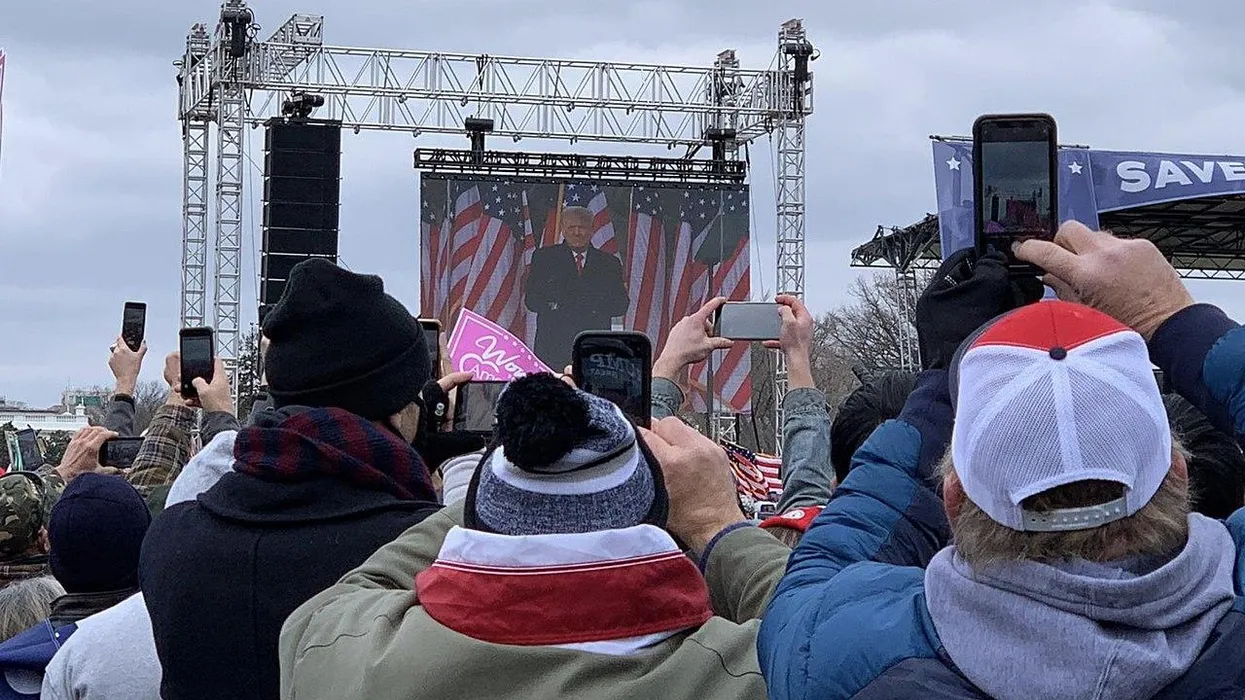
Nearly a week after Democrats swept the 2026 midterm elections, allies of President Donald Trump's "MAGA" (Make America Great Again) movement have begun asserting that the results were rigged — and on Monday morning, Trump himself joined in.
Over the weekend, the president's allies spread election-denial conspiracy theories across social media. Trump amplified those claims on Monday, arguing that there was no way the results could be accurate because preelection polling had shown him to be widely popular.
"Does anybody really believe that this 'Election' was honest. How could the Polls be so wrong??? Some early voting 'dumps' were so large that it was impossible to win, no matter how many people went to vote," Trump wrote on Truth Social. "It's all about the machines, which are far more important than the voter! President DJT"
Taken at face value, the allegation would mean that two elections overseen by Trump were "rigged."
On The Bulwark's "MAGA Monday" program, journalists Sam Stein and Will Sommer discussed the conspiracy theories, which they observed "have been a little slow to get off the ground."
Responding to Trump's complaints about the polls, Stein said the only real problem with the surveys was that they severely undercounted the Democratic vote — and that even without that error, a substantial blue wave would still have materialized. Sommer said Trump's reference to "the machines" appears to revive the notion that electronic voting equipment is far "more important than voters." Allegations centered on voting equipment also defined the post-2020 effort: in November 2020, the Cybersecurity and Infrastructure Security Agency joined state and local election officials in a joint statement calling that election "the most secure in American history" and saying there was "no evidence that any voting system deleted or lost votes."
"That's music to Mike Lindell's ears," Sommer said, noting that Lindell — the MyPillow founder who became one of the most prominent promoters of unsubstantiated 2020 fraud claims — was scheduled to deliver a "national address" at 7 p.m. EST claiming the election had been stolen.
"Jesus Christ, man, I can't believe we're doing this s—— again," Stein said.
Both commentators also noted that some Republicans had initially claimed credit for not disputing the outcome. Former Trump press secretary Sean Spicer wrote on X, "Tuesday was not a good night for Republicans. It's been 4 days and no protests, riots and vandalism." Stephen Richer, the former Republican recorder of Arizona's Maricopa County — a jurisdiction that became a focal point of unfounded 2020 election-fraud claims — replied, "Congrats on not doing J6 this time! Really impressive!"
Two days after that exchange, Trump claimed the election was rigged.
"It's like the lowest bar. You cleared it, Sean. Congrats," Stein said, his voice dripping with sarcasm. "Except now, apparently, Trump's not accepting."
Sommer cautioned that the timeline is not yet complete: it is not January, and the Jan. 6, 2021, Capitol attack came only after more than a month of Trump's claims that the 2020 election had been stolen from him. Those 2020 claims were rejected by courts that dismissed scores of post-election challenges, and then-Attorney General William Barr said in December 2020 that the Justice Department had not seen fraud on a scale that could have changed the outcome. "So, like, the arc has not finished," he added. "You know, you can't say we didn't do January 6th until they're sworn in." Members of the incoming Congress are scheduled to be sworn in on Jan. 3.
Claims of voter fraud are now on the rise, and Sommer said the effort is only now "getting going." Stein suggested the week-long delay stemmed from MAGA supporters being "lost" while Trump refrained from making such claims for a week.

