INEC Bans Web Cameras for Voter Registration After AI-Generated Photos Enter Voter Register
Key Takeaways
- •INEC banned web cameras in voter registration and ordered their replacement with an app-based camera that prevents photographs from being imported from outside sources.
- •The Commission removed 1,609,553 records from the voters' register and identified 54 staff across 10 states as complicit in registration irregularities.
- •INEC traced the breach to compromised passwords, with some of the access coming from authorised persons.
- •Nigeria's presidential election is scheduled for January 16, 2027, and the Final Register is due for publication on December 15.
- •INEC approved an AI governance framework developed with the International Foundation for Electoral Systems and the UK High Commission as part of a wider review of its ICT and cybersecurity arrangements ahead of the polls.
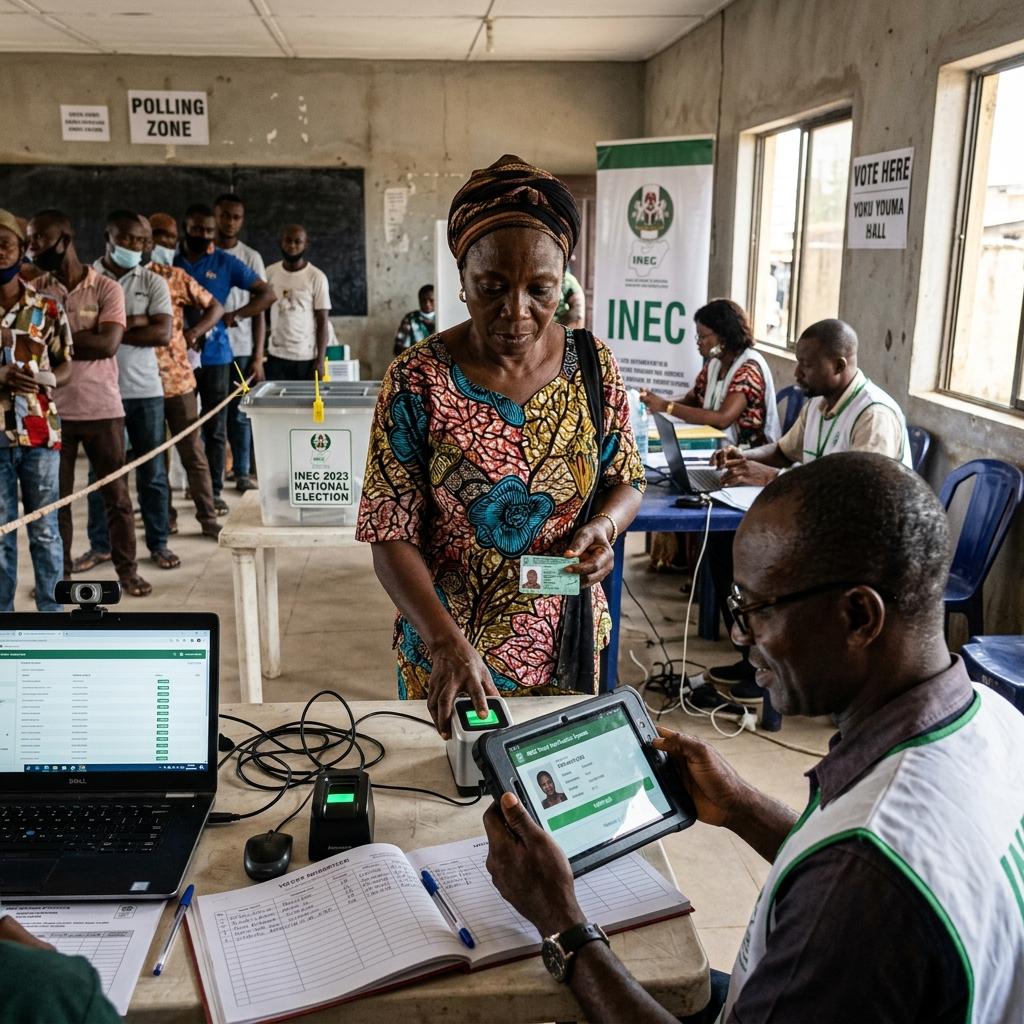
Nigeria's Independent National Electoral Commission (INEC) has banned the use of web cameras in voter registration after admitting that AI-generated pictures found their way into the national register of voters. The electoral body has directed its Director of Information and Communication Technology (ICT) to replace the devices with an app-based camera that blocks photographs from being imported into the system from outside sources.
Chairman Professor Joash Amupitan announced the change at a press conference in Abuja on Monday, where he also traced the breach to compromised passwords, some of them used with authority. The announcement came the same day the Commission removed 1,609,553 records from the register and identified 54 staff across 10 states as complicit in registration irregularities, with the presidential election now fixed for January 16, 2027. Because that register will underpin the 2027 polls, the integrity of its entries now sits at the centre of the Commission's election preparations. The Commission published the announcements through its official channels, including its X (Twitter) account.
How the pictures got in, according to INEC
Professor Amupitan disclosed that the Commission had traced the access points used to bring the AI-generated photographs into the register. He explained that it “takes just one person to compromise the password.”
“Some of that access came from authorised persons,” he added. “Some of those things are given in authority, and when that is done, you know what AI can do,” he noted.
The fix, as he described it, is to stop treating the camera as an open door. “It is what is on the app that will take picture,” he stressed, adding that officials should not “use any URL and begin to import pictures here and there.”
A problem that surfaced in October
The issue first surfaced when the preliminary register went online in October, and screenshots of suspicious photographs triggered backlash on social media. The Commission acknowledged the concerns the following day, and later attributed some of the irregularities to its own registration officers. Notably, the entries had passed through the Commission's capture process into a published register before public scrutiny flagged them.
The disclosures drew calls for answers. The Socio-Economic Rights and Accountability Project (SERAP) urged an independent investigation, while former Vice President Atiku Abubakar asked INEC to explain how the photos entered the register, who submitted them, and what verification they passed.
The staff link and what remains unclear
The Commission's technical assessment found that some registration personnel deliberately circumvented established procedures and misused provisions meant for exceptional cases, including the registration of persons with disabilities. According to the chairman, 54 persons “have been identified as complicit” and face disciplinary action, including possible prosecution.
In the remarks reported so far, the Commission has not disclosed how many photographs were AI-generated or how many credentials were compromised. It has also not stated whether the 54 staff are the same people behind the AI-generated images. Those open questions leave the scale of the problem unquantified heading into the final stretch before the register is finalised.
Asked about the staff involved, Professor Amupitan confirmed that all of them work for the Commission. “We are not covering anything,” he stated, adding that security agencies are running their own investigations.
The Commission described the recent incidents as an early warning. It approved an AI governance framework on Monday, developed with the International Foundation for Electoral Systems (IFES) and the UK High Commission, and reviewed its ICT and cybersecurity arrangements ahead of the polls. The chairman added that some of the measures being taken are ones “we cannot begin to mention here.” The combination — closing the camera as an import route while codifying rules for AI use with external partners — ties the technical fix to a wider governance review ahead of the polls.
The clean-up, however, covers only part of the problem. Professor Amupitan warned that cleaning the 2025/2026 registration exercise alone “will not solve the problem identified,” since duplications from the 2011 to 2023 register will carry over into the Final Register, due for publication on December 15. In the meantime, the markers to watch include the outcomes of the security agencies' investigations, the disciplinary action facing the 54 identified staff, and whether the Commission quantifies the AI-generated photographs it has acknowledged.

