Trump's Renewed Canada Trade War Puts Republican Senate Candidates in Maine and Michigan on the Defensive
Key Takeaways
- •Trade talks between the United States and Canada have broken down, leading Trump to announce new tariffs on billions of dollars of Canadian goods, with Canada retaliating in kind.
- •Maine and Michigan economies are particularly exposed to the trade war: Michigan's auto sector depends on cross-border parts flows, while Maine's lumber, paper, and agricultural industries rely on Canadian supply chains and shoppers.
- •Sen. Susan Collins has called on Trump to keep negotiating with Canada, describing the country as America's best friend, as she faces Democrat Troy Jackson in November.
- •Michigan GOP Senate nominee Mike Rogers is expected to face intense criticism from Democrat Abdul El-Sayed over his past support for Trump's tariff agenda.
- •Slate's Jim Newell argues Trump's trade war has made life harder for Republicans in swing-state Senate races, leaving observers unsure whom the president wants to win this fall.
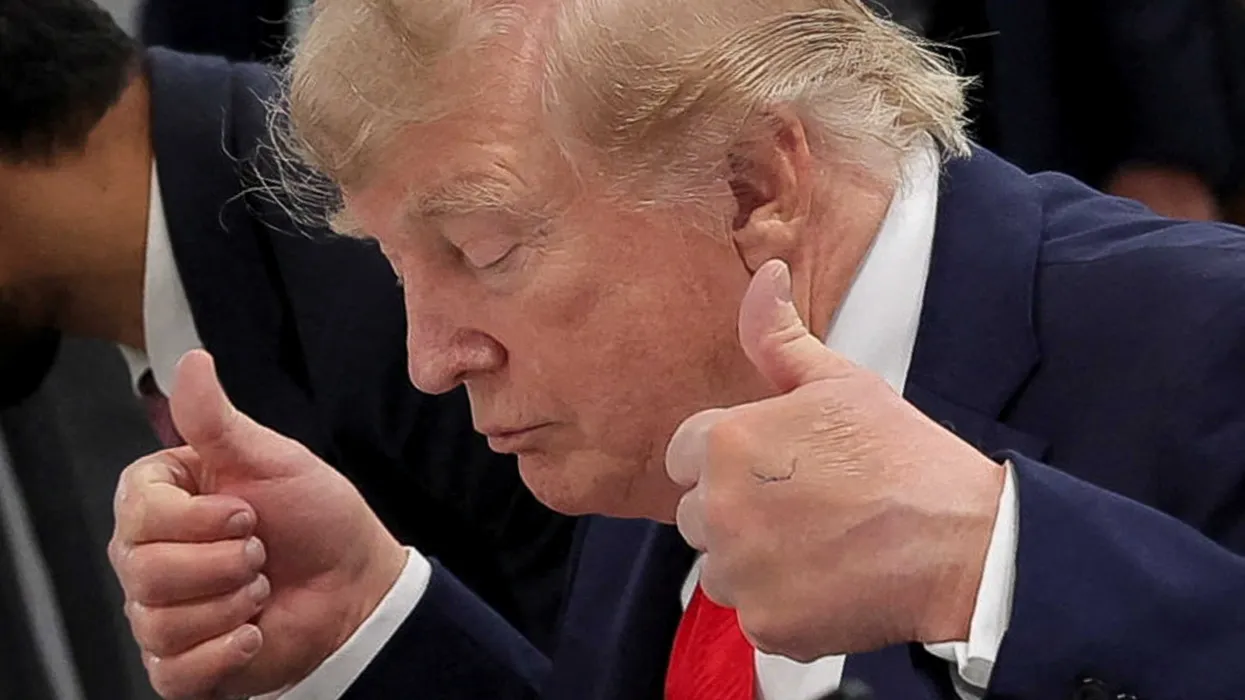
With the midterm elections approaching, Republicans are eager to score wins with voters, but as Slate argued in a new piece, President Donald Trump keeps undermining those prospects, continuing to behave as though he wants his own party to lose.
Writing for the outlet this weekend, senior politics writer Jim Newell suggested Republicans might have had room to gain much-needed ground in two vital swing-state Senate races. In Maine, incumbent GOP Sen. Susan Collins faces Democrat Troy Jackson, who entered the race only after the previous nominee dropped out amid sexual assault allegations. In Michigan, GOP nominee Mike Rogers is waging an uphill battle against Democrat Abdul El-Sayed, whose campaign has become a lightning rod for intra-party disputes over progressive versus moderate candidates.
Those should have been favorable circumstances for Republicans seeking momentum with the Senate majority hanging in the balance. But as Newell detailed, Trump crashed the party by reigniting his widely criticized trade war with Canada, imposing new tariffs on America's closest trading partner—a country with particularly close economic ties to Maine and Michigan. Canada has long ranked among the top two U.S. trading partners, with hundreds of billions of dollars in annual two-way goods trade, and its economies are especially interwoven with the border states named in the piece: Michigan's auto sector relies on parts and materials that cross the border repeatedly during production, while Maine's lumber, paper, and agricultural industries have historically depended on Canadian supply chains and Canadian shoppers. That makes tariff-driven price increases a more direct pocketbook issue in those states than in the country at large.
"Talks with Canada on a trade agreement have broken down, which means the trade war is back on," Newell wrote. "Trump has announced new tariffs on billions of dollars of Canadian goods, and Canada has responded in kind. The breakdown features the usual Trumpian accoutrements: a personal spat with Ontario Premier Doug Ford, whom Trump has compared unfavorably to the Canadian politician's late brother, and whose trash talk has prompted Trump to pretend to rename Lake Ontario to 'Lake America.' Each day we live through this era, we get vastly dumber."
He added: "As dumb as it all is, the consequences are quite real economically—and politically, for Trump's own (theoretical) team. It's not just that this latest trade war will raise costs at a time when 'high costs' are the biggest political issue in the country. It's going to raise costs particularly in states that are either bordering or in close proximity to Canada and rely on trade with it. States like, we don't know, Michigan, Maine, Ohio, New Hampshire, and Alaska. Anything going on in those states in November? Any Senate races, by chance?"
Facing the prospect of economic damage to her state—and political damage to her reelection campaign—Collins has called on Trump to continue negotiating with Canada, describing the country as "our best friend." Rogers, meanwhile, is expected to face intense attacks over the situation from El-Sayed, given his past support for Trump's tariff agenda. How each candidate handles the distance between Trump's trade policy and their own state's economic interests is likely to shape the closing stretch of both races.
Amid the chaos and uncertainty, Newell questioned whom Trump actually "wants to win" in the midterms.
"In Maine and Michigan especially, this has to be mortifying to Republicans," he explained. "Republican candidates Susan Collins and Mike Rogers have better-than-expected opportunities to win, given the tumult Democrats went through in selecting their nominees. Now Trump has gone out of his way to make their lives much more challenging. Sometimes (regularly), we're genuinely unsure whom the president wants to win this fall."
