Trump's Beef Orders Draw Criticism as Wolf Delisting Move Sparks Conservation Backlash
Key Takeaways
- •Trump signed two beef-related executive orders targeting meatpacker market dominance and directing a review of authorities for restoring mandatory country-of-origin labeling for beef.
- •The orders follow Trump's August move pausing tariffs on 300,000 metric tons of imported beef for 90 days, with cheaper beef expected from Argentina, Brazil, and other countries.
- •Food & Water Watch reported JBS earned $2.4 billion in profit while beef prices rose roughly 23-25% across common cuts.
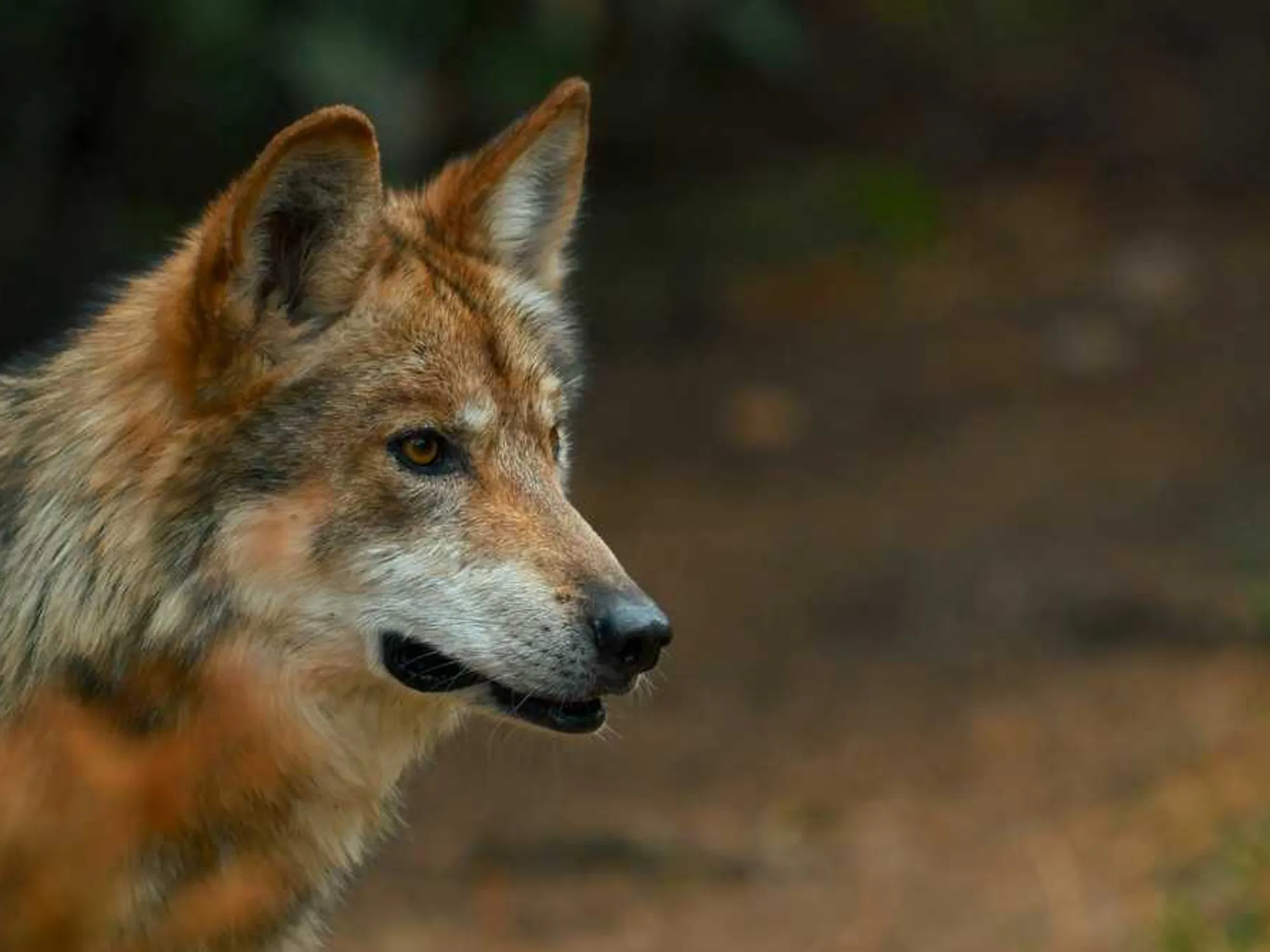
- •One order directs the Interior Secretary to assess delisting or downlisting gray wolves and Mexican gray wolves under the Endangered Species Act and to encourage states to remove state-level protections.
- •Conservation groups, citing only 317 wild Mexican gray wolves, condemned the wolf provisions and pledged court challenges to any weakening of federal protections.
Surrounded by farmers and ranchers in the Oval Office on Friday, President Donald Trump signed a pair of beef-related executive orders—but critics quickly questioned whether the measures will be effective, and warned that one of them could prove lethal for protected wolves.
The president is confronting both high beef prices and the looming midterm elections. After a meeting with Brazilian billionaire Joesley Batista, a key shareholder in JBS, the world's largest meatpacker, Trump last month paused tariffs on 300,000 metric tons of beef for 90 days so it could be sold at a discount. While signing the new orders on Friday, Trump indicated the cheaper beef would be imported from Argentina, Brazil, and "a couple of other places."
According to Politico, Trump's latest orders are aimed at appeasing a US cattle industry angered by the August proclamation, by "cracking down on major meatpackers' dominance of the industry and seeking to implement new labeling standards." However, the outlet noted that "it's not clear whether any of the steps announced Friday will assuage ranchers' concerns or have any impact in the short term, given that most of them would require regulatory changes or congressional action."
Rebecca Wolf, food policy director at Food & Water Watch (FWW), said in a statement that "President Trump is on an apology tour after his deal to flood US markets with foreign-imported beef—it's not working. Today's executive orders will do nothing to reverse the last two years of Trump's disastrous food policy."
"Under his watch, consumer beef prices are at record highs, and ranchers can't make ends meet, all while the multinational meat monopolies profit hand over fist," she stressed.
FWW found last month that while JBS reported $131.7 billion in revenue and $2.4 billion in profit, and fellow industry giant Tyson reported $82.65 billion in revenue and $681 million in profit, "prices are up 23% for choice beef, 24.2% for ground beef, 24.7% for ground chuck, and 25.2% for chuck roast." The reference to meatpacker dominance reflects long-running concern over the concentration of US beef processing, in which a small number of companies—including JBS and Tyson—slaughter the large majority of American cattle, an issue that has drawn federal antitrust scrutiny in recent years.
Wolf also noted that "US agencies charged with protecting market competition sit on the sidelines, made toothless by Trump's reckless job cuts," citing thousands of staff reductions across the Agricultural Marketing Service, the Department of Justice, and the Federal Trade Commission, along with threats to slash funding for the Department of Agriculture (USDA) Packers and Stockyards Division.
Since Congress repealed mandatory country-of-origin labeling (MCOOL) for beef and pork in 2015, FWW has been among those pushing for its restoration. That repeal followed World Trade Organization rulings that found the US labeling requirement discriminated against Canadian and Mexican livestock, clearing the way for the law's removal. Trump's order directs Secretary of Agriculture Brooke Rollins, in consultation with United States Trade Representative Jamieson Greer, to "review all statutory and regulatory authorities that may permit the establishment" of MCOOL for beef products, then issue or amend regulations as permitted by law and develop legislative recommendations.
As a diverse coalition that includes FWW circulates a "Label Our Beef" petition, Wolf said Friday that "it is clearer than ever that Congress must heed popular demand and restore mandatory country-of-origin labeling to give American producers an even playing field. And Trump must put his money where his mouth is and fund antitrust and fair trade enforcement to truly help American families and ranchers."
While FWW declared that "Trump's beef executive orders won't help consumers or ranchers," Angela Huffman, president and CEO of Farm Action, was more diplomatic, welcoming the language on MCOOL, meat processing, and Packers and Stockyards Act enforcement.
"These actions show the administration is listening to problems farmers and ranchers have raised for years, and we appreciate that," Huffman said. "They move in the right direction, but stop short of the stronger reforms independent producers need."
Farm Action supports legislation to restore MCOOL for beef as well as Packers and Stockyards Act enforcement, but has argued the latter "should be paired with stronger producer protections" and urged USDA "to reverse its planned rescission of the Inclusive Competition and Market Integrity rule, which would protect producers against undue prejudice, unjust discrimination, retaliation, and deceptive practices."
As for potential harm from the orders, one of them directs Secretary of the Interior Doug Burgum to "make a determination as to whether the gray wolf and the Mexican wolf have met the recovery criteria for delisting or downlisting under the Endangered Species Act (ESA) and, if he determines that the recovery criteria has been met," begin the process to end protections. Gray wolves in the contiguous United States have been the subject of repeated delisting efforts and legal battles: federal protections were removed and then restored by courts multiple times over the past two decades, with Congress itself delisting wolves in Montana and Idaho and portions of surrounding states in 2011.
Beyond working with other officials on a legislative recommendation to strip federal protections from wolves, Trump told Burgum to "engage with states to encourage them to delist gray wolves and Mexican wolves from any state-specific lists of protected species and to revise their standards" for killing the animals "to assist ranchers in combating predation."
During an Oval Office exchange, Trump falsely suggested that ranchers can now shoot protected wolves.
https://x.com/Acyn/status/2095952065524851004?s=20
Kitty Block, president and CEO of Humane World for Animals, responded Friday that "the war on wolves needs to end, not escalate. They remain absent from much of their historic range and vulnerable to the same cruel trophy hunting, recreational trapping, bounties, and other relentless killing that nearly wiped them out of the lower 48 states. Rolling back federal protections now—or setting that process in motion—would jeopardize decades of recovery and open the door for brutal killing."
"Gray wolves are essential to healthy ecosystems, and decisions about their survival should be based on science, not political favors to farmers and ranchers whose livelihoods are threatened not by wolves but by tone-deaf global trade policies," she added.
Advocates at the Center for Biological Diversity, Grand Canyon Wolf Recovery Project, Sierra Club Grand Canyon Chapter, Western Watersheds Project, WildEarth Guardians, Wildlife for All, and Wolf Conservation Center also condemned the order's wolf language.
"This is a huge distraction to placate a handful of ranchers and make them believe that wolves are a greater threat than President Trump's own policies," said Greta Anderson, deputy director of Western Watersheds Project. "The impact of wolves on the livestock industry [pales] in comparison to the impacts of recent trade agreements and the reality of ranching in the arid West under changing climate conditions."
Claire Musser, executive director of the Grand Canyon Wolf Recovery Project, emphasized that "the Mexican gray wolf is not recovered simply because the population has grown... With just 317 wolves in the wild and a population still facing serious genetic challenges, weakening federal protections now would put decades of recovery work at risk. Decisions about the future of lobos must be based on the best available science and what these wolves need for long-term recovery, not political pressure." The Mexican gray wolf was nearly eliminated from the wild by the mid-20th century and was listed under the ESA in 1976, with today's wild population descending from a small number of wolves captured for a federally managed recovery breeding program.
Arguing that the wolves "desperately need more care and less persecution," Michael Robinson, a senior conservation advocate at the Center for Biological Diversity, promised that "we're prepared to prove in court that downlisting Mexican wolves and a steep increase in killings would not only be cruel but also deeply unwise and illegal."
