Trump's 'Becocked' Comment During Federal Reserve Interview Sparks Linguistic Debate
Key Takeaways
- •President Trump used the obscure term "becocked" to describe the Federal Reserve during a Punchbowl interview with Jake Sherman.
- •The interview addressed whether newly appointed Fed Chair Kevin Warsh should refrain from raising interest rates in the period before the election.
- •Several journalists and analysts suggested Trump may have intended to use the Yiddish word "fakakta," which colloquially means something is broken or nonsensical.
- •Trump expressed frustration that strong economic indicators now trigger market expectations of higher interest rates rather than lower borrowing costs.
- •Trump has a documented history of publicly commenting on and criticizing the Federal Reserve's monetary policy decisions.
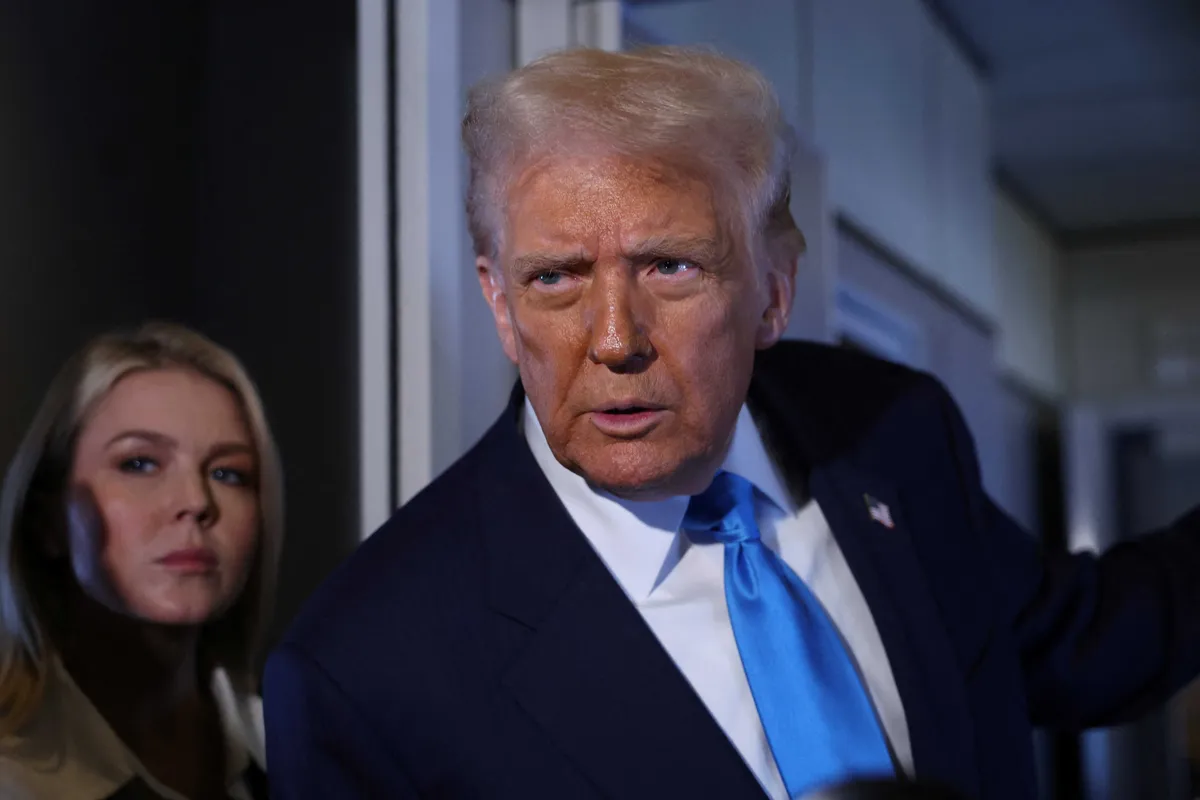
President Donald Trump drew widespread attention on Friday morning when he used the obscure word "becocked" while expressing frustration with the Federal Reserve, sending journalists and analysts scrambling to determine what he meant.
The moment occurred during a sit-down interview with Punchbowl's Jake Sherman, who asked Trump whether newly appointed Fed Chair Kevin Warsh should refrain from raising interest rates in the period before the election. The question underscored the politically sensitive nature of Fed rate decisions in election cycles, when even the appearance of monetary policy alignment with a president's preferences can draw scrutiny, given the central bank's statutory mandate to operate independently of political pressure.
After a brief pause, the president responded by characterizing the state of the Federal Reserve as "becocked."
"You know in the old days... if you announced good numbers, interest rates went down because you were better credit," Trump stated. "Makes sense, right? Now you are becocked — now it's all a different thing. If you announce great numbers, everybody is depressed."
Trump appeared to be referencing the conventional logic that stronger economic fundamentals can improve a country's credit profile, potentially lowering borrowing costs. His complaint reflects a broader frustration he has voiced when markets react to robust data by pricing in higher rates rather than lower ones.
The unfamiliar term quickly stumped viewers and prompted reactions across social media and in the press.
"The Fed is now 'becocked?'" asked Bloomberg reporter Annmarie Hordern in a post on X.
The Fed is now "becocked?" pic.twitter.com/hATY7xF4od — Annmarie Hordern (@annmarie) August 7, 2026
Analyst Tommy Christopher, writing for The Jim Acosta Show, suggested that the president may have been reaching for the Yiddish word "fakakta," which colloquially means something is broken, messed up, or nonsensical.
"At first, it seemed like maybe he was just eggcorning the word 'fakakta' (and maybe he was)," Christopher wrote.
Bulwark reporter Sam Stein concurred with that interpretation. "When Trump said 'becocked' ... it was pretty obvious he was searching for 'fakakta' which is yiddish for ridiculous," Stein wrote. "Seriously."
Christopher also offered an alternative explanation, noting that "becocked" is an archaic and seldom-used English word with a vulgar meaning. He then remarked: "That's a sadly useful word these days."
The Federal Reserve's monetary policy decisions have long been a subject of public commentary from Trump, who has previously criticized the central bank over interest rate levels. The president's choice of Fed Chair, Kevin Warsh, was appointed amid ongoing debate over the direction of U.S. monetary policy and its potential economic and political implications.

