A 100-Year-Old Memoir and a 33% Approval Rating: Columnist D. Earl Stephens Predicts a Democratic Sweep in November
Key Takeaways
- •Stephens says a Reuters/Ipsos poll shows Trump with an all-time low 33 percent approval rating.
- •He argues Trump’s continued support reflects how difficult it can be for people to abandon a political leader even after widespread criticism.
- •The column centers on Michael Blumenthal, who escaped Nazi Germany in 1939, later served in the Kennedy and Carter administrations, and became Treasury secretary under Carter.
- •Stephens says the 2026 midterm elections are 76 days away and could be a critical opportunity to resist Trump and his allies.
- •He predicts Democrats will win major gains in Congress, governorships, and state and local contests despite Republican gerrymandering and voter suppression efforts.
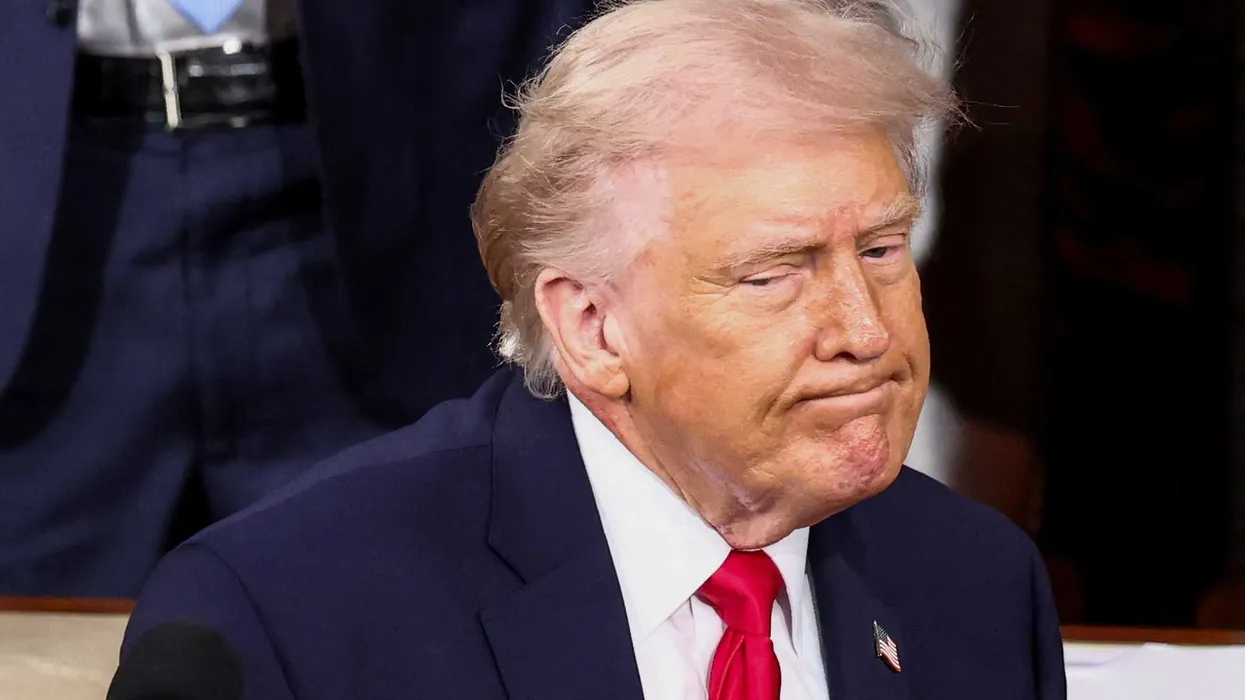
Political polls, like rising prices, are impossible to avoid right now, and veteran journalist D. Earl Stephens concedes he is as sick and tired of both as his readers. But while those escalating prices “do nothing but break our budgets,” he writes in a new Alternet column, polls still offer a barometer of how the American electorate is thinking about things — and they “tend to be more accurate than we generally want to admit.”
That accuracy matters especially this year, Stephens argues, as a “wildly unpopular” Donald Trump continues to overstate his sinking popularity to justify his attack on America by mitigating the importance and accuracy of U.S. elections — “like so many dangerous dictators in history have done before him.”
The column's jumping-off point is the latest Reuters/Ipsos poll, which Stephens posted to what little social media he still uses to scream out loud about things — Bluesky and Notes — showing Trump at an all-time low 33 percent approval rating. Then, he writes, he waited for the predictable responses.
“Namely, HOW can his approvals STILL be that high?!” How can a president fighting multiple, illegal wars with an overextended, suicidal military that is running out of key strategic weapons and moral high ground retain any backing at all? How can a man who drove myriad companies into bankruptcy, and who now presides over what Stephens calls a failing economy — with rising interest rates, soaring inflation, escalating gas and food prices, and skyrocketing government and private debt — win the approval of anybody? “Our air, water, animals and people are under vicious attack,” he writes. “What is there to like?”
Part of the answer, Stephens acknowledges, is arithmetic, painful as it is to accept: Trump won the 2024 election with roughly 49 percent of the vote, so a drop-off of 16 percent since then is significant. But sensing that even that explanation is lacking, he reaches for historical context — specifically, a book his late father pressed on him seven years ago, one year before his death.
His father, Stephens recalls, was the most voracious reader he has ever known, consuming books by the shelf-full — “I bet he read three books a week without breaking a sweat” — so when that man endorsed a book by saying “it was one of the most fascinating things (he'd) ever read,” Stephens knew he was in for a treat.
The book was From Exile to Washington: A Memoir of Leadership on the 20th Century, penned by Michael Blumenthal in 2013. It drew little attention at the time, which Stephens calls “a high crime,” because Blumenthal may be “the greatest, inspirational American success story that most people have never heard of.” As a 13-year-old boy, Blumenthal barely escaped Nazi Germany in 1939, only to end up living in the barbaric Japanese-occupied ghettos of Shanghai just months later. Inside the book, he tells the story of how he ascended from those ghettos to serve in both the Kennedy and Carter administrations — and to serve as Secretary of the Treasury in the latter. That underread arc stretches even further than the memoir's subtitle suggests: Blumenthal went on to spend a decade as chief executive of Burroughs Corporation, then a major American computer maker, and later served as founding director of the Jewish Museum Berlin, which opened in 2001.
The story at the heart of the column dates to 1954, when Blumenthal, by then a rising professor at Princeton University, returned to Germany while putting together a thesis on “Labor-management relations in the German steel industry, 1947-54.” Stephens allows that this may not be “the most fascinating prose in history,” but it makes the point that the man had a lot on his mind, and nobody was going to stop him from fleshing those things out.
Blumenthal was “perhaps the most optimistic man” Stephens has ever come across, yet even he was taken aback by what he found on that return — 15 years after his escape, a decade after Hitler's death, and after the heinous crimes against humanity had been exposed. By Blumenthal's estimates, fully 40 percent of Germany was still under Hitler's spell in the 1950s, and it was understandably hard for him to bear. How, knowing what they did, were they still in the tank for arguably the most gruesome monster in history?
In a personal aside, Stephens admits he stopped reading the book he had been bragging about three-quarters of the way through — something he never does — because it pained him to see all the good this man, and so many others, had done for their country “so willfully destroyed by the worst man on Earth since Hitler.” Reading it in 2017, he concluded that instead of being an aspirational nation, America had “officially become an ignorant, mean and greedy one” in a state of massive regression. “Instead of feeling inspiration, I just felt terribly sad.”
Today, Stephens notes, even measles are making a comeback “in Trump's rapidly diminishing 2026 America” — a line that lands against a verifiable backdrop, after the United States confirmed more than 1,200 measles cases in 2025, the country's worst year for the disease since 1992. He plans to finish the book, he writes, “but only if I can be convinced that America is on its way out of this mess.”
For the columnist, the lesson of Blumenthal's 1950s journey back to Germany is direct: that fully 33 percent of America still supports Trump — “this ghastly, racist lowlife,” in Stephens's words — is hardly surprising. His conclusion is unsparing: “Human beings are easily the most evil living things on the planet.”
As for the way out of the current-day mess, Stephens tells readers they don't need him to explain “how bad and truly scary things are right now,” returning to a theme from an earlier column, “Shut Up and Vote”. Anyone unaware of the situation, he argues, “either aren't paying attention, are dangerously stupid, are willingly ignorant, or most likely all of the above.” Keeping up with what is happening in America takes guts and bravery, he adds, “and I salute anybody who is.”
The midterm elections, he notes, are but 76 days away, and “they really might be our last chance to save ourselves from the authoritarian monster in our White House, and his abhorrent supporters who live among us.” The historical record at least runs in the opposition's direction: the president's party has lost House seats in almost every midterm since World War II, with 1998 and 2002 the lone exceptions, though the magnitude of those losses has varied widely from cycle to cycle. Trump will continue to try to attack these elections, Stephens writes, “because it is what dictators like Hitler do. How much success he will have is open to question.”
Then comes his own forecast: “When November 3rd rolls around Democrats will sweep to historic victories all over the map.” Despite Republicans' anti-American gerrymandering and voter suppression tactics, he writes, the Democratic Party will win a solid majority in the Congress and a slim one in the Senate. They will win important governors' races and make tremendous gains in hundreds and hundreds of state and local races throughout the country. All those victories will not end “the Republican attack on America,” he cautions, but they will be “an important victory in this long war to save America from itself.”
His confidence, he says, rests on the recent record: “I know these things will happen because these things have been happening. There hasn't been one important contested election since 2024 that Democrats have failed to win over Republicans.” Turnout has been robust, he writes, and the energy is with the Left and “blowing hard against the Right.” And “nothing motivates people more than fear, and the smart and decent people in America are scared to death right now.”
“When the November tsunami hits, and all the votes are counted, the battle will have been joined by the real patriots in America, and that's when hope returns,” Stephens writes. And when that hope returns, and “we are giving as well as we have been getting, who knows?” He might even feel optimistic enough to return to reading the rest of Blumenthal's sensational book.
One final tidbit from his research for the piece: Blumenthal is still alive and living in Princeton, New Jersey. He is 100 years old. “If this man, and all he has been through can stick with America that long, then so can we.”
D. Earl Stephens is the author of Toxic Tales: A Caustic Collection of Donald J. Trump's Very Important Letters and finished up a 30-year career in journalism as the Managing Editor of Stars and Stripes, the independent news organization serving the U.S. military community. All of his work can be found at his Substack.
Source: Alternet, published August 20, 2026.

