U.S. Federal Debt Tops $40 Trillion — Here's How It Reaches Household Budgets
Key Takeaways
- •U.S. federal debt has topped $40 trillion for the first time, equivalent to more than $359,000 for every American taxpayer, according to Treasury data.
- •Bank of America chief equity strategist Michael Hartnett forecasts the national debt will climb to $50 trillion in less than three years.
- •Interest payments on the debt now exceed $1 trillion annually, making them one of the federal government's largest single expenses alongside Medicare/Medicaid and Social Security.
- •The Congressional Budget Office projects a deficit of roughly $1.9 trillion for fiscal 2026, as the government spends about $1.33 for every dollar of revenue it collects.
- •The Government Accountability Office warns that if deficits continue, debt will grow about twice as fast as the economy over the next decade and could reach 2.5 times the size of GDP within 30 years.
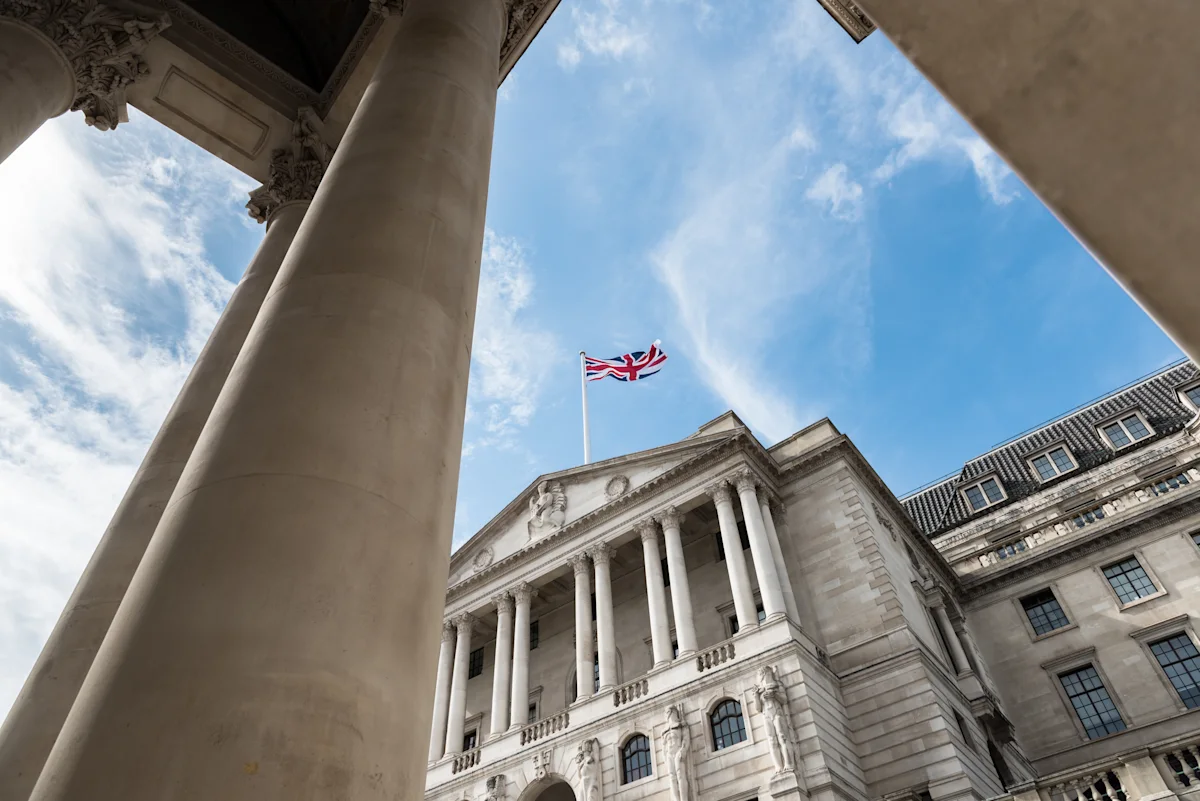
The U.S. government's debt has surpassed $40 trillion, according to the latest data from the Treasury — a staggering figure that works out to more than $359,000 in federal debt for every American taxpayer. Bank of America chief equity strategist Michael Hartnett projects the number will swell to $50 trillion in less than three years. The milestone caps an accelerating climb: the debt did not reach $1 trillion until 1981, crossed $10 trillion in 2008, $20 trillion in 2017 and $30 trillion in early 2022 — meaning the most recent $10 trillion has piled up in just the past few years.
"The problem with $40 trillion is not the number," Stephen Innes, financial markets analyst and former investment bank trader, wrote in an analysis. "Markets have been watching the US debt clock spin higher for years and, for most of that time, the response has been little more than a shrug. Washington spends, Treasury issues, investors absorb it, and the machine keeps moving."
The largest federal budget items are Medicare/Medicaid combined (nearly $2 trillion), Social Security (over $1.6 trillion), national defense ($946 billion) — and interest on the debt (over $1 trillion). Innes believes interest costs will soon begin "eating the budget alive," with the steep trajectory of government debt making the interest expense "one of Washington's largest single outlays." Credit-rating firms have already acted on that trajectory: in May 2025, Moody's stripped the U.S. government of its last remaining AAA rating, following similar moves by S&P Global in 2011 and Fitch in 2023, citing years of growing deficits and interest costs.
The question that follows for markets and households alike is what the milestone means for the stock and bond markets — and for the cost of living.
Spending $1.33 for Every $1 Collected
For fiscal year 2026, the federal government is projected to collect $5.6 trillion in revenue while spending about $7.4 trillion. That results in a deficit of roughly $1.9 trillion, according to the Congressional Budget Office.
"In other words, the government is spending roughly $1.33 for every $1 collected," Colin Slabach, clinical assistant professor at New York University's School of Professional Studies, told Yahoo Finance in an email.
"The good news is that there is still plenty of demand for US government debt," he added. "The problem is that if that changes in the future — and nations like Japan need to sell our debt to stabilize their own currency — it could lead to an overabundance of supply."
That, Slabach said, is when the Treasury would have to pay increasingly higher interest rates to attract investments in the U.S. government. Foreign appetite is central to that equation: Japan holds the largest stock of U.S. Treasuries of any foreign nation, with China second, according to Treasury Department data — leaving the market sensitive to shifts in overseas demand.
The National Debt's Impact on Interest Rates
As swelling government debt pushes bond yields higher, borrowing costs for consumers also rise.
"As the federal government runs a deficit, it must borrow the difference by issuing Treasury securities. Increased supply of U.S. Treasuries pushes yields higher to attract investors. Those yields then serve as a benchmark for interest rates across the economy," the Peter G. Peterson Foundation, a nonpartisan economic think tank, wrote in an economic outlook.
The government itself faces the same arithmetic: because maturing securities must be refinanced at prevailing rates, the average interest rate Treasury pays on its debt has roughly doubled since 2021 as older, lower-yielding bonds roll off.
As rising rates filter through the economy, the cost of living squeezes household budgets even tighter. "Rising borrowing costs mean larger payments on mortgages, car loans, student loans, business loans, and credit card debt," the report noted.
However, it is not only about a higher monthly housing payment, Ethan White, co-founder of White Sands Tax Services in Long Beach, Calif., told Yahoo Finance. When borrowing costs remain high, the "freedom to buy, move, downsize, or respond to a new job or caregiving need" is reduced.
"The debt becomes tangible not when Washington crosses another trillion-dollar milestone, but when an otherwise reasonable life decision no longer fits within the family budget," White said.
Federal Debt Could 'Lower the Standard of Living for All Americans'
In June, the Government Accountability Office (GAO) came to a startling conclusion: at $31.3 trillion, the U.S. debt was roughly equal in size to the country's economy. Within weeks, the debt quickly surpassed the U.S. Gross Domestic Product.
"When the federal government spends more than it collects in revenue, it borrows money to make up that deficit," the GAO report said, adding that while the federal debt would often spike during an economic setback, over the past two decades the deficit had grown even as the economy thrived.
One result: businesses face higher borrowing costs. With less capital for operational costs, wages suffer, "leading to slower wage growth," the GAO reported.
"If nothing is done to reduce deficits each year, we project that debt will grow about twice as fast as the economy over the next 10 years. In 30 years, that debt will likely be 2.5 times the size of the economy," the GAO said. "What that means for you, and future generations, is that today's deficits — if not addressed — could have lasting financial consequences. The federal government's debt could ultimately lower the standard of living for all Americans."
Taxes, Investments, and Debt
A growing deficit could bring another headache to taxpayers. "It could mean higher taxes with no additional services because the taxes will pay the interest on the debt," Slabach said.
Investors are also likely to see continued volatility in the markets.
"Higher rates can weigh on stocks because it makes borrowing more expensive for companies," Robert Brokamp, CFP, a financial advisor with The Motley Fool, told Yahoo Finance. "When rates rise, the prices of current bonds drop since they are now less attractive than new bonds offering higher yields. Because rates have risen in 2026, the overall bond market has dropped approximately 2.5% so far this year. It's not a devastating loss, but also not what many investors expect from 'safe' bonds."
Brokamp recommends keeping any money that may be needed within the next three to five years in higher-yielding cash, money market funds, CDs, or short-term bonds, which are less sensitive to interest-rate moves.
Borrowers should watch debt levels as well.
"If rates remain elevated, carrying $25,000 on a variable-rate credit card or financing a car every few years becomes much more consequential," Zachary Sahar, CPA, managing director at Capital Tax in Walnut Creek, Calif., said in an email. "I'd focus less on predicting Washington and more on reducing expensive variable-rate debt, maintaining liquidity, and avoiding new fixed expenses that only work if rates or economic conditions improve."
For those tracking how the trajectory plays out, the Treasury's quarterly refunding announcements and auction results offer a running signal of how easily the growing supply of debt is being absorbed — demand that feeds directly into the yields used to price mortgages and other consumer borrowing. Congress's periodic debt-ceiling standoffs, which have repeatedly pushed the Treasury to the edge of its borrowing authority, remain another recurring pressure point on that pipeline.
Source: Yahoo Finance

