Trump Claims 99% Republican Approval and Record Rally Crowds as National Polls Tell a Different Story
Key Takeaways
- •Trump asserted on Truth Social that his approval rating among Republican voters is 99 percent and that his midterm rally crowds are five times larger than any previously recorded, without identifying the poll behind the claim.
- •Recent surveys measured his support among Republicans at 83 percent (ABC News/Washington Post/Ipsos), 76 percent (Fox News), and 75 percent (Marquette Law School).
- •The 99 percent figure may trace to CNN analyst Harry Enten's reporting that 99 percent of MAGA Republicans voted for Trump in 2024, a measure distinct from current approval among the broader GOP voting base.
- •A University of Massachusetts poll found that the share of Republicans identifying with the MAGA movement fell from 77 percent to 68 percent in August.
- •Trump's overall approval stood at 32 percent in a September Reuters/Ipsos poll and 34 percent in a New York Times/Siena College survey, the latter the lowest for a president near a midterm election since Harry Truman in 1946.
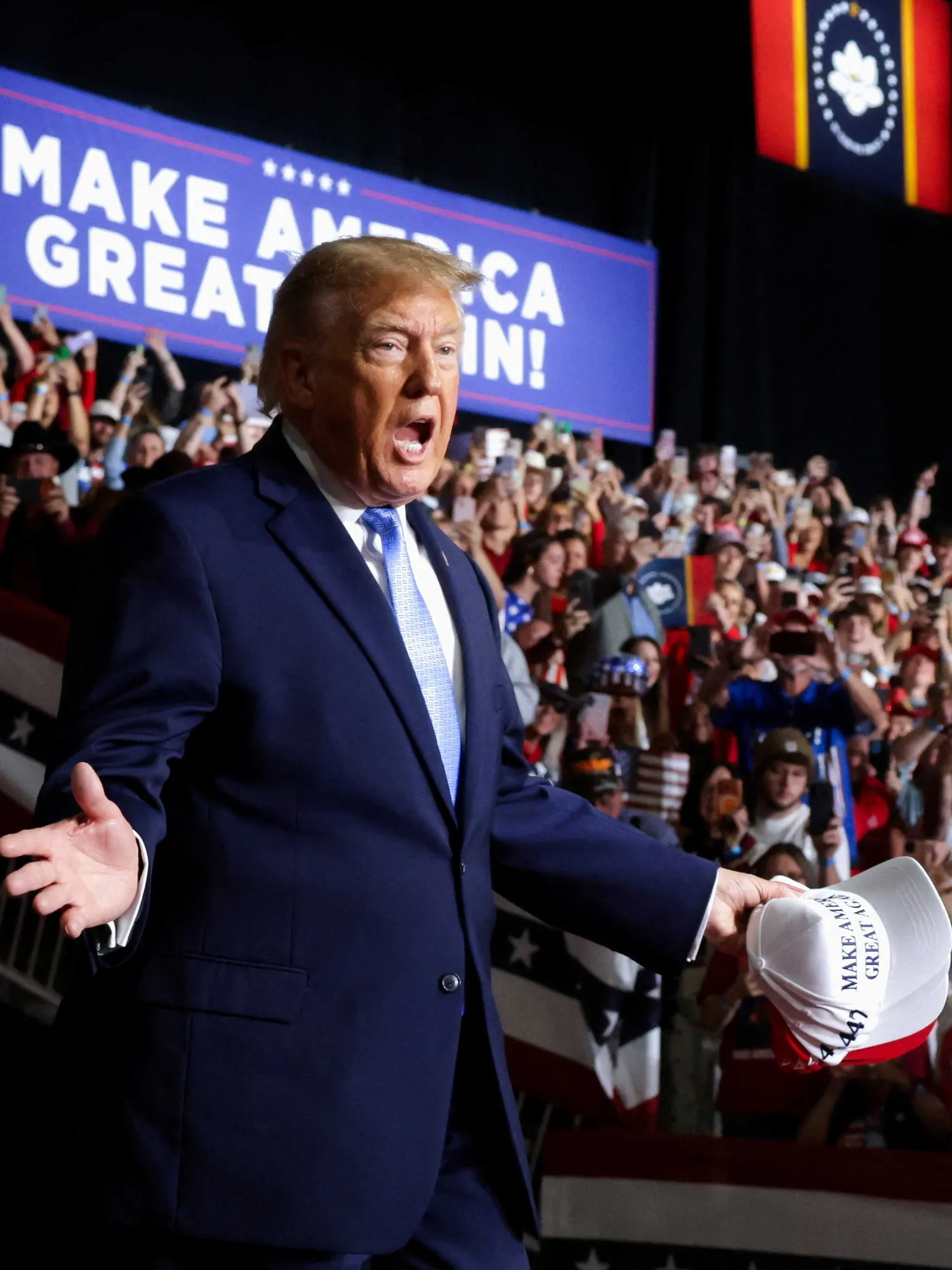
President Donald Trump on Thursday offered an unusually rosy account of his standing with Republican voters, claiming near-unanimous support even as a series of national surveys pointed to a considerably less flattering picture.
In a post on Truth Social, Trump touted the size of his midterm rally crowds and cited a poll that supposedly put his approval among Republican voters at 99 percent — without identifying the survey. The framing carries stakes beyond rhetoric: midterm elections, in which all 435 House seats and roughly one-third of Senate seats are on the ballot, have traditionally been treated as referendums on the party holding the White House, which is why presidential approval and crowd sizes draw such close scrutiny in the run-up to the voting.
“We are drawing the BIGGEST CROWDS at Trump Rallies in the history of Midterm Elections, by a factor of five times. There has never been anything like it! My Approval Rating in the Republican Party is now at 99 percent. Thank you, such an honor!!!” Trump wrote.
The claim stands in contrast to numerous reports of empty seats at many of his rallies and to polling that depicts declining popularity. Trump repeated the 99 percent figure to reporters while traveling to South Carolina to campaign for Darline Graham, but again did not name the poll he was citing.
Recent surveys show his approval among Republicans well below that level. An ABC News/Washington Post/Ipsos poll put his support among Republican voters at 83 percent, Fox News measured it at 76 percent, and Marquette Law School reported 75 percent. While the president still enjoys majority support among GOP voters, it falls far short of his boast.
According to Mediaite, the number may trace back to CNN data analyst Harry Enten, who previously reported that 99 percent of MAGA Republicans voted for Trump in the 2024 presidential election and that 98 percent approved of his performance in September.
The distinction matters: “MAGA” Republicans are not interchangeable with the GOP voting base as a whole, and the 99 percent figure refers to how people voted in 2024 rather than how they currently rate his performance in office. That gap is increasingly significant as a growing number of Republicans distance themselves from Trump's signature slogan. A University of Massachusetts poll found that the share of Republicans who identify with MAGA fell from 77 percent to 68 percent in August.
Trump's overall approval, meanwhile, sits at the lowest point of his political career, weighed down by his unpopular Iran war, the higher cost of living, and tariffs. A Reuters/Ipsos poll in September recorded an approval rating of 32 percent, driven by a decline in Republican support. A separate New York Times/Siena College survey released this week measured his approval at 34 percent — the lowest recorded for a president near a midterm election since Harry Truman in 1946, when Republicans won control of both houses of Congress.
Trump has denied unfavorable polling figures throughout his political career. The difference now is that support within his base is eroding, and the repeated claims appear to serve more as a coping mechanism as his popularity fades and the end of his presidency nears — under the 22nd Amendment, he is barred from being elected to a third term. As additional surveys are released ahead of the midterms, the distance between the White House's public claims and the pollsters' numbers will remain one of the clearest gauges of the president's standing within his own party.

