Trezor Data Breach at Shipping Partner Skladon Exposes Data Tied to 27,000 Orders
Key Takeaways
- •An unauthorized attacker exported records covering roughly 27,000 Trezor orders from shipping partner Skladon on November 7, 2026, and Trezor was notified eight days later.
- •The stolen data included full names, phone numbers, delivery and email addresses, order dates, product names, and prices, and affected shipments across multiple countries.
- •Trezor stated that its own systems, wallet backups, PINs, and passphrases were not compromised, though some customers have already reported scam calls referencing their purchases.
- •Customers who ordered between August 9 and November 7, 2026, were affected, but Trezor cannot directly email a small group from August 9-14 because their details were anonymized under its 90-day retention policy.
- •In response to the incident, Trezor is shortening its data retention from 90 to 45 days, reviewing third-party security requirements, working to expand Anonymous Pickup beyond 18 European countries to the United States, and has informed the data protection authority.
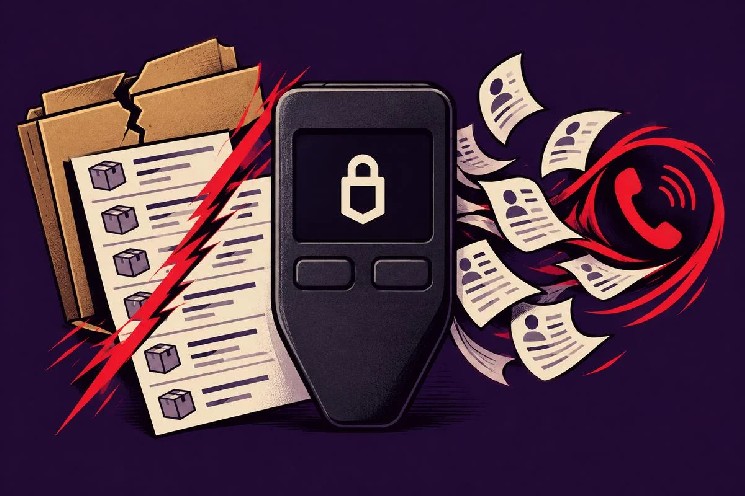
Trezor Data Breach at Shipping Partner Skladon Exposes Data Tied to 27,000 Orders
A data breach at Skladon, a shipping partner of crypto hardware wallet maker Trezor, exposed customer information tied to approximately 27,000 orders, the company says. The incident, which took place on November 7, 2026, did not affect Trezor's own systems or the security of its devices, but some customers have already reported receiving scam calls in its aftermath. It also shows how customer records held by outside vendors can be exposed even when a company's core infrastructure stays untouched.
What the breach exposed
According to Trezor, an attacker gained unauthorized access to Skladon's systems and exported records covering roughly 27,000 orders. The shipping partner informed Trezor of the intrusion on November 15, 2026—eight days after it occurred.
The exported records contained full names, telephone numbers, delivery and email addresses, order dates, product names, and prices. Because Skladon handles Trezor shipments to many countries, the breach is not confined to a single region.
Who is affected
Trezor says customers who received its incident notification email and placed orders between August 9 and November 7, 2026, were affected. A small number of customers who ordered between August 9 and August 14, 2026, may also have been caught up in the breach, but the company is unable to email them directly because their details had already been anonymized under its 90-day data retention policy. The retention window effectively determined who could be warned individually.
Customers who received an email but ordered after November 7, 2026, are not affected, according to Trezor.
Wallets remain secure, but scam calls have started
The company stressed that the Skladon breach did not compromise Trezor's systems or wallet security. Wallet backups, PINs, and passphrases were not involved in the incident, since those credentials are held by neither Trezor nor its shipping partner.
Even so, the exposed purchase details are enough to make fraudulent contact appear convincing. Trezor warns that scammers may reference the products customers bought and the prices they paid in phone calls, text messages, emails, or letters. Some customers have already reported receiving scam calls. The stakes reflect the mechanics of self-custody: since neither Trezor nor any partner holds customers' credentials, there is no support desk able to reverse a transfer, which is why the company's advice centers on keeping the backup private.
Trezor advises customers to treat any unexpected contact about an order as suspicious and to reach support only through its official website—never through a link, QR code, or telephone number supplied in a message. The company says it will never cold-call customers or request their wallet backup. Customers should never share that backup or enter it anywhere other than on their Trezor device. Anyone who receives a threat or feels unsafe should contact local police first, the company says.
Shorter data retention and Anonymous Pickup
In response to the incident, Trezor is working to shorten its order-data retention period from 90 days to 45 days, with the aim of reducing it further. The company is also reviewing its third-party relationships and the security requirements it imposes on those partners. The review reflects a reality of online retail: fulfilling orders through outside logistics providers means some customer data sits in systems the company does not directly control, as this incident demonstrated.
Trezor also highlighted Anonymous Pickup, a delivery option it has been developing since early 2026. Available in 18 European countries—described by the company as most European countries—the service lets buyers collect orders from parcel lockers or pickup points instead of receiving home deliveries, keeping customers' names and home addresses from reaching Trezor. The company is also working to bring the option to the United States.
Trezor acknowledged that this was not the first incident involving a partner to expose customer contact details and addresses, and it apologized to affected customers—including those affected more than once.
Ongoing investigation and customer notifications
The investigation into the Skladon breach remains ongoing, and Trezor says it has informed the data protection authority. It has emailed every affected customer it can still reach. For customers who ordered between August 9 and August 14, 2026, whose details had already been anonymized, the company is communicating through its blog and an X post. Developments to watch include the investigation's outcome, any follow-up from the data protection authority, and whether the shortened retention period and the US expansion of Anonymous Pickup take shape as planned.
Article produced with the assistance of artificial intelligence and reviewed by the editorial team.

