Treasury Yields Dip but Continue to Probe the Top of Their Range
Key Takeaways
- •Treasury yields dipped modestly while continuing to press the top of their recent trading range, where they serve as the benchmark for borrowing costs such as mortgages and corporate loans.
- •Treasury Secretary Scott Bessent's proposed $4 billion in shifted maturity buying is considered negligible relative to the overall Treasury market, one of the largest and deepest asset markets in the world.
- •Officials are floating use of the Treasury General Account at the Federal Reserve, but the account is a finite pool of cash and no concrete plan appears to be in place.
- •A Reuters poll shows Trump's approval at 33%, matching the lowest of his presidency, with only 31% of respondents approving of the Iran war and 29% of Republicans disapproving.
- •Upcoming Treasury auctions will provide a direct read on investor appetite for US debt, with a rise above 4.75% viewed as ominous and above 5% as calamitous.
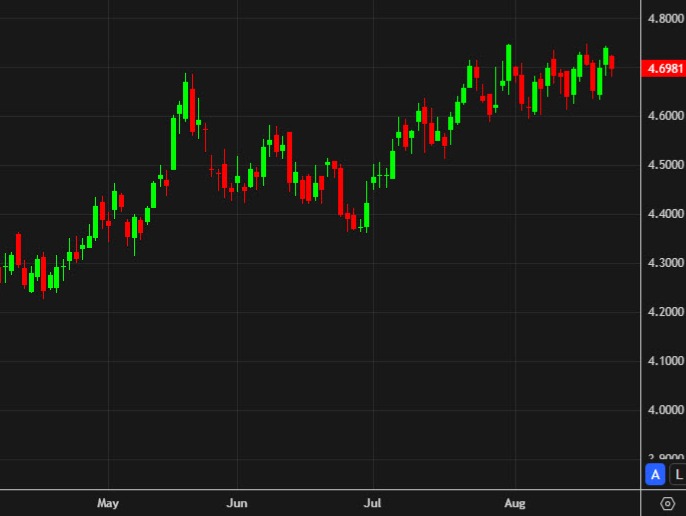
Treasury yields dipped modestly but continued to probe the top of their recent trading range, keeping market attention fixed squarely on the bond market. The stakes reach beyond Treasuries themselves: yields on US government debt act as the benchmark for borrowing costs across the economy, from mortgages to corporate loans, so a market pinned near the top of its range keeps that pressure in view for households and businesses alike.
The backdrop is an uncomfortable one: a government fighting markets. As the piece argues, there is a certain futility to that approach, in large part because it rarely works — and when it does, it is usually of the Mario Draghi "whatever it takes" variety, paired with dramatic action, a reference to the then-European Central Bank president's 2012 pledge to preserve the euro. History offers cautionary parallels from the other direction, most recently the UK's 2022 "mini-budget" episode, when gilt yields spiked after an unfunded fiscal plan and only relented once it was withdrawn. Measured against any such standard, Treasury Secretary Scott Bessent's talk of $4 billion in shifted maturity buying looks, in the article's words, comically under-armed — a sum that is a rounding error in the overall Treasury market, one of the largest and deepest asset markets in the world.
Officials are now also floating the use of the Treasury General Account — the US government's account at the Federal Reserve — but it is starting to look like there is no real plan in place. The mechanics are worth noting: the account is where the government holds cash for its payments, and drawing it down does put money into the banking system, but it is a finite pool rather than an open-ended tool. The pattern, the piece suggests, traces back to President Donald Trump's impulsiveness and a habit of tasking deputies with goals that may be impossible to meet.
Political pressure is compounding. Reuters has just released a poll showing Trump's approval at 33%, matching the lowest of his presidency, while the Iran war is increasingly unpopular: just 31% of respondents approve of the war, and 29% of Republicans disapprove.
The bond market senses a president flailing on affordability and a Republican party pandering to the polls, as illustrated by the reversal on data centers — an administration that had championed the AI infrastructure buildout now questioning its surging electricity demands.
The ultimate arbiter here will be the bond market itself, and upcoming Treasury auctions will offer a direct read on investor appetite for US debt. A fresh rise above 4.75% would be ominous, and a climb above 5% calamitous — which does not leave much room for error from here.
Source: ForexLive

