Clean energy investments fall dramatically in Appalachia
Key Takeaways
- •Private construction spending in manufacturing has declined for 20 months, and the nation has lost 277,000 manufacturing jobs since January 2024, according to Stephen Herzenberg.
- •U.S. private construction spending in manufacturing rose from about $80 billion in early 2022 to $249 billion before November 2024 before dropping to $170 billion in June.
- •In Appalachia, clean energy deployment was 17% below its 2024 peak and clean energy manufacturing investment was 26% below its fourth-quarter 2023 peak.
- •ReImagine Appalachia said 67% of the region’s nearly 93,000 clean energy jobs were at risk in a December report and that regional clean energy investment stagnated in 2025.
- •The groups said consumer spending on clean energy and electric vehicles kept rising in 2026 even as project finance slowed.
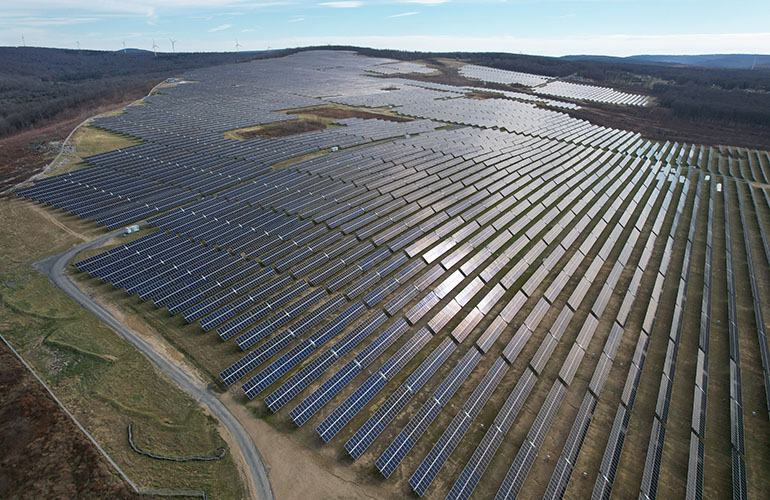
The Keystone Research Center and ReImagine Appalachia said a recent decline in clean energy investment in Appalachia has significantly affected the region’s employment figures and manufacturing output.
A solar project was built on a former coal mining site in Pennsylvania.
“The manufacturing investment boom that federal clean-energy and innovation policies sparked in 2022 has turned into a bust. Private construction spending in manufacturing has been in free fall for 20 months, and the nation has lost 277,000 manufacturing jobs since January 2024,” said Stephen Herzenberg, economist and executive director emeritus at the Keystone Research Center.
According to U.S. Census Bureau data, private construction spending in the United States was about $80 billion in early 2022 and more than tripled to $249 billion before November 2024. The increase was driven in part by federal policies that encouraged clean energy investment, including the Inflation Reduction Act (IRA). Those annual investments fell to $170 billion in June of this year.
The shift matters for Appalachia because many of the region’s communities have been trying to turn federal clean-energy incentives into local construction, manufacturing and supply-chain jobs, not just new projects. In a region defined here as Kentucky, Ohio, Pennsylvania and West Virginia, the pace of that buildout has slowed: ReImagine Appalachia said clean energy deployment was 17% below its 2024 peak in the post-incentive period, while clean energy manufacturing investments were 26% below their peak level in the fourth quarter of 2023.
“Getting private construction spending in manufacturing growing rapidly again is vital to manufacturing communities in coal-country Appalachia and across the United States — and to the regional and national economy, to limiting climate-related disasters, and to public health,” Herzenberg said.
ReImagine Appalachia analyzed state-level private construction data from the Rhodium/MIT Clean Investment Monitor, which tracks related federal incentives and investments. In Appalachia — defined here as Kentucky, Ohio, Pennsylvania and West Virginia — clean energy deployment was 17% below its 2024 peak in the post-incentive period, while clean energy manufacturing investments were 26% below their peak level in the fourth quarter of 2023.
In December, ReImagine Appalachia released a report saying 67% of the region’s nearly 93,000 clean energy jobs were at risk under the Trump administration. That report said clean energy investments in the region, which had peaked at $4.7 billion in one year, stagnated in 2025.
Appalachia includes many “energy communities,” or communities that have depended on fossil-fuel-driven economic growth, including coal production. The IRA provided incentives for clean energy projects at a certain scale, such as solar PV, to receive additional tax credits when new systems are deployed in energy communities.
Despite the slowdown in cash investment, ReImagine Appalachia and the Keystone Research Center said consumers in the region are spending more on clean energy and electric vehicles in 2026, showing demand has not disappeared even as project finance has cooled.
“There is real hope in this data. Consumer spending on clean energy and clean transportation kept rising in 2026 because renewables and batteries keep getting cheaper. But to rebuild manufacturing in coal-country Appalachia, we need a reversal in federal policy. Federal investment was a game changer, and it can be again,” said Diana Polson, Pittsburgh policy and research director at the Keystone Research Center.
News item from ReImagine Appalachia
