US Treasury Proposes GENIUS Act Rules for Stablecoin Issuers, Opens Public Comment
Key Takeaways
- •The Treasury issued proposed rules on Aug. 17 implementing Section 3 of the GENIUS Act, with a 60-day public comment period open until at least mid-October.
- •The GENIUS Act, signed in July 2025 as the first federal stablecoin statute, restricts issuance to permitted issuers, requires one-to-one reserve backing with monthly CEO-certified reports, and prohibits paying interest to stablecoin holders.
- •Foreign-issued stablecoins may reach U.S. users only if their home-country regulatory frameworks are judged substantially similar to the U.S. regime.
- •Treasury must resolve 87 questions posed in the notice of proposed rulemaking and finalize the rules before the GENIUS Act becomes effective on January 18, 2027.
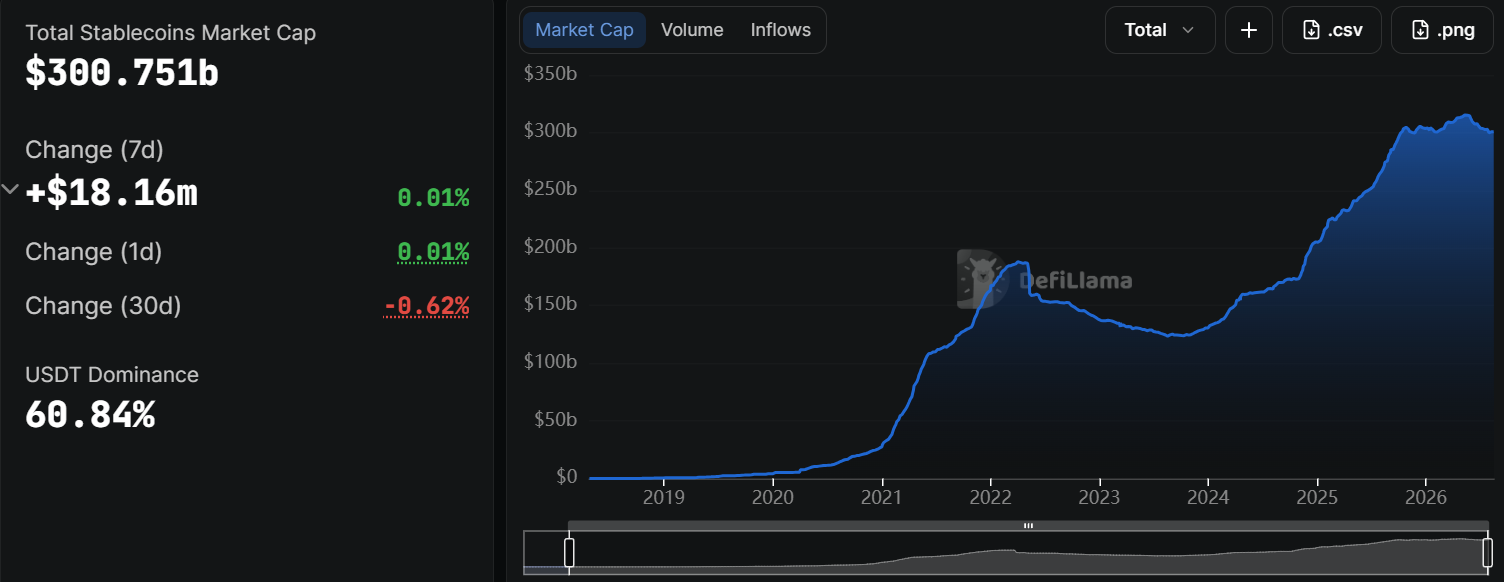
- •Total stablecoin market capitalization stood at roughly $308–310 billion in August, below its 2026 peak, with Tether's USDT at about $184 billion holding close to 60% market dominance.
The U.S. Department of the Treasury moved forward with implementation of the GENIUS Act on Aug. 17, issuing proposed rules that govern payment stablecoin issuance, offers and sales in U.S. markets. The department opened the proposal to public comment as regulators continue building the federal stablecoin framework, with the United States also pursuing the Clarity Act, separate legislation that would divide oversight of digital-asset markets between the Securities and Exchange Commission and the Commodity Futures Trading Commission, as part of its broader crypto regulation agenda.
The regulatory push arrives while the stablecoin market is contracting, having shed nearly $10 billion since the start of the year, and as total supply remains below its 2026 peak following years of strong growth. Stablecoins circulate mainly as trading collateral on crypto exchanges and as a channel for dollar-denominated transfers across borders, which is the payment-and-settlement role the Treasury proposal places at the center of the new regime.
GENIUS Act Rules Target U.S. Stablecoin Issuance
The Treasury is seeking public comment on Section 3 of the GENIUS Act, which addresses the framework for stablecoins in the United States. The section prescribes who may issue or offer stablecoins and includes restrictions on foreign stablecoin issuers. The regulator is examining how to interpret these provisions of the law to ensure their effectiveness.
Signed into law in July 2025 as the first federal statute dedicated to stablecoins, the GENIUS Act limits issuance to permitted issuers, namely subsidiaries of insured depository institutions, federally qualified nonbank issuers and qualifying state-regulated issuers, with larger issuers brought under federal supervision. The law also requires issuers to back their tokens one-to-one with reserves held in cash and short-term U.S. Treasury securities, to publish monthly reserve reports certified by their chief executives, and it prohibits paying interest to stablecoin holders. Foreign-issued stablecoins may reach U.S. users only if their home-country rules are judged substantially similar to the U.S. framework, a determination the proposed rules are meant to put into practice. Congressional backers pitched the framework in part as a way to reinforce the dollar's role in digital payments.
The notice of proposed rulemaking (NPRM) sets out how Treasury plans to implement the requirements for becoming a licensed stablecoin issuer in the U.S., and poses 87 questions concerning the interpretation of the section. With the deadline for public comments set at 60 days, comments will remain open until at least mid-October, leaving the Treasury roughly three months to finalize the rules before the GENIUS Act becomes effective on January 18, 2027. How the department resolves those questions on licensing, foreign-issuer restrictions and enforcement will determine which firms can lawfully distribute stablecoins in the U.S. market once the statute takes effect.
Treasury has also stated that it will treat stablecoins as a new arena, separate from other financial instruments such as securities and commodities. While the department acknowledged existing rules, it noted that these traditional investment rules may frustrate stablecoin goals. The proposal stated that the core purpose of a stablecoin under the GENIUS Act is to serve as an effective means of payment and settlement, including across borders.
Stablecoin Market Cap Holds Near $310 Billion
The proposal comes as the stablecoin market has slowed following strong expansion during 2025. DeFiLlama placed total stablecoin market capitalization at roughly $308 billion to $310 billion in August, below the levels above $315 billion recorded earlier in 2026.
The market expanded sharply during 2025, with DeFiLlama reporting that stablecoin supply rose from about $204 billion at the beginning of 2025 to roughly $305 billion by early December. Growth slowed during 2026: DeFiLlama data showed the sector down approximately 1% over the latest 30-day period, while weekly supply remained largely flat around the $310 billion level.
Tether remained the largest stablecoin issuer, with USDT holding roughly $184 billion in circulating market value, close to 60% market dominance. Circle's USDC ranked second at approximately $72 billion to $74 billion. Circle went public on the New York Stock Exchange in June 2025, a listing that came as the sector's expansion drew traditional finance deeper into stablecoin issuance and distribution.
The latest contraction does not erase the sector's earlier expansion, but it shows that stablecoin supply has stopped growing at the pace recorded during 2025. The GENIUS Act could now influence how issuers approach U.S. distribution, licensing and foreign-market access, and Treasury's final Section 3 rules will determine how those statutory restrictions apply ahead of the law's expected Jan. 18, 2027 start. For issuers, exchanges and cross-border payment users, the mid-October comment deadline is the next concrete checkpoint in the rulemaking.
Disclaimer: This article is for informational purposes only and does not constitute financial advice. Digital assets can experience sharp market movements.

