Bessent's Treasury Weighs $950 Billion Cash Account to Fund Expanded Bond Buybacks
Key Takeaways
- •Treasury doubled its planned buybacks of older long-dated securities to at least $4 billion per operation, with Scott Bessent saying the amount could rise further.
- •Officials said the Treasury General Account, which is near $950 billion, is available to help fund the purchases, though they did not confirm whether it will be used.
- •The Treasury has not said how it will finance the larger buybacks, and short-term bill issuance remains an option.
- •The buyback program was resumed in 2024 after a 20-year pause and is intended to improve trading liquidity in older Treasury securities.
- •The United States is preparing new sanctions against Iran on Monday, expanding pressure on sectors including banking, energy, aviation and cryptocurrency.
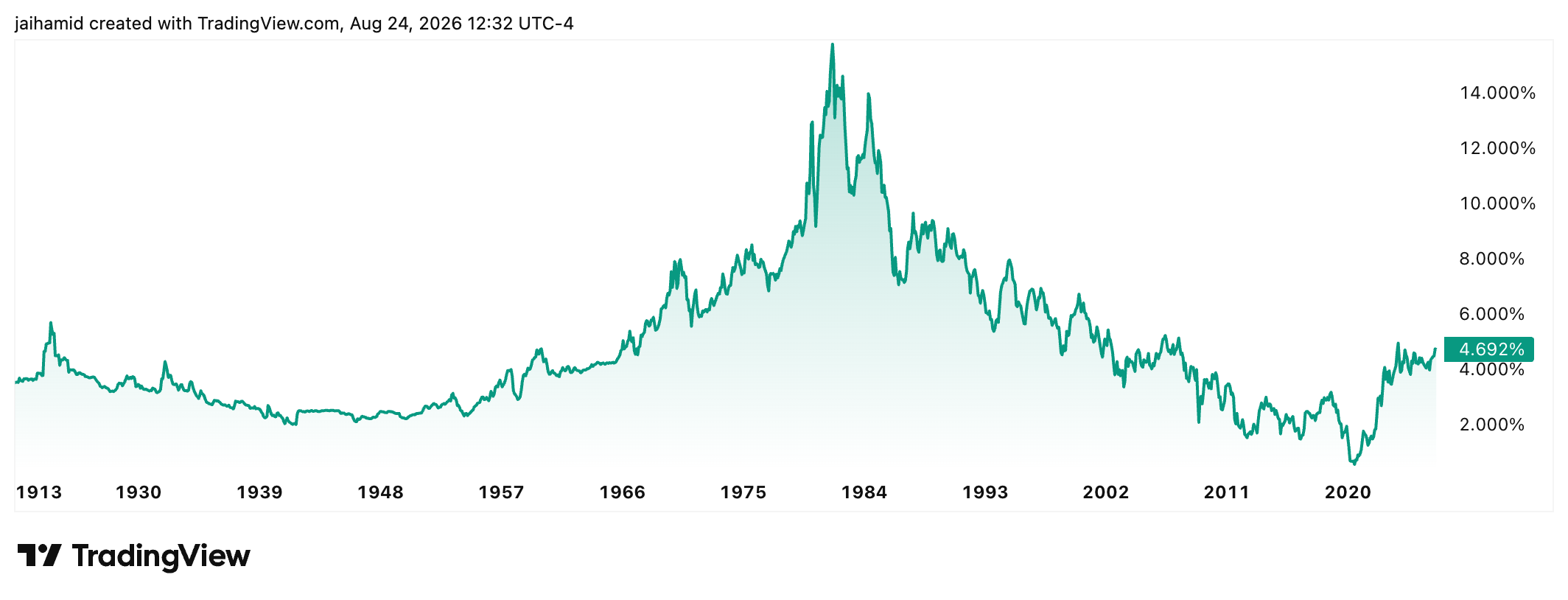
The U.S. Treasury may tap its roughly $950 billion General Account to help fund larger purchases of U.S. government bonds as long-term yields climb once again.
Two senior Treasury officials reportedly said the cash is available. Last week, the Treasury doubled its planned buybacks of older, off-the-run long-dated securities from $2 billion to at least $4 billion per operation, and Treasury Secretary Scott Bessent has said those purchases could go above the new minimum. The buyback program itself dates to 2024, when the Treasury resumed regular repurchases for the first time in two decades, with the stated goal of improving trading liquidity in older securities that change hands less freely than newly issued debt.
The Treasury has not said how it would pay for the larger buys. Most traders had expected more short-term bill sales, and officials have not ruled that out. Bessent called the plan a “Treasury Twist” in an interview last week, meaning longer-term Treasurys would be bought while shorter-term debt could be issued. The nickname echoes the Federal Reserve’s “Operation Twist,” first deployed in the early 1960s and revived in 2011, when the central bank sold shorter-dated holdings and bought longer ones in a bid to push down long-term rates.
Treasury weighs its $950 billion cash account
The Treasury General Account, or TGA, is the government’s main cash account at the Federal Reserve, and it already holds tax collections. Using it could let the Treasury pay for part of the buybacks with cash already on hand rather than relying only on new bill issuance.
The balance now sits near $950 billion, compared with the Biden administration’s stated target of about $550 billion to $600 billion. Bessent built the account above that earlier range. Balances of that size typically follow a debt-ceiling increase, when the Treasury rebuilds its cash buffer after Congress lifts the borrowing cap, as lawmakers did in July.
The officials did not say how much of the TGA might be used, whether any cash will be used at all, or when an announcement could come. They gave no sign that the money would support purchases beyond the off-the-run securities covered by last week’s plan, but they did say the account is available.
Officials also rejected claims that the Treasury had dropped its “regular and predictable” approach to debt sales or was gaming the market. The larger buyback plan came about two weeks after the quarterly refunding announcement, where such information would normally appear.
According to CNBC, the official auction schedule did not change. The Treasury announced the plan on Aug. 19, nearly three weeks before the first operation on Sept. 9, and released the schedule for the whole quarter. The next quarterly refunding statement, due in early November, is the setting where any lasting changes to issuance or buyback plans would normally be spelled out.
Trump’s Treasury prepares a new Iran financial offensive
The United States is also set to unveil new financial measures against Iran on Monday. Washington and Tehran missed a 60-day ceasefire window to reach a deal, shutting the formal truce route as the Middle East war enters its sixth month. Tehran has threatened to seize vessels that break transit rules in the Strait of Hormuz.
On X Sunday evening, Bessent said Trump had annihilated nearly all Iranian military facilities, destroyed the country’s military capability, and made its nuclear program inconsequential. He described the next step as an “economic D-Day,” stating that Iranians believed retaliation was certain and American sanctions were negotiable.
Bessent further said:
“The Islamic Republic has drawn strength from a calculus that regards Iranian retaliation as certain and American enforcement as negotiable. Under President Trump, those who fear the danger of defying Tehran ought not to discount the cost of testing Washington. The President has created the conditions to leverage every agency, every authority and action many assumed we would never summon. Our objective is to sever every economic lifeline that sustains the tyrannical regime until Tehran stands alone.”
The new measures will add to sanctions already targeting Iran’s banking, energy, aviation and cryptocurrency sectors. The Trump administration says Iran’s economy is in sharp decline, with runaway inflation and a falling currency. The Iranian rial hit a new open-market low on Sunday, with one U.S. dollar moving above 2 million rials. The escalation echoes the first Trump administration’s “maximum pressure” campaign, launched after Washington withdrew from the 2015 nuclear deal in 2018 and reimposed sweeping sanctions on Iran’s oil exports and banks.
Bessent also wrote in a Financial Times opinion piece that countries cutting Iran’s remaining financial and commercial links could strengthen their own access to global capital and markets.
Bessent said:
“Those who sever Iran’s remaining financial and commercial connectivity will reinvigorate their own. They will deepen their access to global capital, reinforce confidence in their markets and attain the standing they seek in the world economy. And any nation that serves as a financial artery of a withering regime should expect to share in its isolation. To become a sanctuary for terror is to become, in the eyes of the United States, a global pariah.”

