Former CIA Director Panetta Warns Trump Is 'Running Out of Options' on Iran: 'We Are Really Stuck'
Key Takeaways
- •Panetta said Trump is running out of options in the confrontation with Iran and that the dispute could become a prolonged conflict.
- •The White House is preparing new sanctions on Iran, which officials have described as an “economic D-Day.”
- •Panetta argued that Iran can survive additional economic pressure, especially because Chinese oil purchases have helped keep its economy afloat.
- •He said Iran is likely to respond by striking regional allies, military targets, or shipping through the Strait of Hormuz.
- •The Strait of Hormuz is a major global oil chokepoint, carrying roughly a fifth of the world’s oil trade.
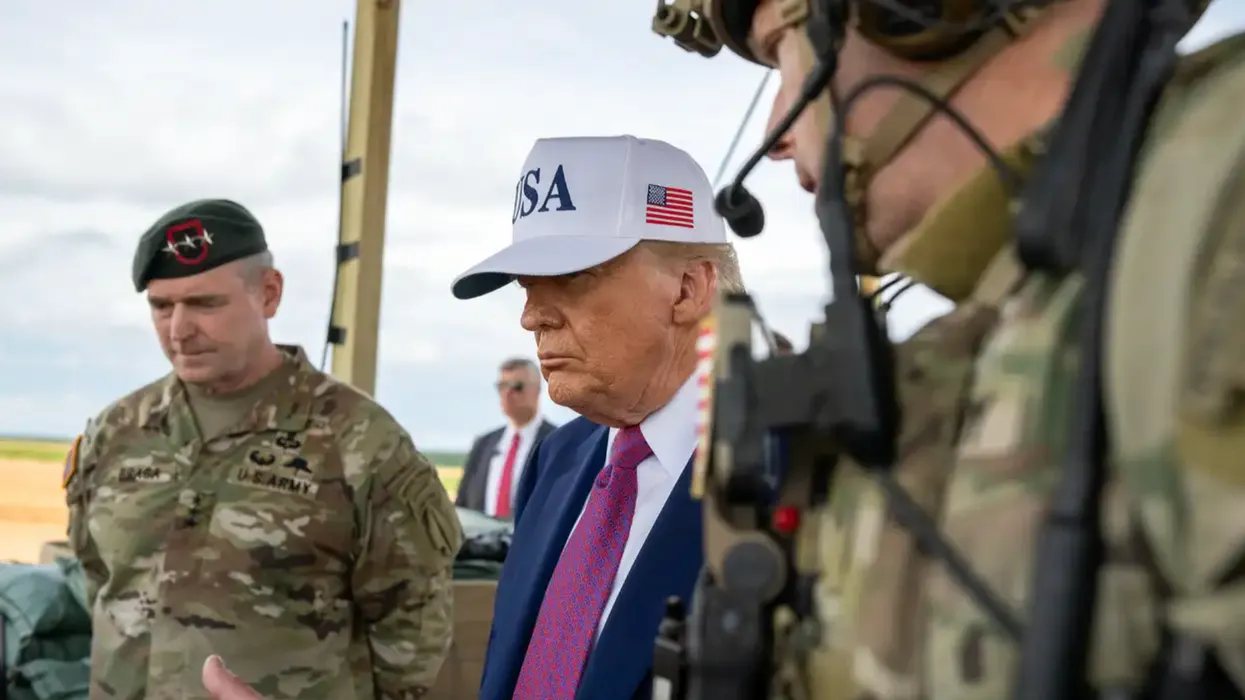
Former CIA Director Leon Panetta warned that President Donald Trump is "running out of options" in the confrontation with Iran, saying the conflict threatens to move from a "stalemate" into a genuine "prolonged conflict" and that the United States is now "really stuck."
Panetta, who also served as Defense Secretary during the Obama administration and, earlier, as White House chief of staff and budget director under President Bill Clinton, appeared Monday on MS NOW's "State of Play" to discuss the latest developments in the Trump administration's escalating conflict with Iran.
The president and his officials have in recent days been promoting a raft of sanctions against Iran expected this week, likening the move to an "economic D-Day," as the White House pushes for Iran to yield to its demands. The new measures would layer onto a US sanctions regime on Iran that dates to the aftermath of the 1979 Islamic Revolution and the embassy hostage crisis and has been expanded repeatedly in the decades since.
Host Peter Alexander suggested that Trump is eager to avoid reigniting a direct military conflict with Iran, and asked Panetta whether the pivot to "economic warfare" amounted to a "concession" that his past strategies had failed.
"Well, I don't think there's any question that the president is running out of options here," Panetta said. "He's decided not to use military force. Our stockpiles are dangerously down. So that option may be off the table. And so he's using economic pressure, calling the blockade economic pressure. But the reality is that our intelligence pretty much makes clear that whatever kind of economic pressure we put on Iran, they have the capability to survive."
He continued: "And as long as China is around and the president doesn't decide to take on China, which would have to be a decision here if they want any kind of sanctions to work, the reality is that it's not likely that this is going to change the situation. And the bottom line is we're probably in for a continuing, prolonged war in Iran."
Panetta's emphasis on China reflects what has kept Iran's economy afloat through earlier rounds of sanctions: in recent years, the vast majority of Iran's crude oil exports have gone to Chinese buyers, whose purchases have continued despite US pressure campaigns.
Alexander pressed further, asking what Trump could realistically achieve with new sanctions, given that the United States has already sanctioned Iran for the last 50 years. Panetta responded that, as far as he could tell, the plan amounted to "more of the same."
"You know... you can continue to pile on sanctions upon sanctions, upon sanctions; you can continue to try to pressure those that do work with Iran not to do that, not to trade with Iran, right? You can do it," Panetta said. "You can do a lot to kind of at least make a show that this is a tougher step. But the problem is Iran is not just going to sit there. They're going to hit back. They're going to hit back at our regional allies. They're going to hit back by shutting down any kind of traffic that goes through the Strait of Hormuz. They're going to hit back probably militarily, because they've been firing missiles at our regional allies. And so they're going to continue to attack. The United States has not responded in any way to those attacks. So they are going to continue to put pressure on the United States. This is a war on the economic front to now match the war on the military front."
The Strait of Hormuz that Panetta cited is the narrow waterway between Iran and Oman through which roughly a fifth of the world's oil trade passes, according to US Energy Information Administration estimates, and it is a chokepoint Iran has threatened to close during past standoffs with Washington and its allies.
Source: Alternet

