TNM Drill Down: Revival Gold's Idaho Intercepts Lead Top Gold Assays for July-August
Key Takeaways
- •Revival Gold's hole BT26-255D at Beartrack-Arnett in Idaho cut 131.7 metres grading 3.43 grams gold per tonne, for a width-times-grade value of 452, the top-ranked intercept of the period.
- •Thunder Gold's hole TM26-210 at Tower Mountain returned 661.5 metres grading 0.55 gram gold, the longest continuously mineralized interval reported at the project, with the hole ending in mineralization below the resource pit shell.
- •Sentinel Metals' first hole at the Columbia project in Montana returned 46.8 metres grading 5.5 grams gold, confirming mineralization extends into fresh rock, but core recovery of about 20% in the high-grade interval means sampling bias cannot be ruled out and the interval will be redrilled.
- •The Joss area at Beartrack-Arnett hosts 6.7 million inferred tonnes grading 4.05 grams gold for 877,000 ounces, which are excluded from Revival's 2023 prefeasibility study economics.
- •Tower Mountain's January resource estimate outlined 514,000 indicated ounces and 3.05 million inferred ounces of gold.
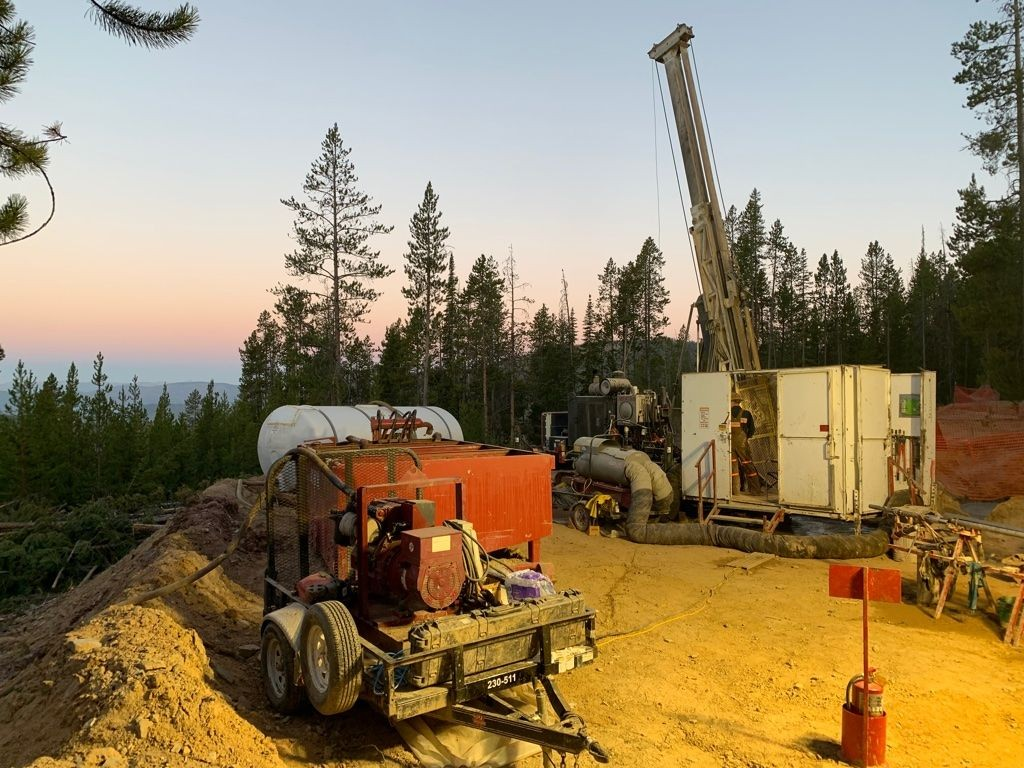
Drilling in the United States and Canada delivered the strongest gold assay results for the July 16 to Aug. 14 period, with intercepts from Revival Gold (TSXV: RVG), Thunder Gold (TSXV: TGOL) and Sentinel Metals (ASX: SNM) topping the rankings. Holes are ranked by grade times width, a common screening metric that rewards both thickness and grade, though it does not by itself define an economic deposit. Here are the top 10.
Beartrack-Arnett
Drilling at Revival Gold's Beartrack-Arnett project in east-central Idaho cut 131.7 metres grading 3.43 grams gold per tonne from 543 metres downhole in hole BT26-255D, including 42.5 metres grading 6.56 grams gold and 12.1 metres grading 11.58 grams gold, the company reported on Aug. 4. That amounts to a width x grade value of 452.
The intercept, one of the highest grade-thickness results reported from the project, came from the Joss area, where Revival is targeting expansion of a high-grade underground sulphide resource. It lies about 70 metres above a 2022 hole that returned 11.4 metres at 10.1 grams gold, and about 150 metres below a 2021 hole that cut 11.8 metres grading 8.9 grams gold. According to Revival, the results suggest the beginning of a north-plunging mineralized shoot.
Joss hosts 6.7 million inferred tonnes grading 4.05 grams gold for 877,000 oz., which are excluded from the economics of Revival's 2023 prefeasibility study for a first-stage open-pit heap-leach operation. The company's current 5,500-metre drill program aims to expand the Joss resource ahead of a potential resource update and a future underground economic study. Beartrack-Arnett is a past-producing gold camp, with historical open-pit mining in the 1990s, and the current work is focused on extending mineralization beyond and beneath that legacy mining.
Tower Mountain
Hole TM26-210 at Thunder Gold's Tower Mountain project, about 40 km west of Thunder Bay, Ont., cut 661.5 metres grading 0.55 gram gold from 72 metres downhole, including 24 metres grading 1.82 grams gold, for a width x grade value of 366, the company reported on Aug. 11.
It was the longest continuously mineralized interval reported at the project to date, Thunder said. Click to see a 3-D image of the drilling. Tower Mountain sits in the Shebandowan greenstone belt, part of the Wawa-Abitibi subprovince that hosts numerous gold deposits across northwestern Ontario.
About 516 metres of the intercept, grading 0.50 gram gold, lies within the pit shell used for Tower Mountain's resource estimate. The remaining 145.5 metres below the pit shell graded 0.73 gram gold, and the hole ended in mineralization, pointing to potential for extending the resource at depth. Deeper extensions of this kind matter for low-grade, bulk-tonnage style deposits such as Tower Mountain's, where large mineralized volumes at modest grades can support open-pit mining scenarios.
A January resource outlined 34.5 million indicated tonnes grading 0.46 gram gold for 514,000 oz., plus 211.1 million inferred tonnes at 0.45 gram gold for 3.05 million ounces.
Columbia
DDCO26-001, the first hole at Sentinel Metals' Columbia project in Montana, returned 46.8 metres grading 5.5 grams gold from 88.2 metres downhole, including 21.4 metres grading 11.1 grams gold and 13.5 metres grading 16.6 grams gold, for a width x grade value of 257, the company reported Aug. 10.
The hole confirmed that mineralization extends into fresh rock below the historically targeted oxide zone. That distinction matters: oxide-zone gold is typically amenable to heap leaching, while sulphide mineralization in fresh rock usually requires more intensive processing. However, core recovery averaged only about 20% through the 13.5-metre high-grade interval, meaning sampling bias cannot be ruled out. Sentinel has switched to triple-tube drilling to improve recovery and plans to redrill the interval, a step investors will watch as a check on the reported grades.
The company's initial 5,000-metre, 21-hole program is testing extensions at depth and along strike while also targeting areas for potential resource upgrades.
Columbia hosts 23.6 million inferred tons (21.4 million tonnes) grading 1.34 grams gold for 920,000 oz., according to a 2024 resource.
