Radisson Mining's O'Brien Project Tops Northern Miner's Gold Assays Ranking for June-July
Key Takeaways
- •Radisson Mining's O'Brien project in Quebec produced the highest-ranked intercept, including one metre assaying 1,603.95 grams gold per tonne — the highest-grade assay ever recorded at the historic mine.
- •West Point Gold's Gold Chain project in Arizona returned 66.2 metres grading 6.57 grams gold, extending the Northeast Tyro zone beyond 250 metres depth as the company advances toward its inaugural resource estimate.
- •Auro Metals' Santa Barbara project in Ecuador yielded a 705.7-metre intercept grading 0.61 gram gold and 0.1% copper from surface, with the hole ending in mineralization and the system remaining open at depth.
- •Radisson is conducting a fully funded 140,000-metre drill campaign expected to continue into 2027, building on a March resource update that increased inferred resources by 82% to approximately 1.7 million ounces of gold.
- •Auro Metals, formerly Tincorp Metals, holds indicated resources of 697,000 ounces of gold and inferred resources of 3.42 million ounces of gold at Santa Barbara, placing it among the larger gold-copper inventories on the TSX Venture Exchange.
The Northern Miner has released its ranking of the top 10 gold drill assays for the June 17–July 15 reporting period, with holes scored by grade multiplied by width — a widely used industry metric that offers a quick basis for comparing intercepts across projects, though it does not account for strike length, continuity, or metallurgical recovery.
The strongest gold intercepts during this window came from projects across the Americas — Canada, the United States, and Ecuador. Radisson Mining Resources (TSXV: RDS) claimed the top spot with its resource-stage O'Brien project in Quebec. West Point Gold (TSXV: WPG) secured second place with its Gold Chain project in Arizona, while Auro Metals (TSXV: AURO) rounded out the top three with its Santa Barbara gold-copper project in Ecuador. All three are TSX Venture Exchange–listed juniors, a segment that typically advances early-stage projects through exploration toward resource definition and economic studies.
O'Brien Project — Radisson Mining
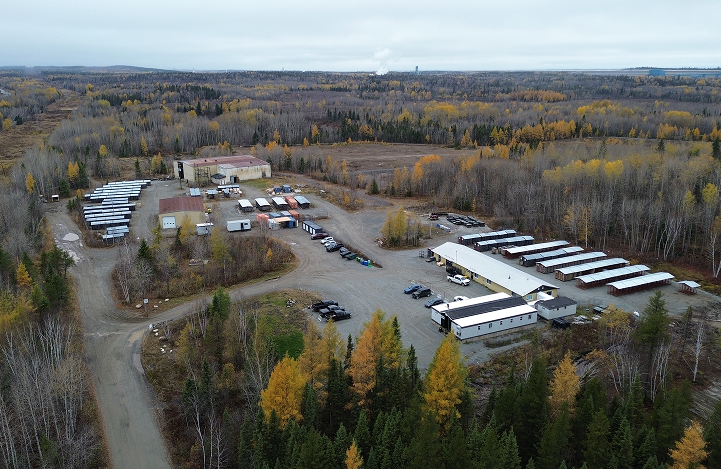
On July 7, Radisson Mining reported that hole OB-26-385W4 at the O'Brien project in Quebec intersected 5.1 metres grading 316.31 grams gold per tonne from a downhole depth of 823 metres, producing a grade-times-width value of 1,613. Within that interval, one metre assayed 1,603.95 grams gold — the highest-grade assay ever recorded from the historic mine. The O'Brien project sits within the Cadillac Township area of the Abitibi Greenstone Belt, one of the world's most productive gold regions, which has hosted decades of underground mining by major and junior operators alike.
The intercept builds on a March resource update that lifted inferred resources by 82% to approximately 1.7 million ounces of gold contained in 10.3 million tonnes grading 5.08 grams gold. Indicated resources stood at 630,000 ounces in roughly 3.5 million tonnes grading 5.59 grams gold. Radisson is currently executing a fully funded 140,000-metre drill campaign that is expected to continue into 2027, one of the larger ongoing programs among Abitibi-focused juniors.
A preliminary economic assessment published in 2025 envisioned an 11-year underground mining operation with a $532-million after-tax net present value, a 48% internal rate of return, and $175 million in initial capital expenditures, assuming toll milling. The toll-milling approach — processing ore at a third-party facility rather than building a dedicated plant — is a common strategy for juniors seeking to reduce upfront capital while advancing toward production decisions.
Gold Chain Project — West Point Gold
West Point Gold announced on June 23 that hole GC26-148 at its Gold Chain project in Arizona returned 66.2 metres grading 6.57 grams gold from 219 metres downhole. The intercept included a higher-grade core of 20.7 metres at 18.25 grams gold, yielding a grade-times-width value of 435. The hole extended the Northeast Tyro zone to depths exceeding 250 metres below surface. Arizona has seen renewed exploration interest as gold prices have strengthened, drawing junior explorers to historic mining districts with limited modern drilling.
The intersection came from a now-completed 21,079-metre drilling campaign. At the time of the announcement, assays from 21 additional holes remained pending and were expected to contribute to the project's inaugural resource estimate, anticipated later this year. West Point continues to expand the Tyro mineralized system, with further deep drilling planned as the company advances toward its first resource — a key inflection point for any early-stage explorer, as a resource estimate is typically required to attract project-level financing or offtake interest.
Santa Barbara Project — Auro Metals
On June 22, Auro Metals reported that hole DSB-54 at its Santa Barbara gold-copper project in Ecuador intersected 705.7 metres grading 0.61 gram gold and 0.1% copper starting from surface. The broad intercept included 235 metres grading 0.97 gram gold and 0.11% copper, for a grade-times-width value of 430. The hole ended in mineralization, signalling that the system remains open at depth. Ecuador has been working to position itself as an emerging mining jurisdiction, with large-scale operations such as Lundin Gold's Fruta del Norte mine demonstrating the country's porphyry and epithermal potential.
The results represent the first holes from the company's stage-one 10,000-metre drill program. That program was initiated after Tincorp Metals completed its acquisition of Santa Barbara in May and prior to its corporate name change to Auro Metals in June. The campaign aims to confirm historical drilling results, infill the existing resource, and gather material for metallurgical test work.
A March resource estimate for Santa Barbara outlined indicated resources of 697,000 ounces of gold and 68.2 million pounds of copper, along with inferred resources of 3.42 million ounces of gold and 425.9 million pounds of copper — a scale that places the project among the larger gold-copper inventories held by TSXV-listed companies. Previous operators have completed more than 22,000 metres of drilling at the project, with preliminary economic assessments carried out in 2015 and 2021 as Santa Barbara advanced under earlier ownership.

