BITmarkets Publishes New Study Ranking the Top 10 Athletes in Crypto Partnerships
Key Takeaways
- •BITmarkets' new study ranks the top ten athletes in crypto partnerships, featuring names such as Cristiano Ronaldo, Lionel Messi, Tom Brady, Stephen Curry, Shohei Ohtani, Serena Williams, Naomi Osaka, Trevor Lawrence, Shaquille O'Neal, Klay Thompson and Andre Iguodala.
- •Global crypto sports sponsorship spending exceeded $742 million in 2022 across 230 active contracts, while crypto climbed from the 43rd-largest to the second-largest NBA sponsorship category within a single season.
- •Athlete arrangements varied widely in structure, from Russell Okung receiving half of his NFL salary in bitcoin in December 2020 to Klay Thompson and Andre Iguodala converting portions of their Golden State Warriors salaries into bitcoin through Cash App in 2022.
- •The collapse of FTX in November 2022 triggered class-action lawsuits naming several athlete ambassadors, including Tom Brady, Stephen Curry, Naomi Osaka and Shaquille O'Neal, and US regulators settled with Kim Kardashian in October 2022 over an undisclosed paid token endorsement.
- •The study concludes the market has moved to a more cautious model, with the EU's MiCA regulation imposing standardised disclosure and marketing requirements since the end of 2024 and fan tokens increasingly tied to tangible benefits like stadium privileges and voting rights.
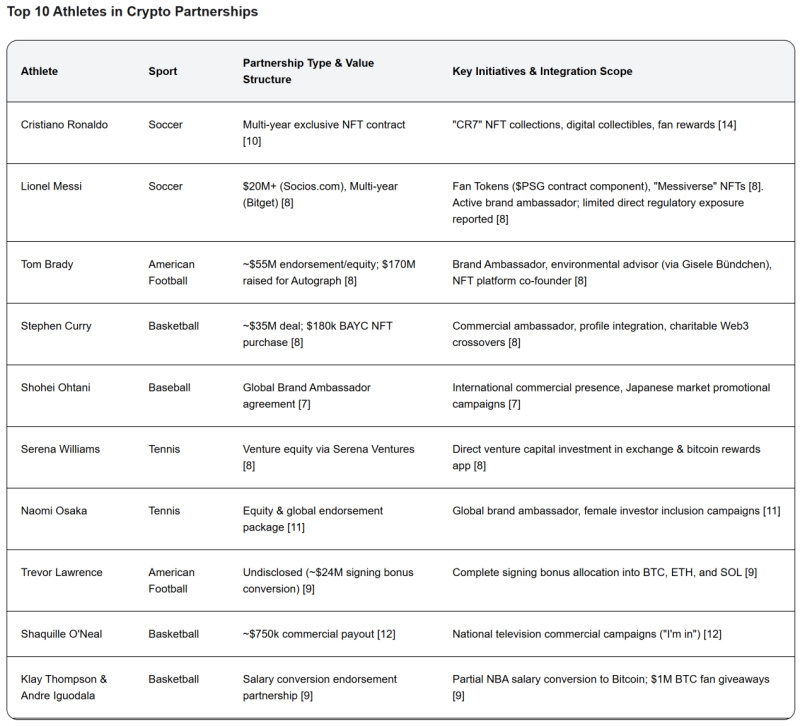
Kingstown, Saint Vincent and the Grenadines, August 17, 2026 (Chainwire) — BITmarkets has published a new study, Crypto and Elite Athletes: More Than Just a Sponsorship, examining what happened when crypto's rapid rise met the world of elite sport. From NFT collections and fan tokens to equity deals and salaries converted into bitcoin, the study looks behind the headlines at how some of the biggest names in sport became involved with digital assets.
The report follows BITmarkets' recent analysis of football clubs and competitions and shifts the focus from teams to individual athletes across football, basketball, American football, baseball and tennis. Rather than simply asking who signed the biggest deal, the study compares how the partnerships worked, what each athlete brought to them, and how the market changed after 2022.
Which Athletes Made the Top 10?
The ranking brings together Cristiano Ronaldo, Lionel Messi, Tom Brady, Stephen Curry, Shohei Ohtani, Serena Williams, Naomi Osaka, Trevor Lawrence and Shaquille O'Neal, together with Klay Thompson and Andre Iguodala. The familiar names, however, are only the start of the story. The full chart shows how differently the deals were built, from multi-year ambassador roles and NFT projects to venture investments, equity stakes and payments converted into crypto assets.
How Big Did Crypto Sponsorship Become?
BITmarkets notes that global crypto sports sponsorship spending exceeded $742 million in 2022 across 230 active contracts. In the NBA, crypto moved from the 43rd-largest corporate sponsorship category to the second-largest within a single season, generating an estimated $100 million to $150 million in annual team and league revenue. The peak of that visibility came at Super Bowl LVI in February 2022, quickly dubbed the "Crypto Bowl," where crypto brands bought some of the most expensive advertising slots of the night in front of one of the largest television audiences of the year in the United States.
Those figures help explain why athlete deals quickly became more ambitious than standard advertising contracts. Some ambassadors received equity or tokens alongside promotional fees, while others chose direct exposure to crypto through payment conversions. The study traces examples ranging from Russell Okung, who in December 2020 became the first NFL player to have half of his salary paid in bitcoin while with the Carolina Panthers, to partnerships in which Klay Thompson and Andre Iguodala converted parts of their Golden State Warriors salaries into bitcoin through Cash App in 2022 and supported bitcoin giveaways for fans.
From Hype to a More Cautious Model
The market disruption of 2022 changed that picture. High-profile corporate failures and tighter regulatory scrutiny reduced the appetite for sweeping promotional campaigns. The collapse of FTX in November 2022 was the clearest single case: the exchange had built its public face around athlete and celebrity ambassadors — Tom Brady, Stephen Curry, Naomi Osaka and Shaquille O'Neal among them — several of whom were later named in class-action lawsuits filed by customers. US regulators, for their part, signalled that paid crypto promotions must be clearly disclosed, settling with celebrity promoter Kim Kardashian in October 2022 over a token endorsement for which she had not disclosed her payment. In their place came a more selective model focused on compliant financial infrastructure, clearer disclosure and practical uses for the technology.
That change may be the study's most revealing finding. Digital collectibles and fan tokens are increasingly being linked to tangible benefits such as physical rewards, stadium privileges and voting rights. The regulatory backdrop has hardened as well: the EU's Markets in Crypto-Assets Regulation (MiCA), fully applicable across member states since the end of 2024, imposes standardised disclosure and marketing requirements on crypto-asset issuers and service providers — the companies that typically sit behind sports partnerships. The story is therefore not simply one of crypto sponsorships disappearing after the boom; it is one of the market learning what these partnerships need to offer if they are to last.
The complete study shows how every deal in the Top 10 was structured, which partnerships went beyond a traditional endorsement, and how the market's legal and regulatory reckoning changed the playbook. The full chart and supporting sources are available on the BITmarkets website.
About BITmarkets
BITmarkets is a cryptocurrency exchange that offers 24/7 support. Traders can engage in trading over 200 cryptocurrencies, as well as gain access to daily market updates and diverse educational materials. Security is a top priority at BITmarkets, with 99.9% of client funds held in cold storage. BITmarkets continues to reshape the way digital assets are used by both retail and institutional clients, focusing on making cryptocurrency more accessible, straightforward and better connected to the broader financial world. Users can learn more about BITmarkets' license and regulatory framework, and for general information, visit www.bitmarkets.com or the exchange's listing on CoinMarketCap.com.
The company values the trust placed in the BITmarkets brand and advises users to remain cautious of fraudulent websites, communications or social platforms impersonating BITmarkets or using similar branding, such as its name or logo. URLs should be verified and interactions should take place only through official channels. BITmarkets will never request sensitive information via unofficial or unsolicited messages. If in doubt, users can contact the company through the official support desk.
Crypto assets are unregulated, decentralised and highly volatile assets that entail substantial risks, and investors may lose all invested capital. Past or current performance, including unrealized gains, does not guarantee future results.
Contact: Ali Daylami, Head of Data Analytics, BITmarkets — marketing@bitmarkets.com
Source: Chainwire

