Japan’s Only Registered High-Speed Trading Firm Leaves Tokyo for Singapore
Key Takeaways
- •Dharmacapital Co. has moved its entire staff from Tokyo to Singapore, leaving Japan without any locally operating high-speed trading firms.
- •The company was Japan’s only firm registered as a high-speed trader under the Financial Instruments and Exchange Act and has held that status since at least 2018.
- •Dharmacapital had already incorporated a Singapore entity on April 16, 2026, indicating the relocation was planned in advance.
- •The firm continues to be able to make markets on the Tokyo Stock Exchange and Osaka Digital Exchange from Singapore.
- •The move may matter for latency-sensitive trading and for liquidity provision on the Osaka Digital Exchange, which relies on market makers to attract institutional participants.
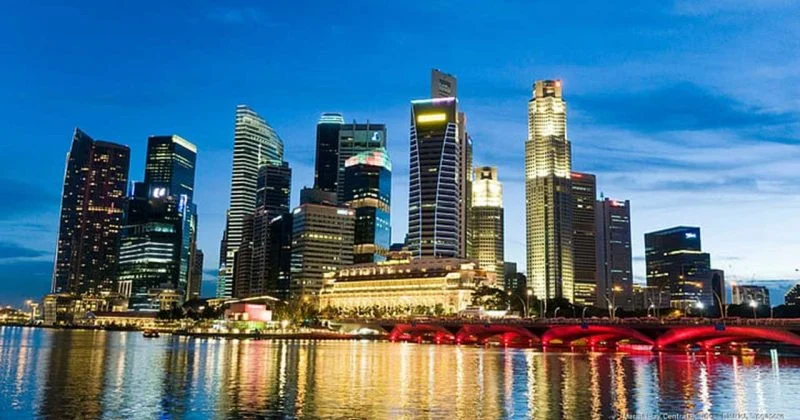
Tokyo has lost its last high-speed trading firm. Dharmacapital Co., Japan’s sole registered high-frequency trading operation, moved all of its staff to Singapore earlier this month, according to people familiar with the matter.
The move leaves Tokyo, home to the world’s fifth-largest stock exchange by market capitalization, without any locally operating high-speed trading firms, even as electronic trading remains a core part of how modern markets set prices and manage liquidity.
A move months in the making
The relocation did not happen overnight. Dharmacapital incorporated a Singapore entity, DHARMACAPITAL PTE. LTD., on April 16, 2026, indicating that preparations were underway well before the company’s staff left Tokyo.
Before the move was completed, the firm maintained operational ties to both cities. As of August 2026, however, the transition is complete, and the entire team is now based in Singapore.
Dharmacapital occupies a distinctive position in Japan’s financial system. It is the only firm registered as a high-speed trader under Japan’s Financial Instruments and Exchange Act, a designation it has held since at least 2018. The company also serves as a designated market maker on major Japanese exchanges, including the Tokyo Stock Exchange and Osaka Digital Exchange, where it provides continuous liquidity that helps keep bid-ask spreads tight and markets functioning smoothly.
No public explanation has accompanied the shift. The company has not cited regulatory frustrations, tax burdens, or operational problems.
What it could mean for Japanese markets
Market makers such as Dharmacapital play an important role in allowing buyers and sellers to transact efficiently. They sit in the order book, quoting prices on both sides, while their algorithms respond to market conditions in microseconds.
Dharmacapital can still make markets on the Tokyo Stock Exchange and Osaka Digital Exchange remotely from Singapore. The firm has not announced any plan to end its Japanese market-making activities. Even so, physical proximity to exchange infrastructure matters in high-frequency trading, where latency is measured in microseconds and small delays can affect execution quality.
Operating from Singapore rather than Tokyo adds network hops between the firm’s systems and Japanese exchange matching engines. For strategies that rely on being faster than competitors by fractions of a millisecond, that distance is not trivial.
The Osaka Digital Exchange deserves separate attention. The platform, which launched as a venue for trading digital securities and security tokens, depends on market makers to supply the liquidity that attracts institutional participants. Losing the physical presence of its key market maker could complicate adoption efforts at a time when Japan is seeking to expand its digital securities market.
Other international high-frequency trading firms, including Citadel Securities, Virtu Financial, and Jump Trading, maintain Asian operations, but their main hubs are typically in Hong Kong or Singapore rather than Tokyo. Japan’s market structure has historically been less accommodating to the co-location and low-latency setups these firms prefer, which helps explain why Dharmacapital stood alone on the registry.

