Tokenized Stocks Hit $3.53 Billion as Wall Street's Blockchain Push Accelerates
Key Takeaways
- •Tokenized stocks and ETFs reached $3.53 billion on October 25, accompanied by 4.42 million holder addresses and $10.26 billion in monthly transfers, according to RWA.xyz data.
- •The SEC granted temporary, conditional exemptions on September 17 requiring tokenized-equity venues to preserve shareholder rights, notify issuers, and honor objections, with future SEC decisions set to shape the market.
- •Twenty-two of 63 companies proposed for blockchain trading through OKXICE, including Microsoft, Alphabet, Goldman Sachs, and Wells Fargo, had objected by October 23.
- •Hong Kong priced roughly $2.6 billion in digital green bonds, Luxembourg issued a 1.7 billion euro sovereign bond on Clearstream's D7 platform, and JPMorgan launched its Ethereum-based JPM Coin deposit token for institutional clients.
- •The IMF found that nearly 80% of tokenized stock trades involved fractional shares but cautioned about fragmented liquidity and technology risks.
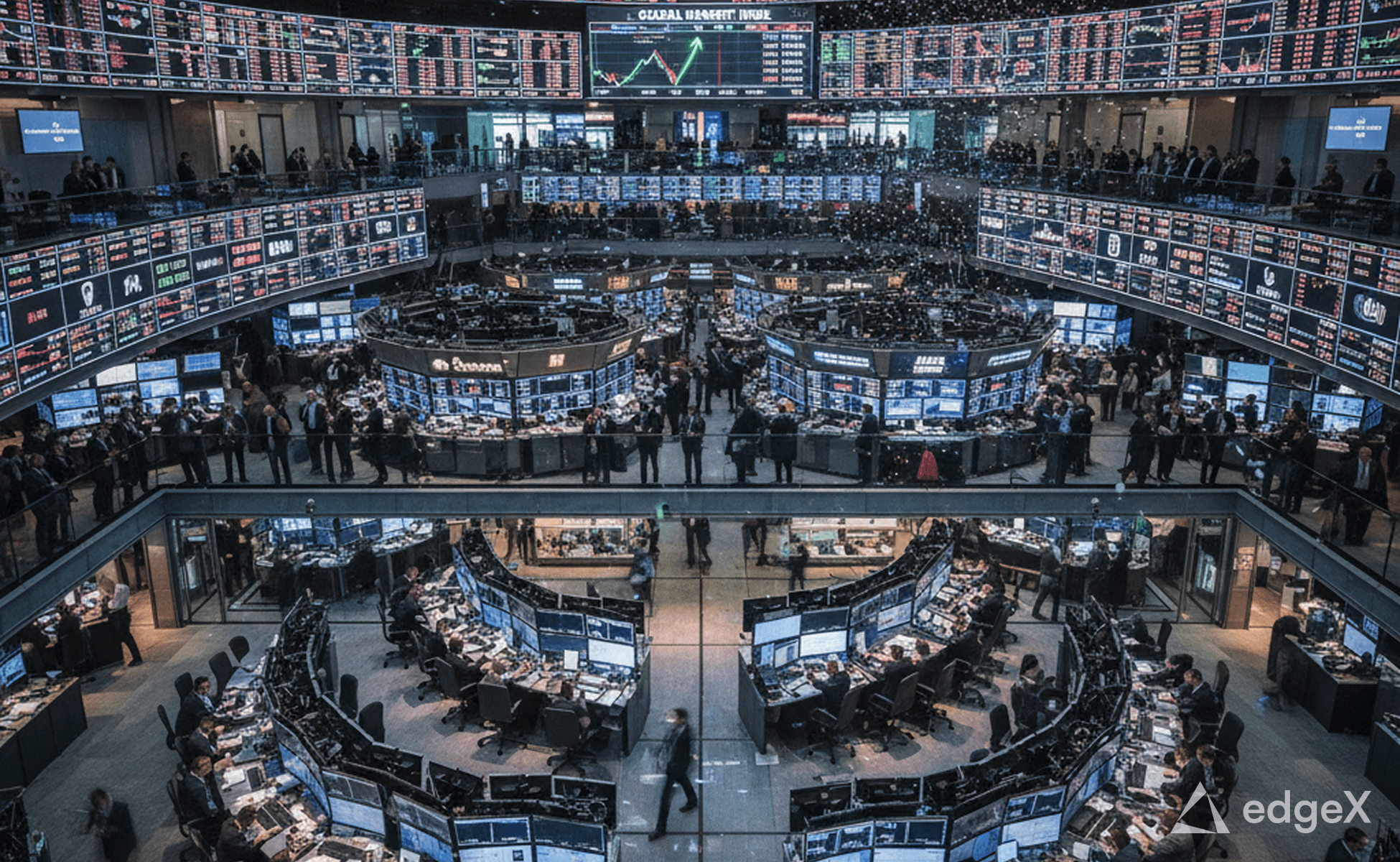
Tokenized stocks and ETFs reached $3.53 billion on October 25 as Wall Street broadened its blockchain ambitions beyond equities into bonds, deposits and funds. Data from RWA.xyz counted 4.42 million holder addresses and $10.26 billion in monthly transfers.
Those addresses do not necessarily correspond to individual investors, and transfer volumes reflect activity rather than fresh inflows. Still, the figures situate tokenized stocks within a wider financial shift as Wall Street tests blockchain networks for established assets.
The push now spans government bond issuance in Hong Kong and Luxembourg, tokenized bank money, and equity trading venues. Yet company objections and unresolved questions over shareholder protections have exposed the limits of that expansion. The result is a market with substantial activity but uneven approval from companies whose securities may trade.
A month ago, we warned that "MASS TOKENIZATION" was coming. Today, it's breaking records, and the numbers are getting hard to ignore. Stocks. Bonds. Bank deposits. Investment funds. The way we invest and move money is changing. You could end up using blockchain without even…
— Coin Bureau (@coinbureau) October 25, 2026
Tokenized Stocks Hit $3.53 Billion as Wall Street Faces Issuer Pushback
On September 17, the U.S. Securities and Exchange Commission granted temporary, conditional exemptions for venues trading tokenized equities. Operators must preserve equivalent shareholder rights, notify issuers and honor objections. The rules separate tokenized stocks conveying actual ownership from products that track prices without shareholder claims, and that distinction defines how Wall Street's blockchain proposals must treat investors. Because the relief is temporary and conditional, subsequent SEC decisions will help determine how the tokenized-equity market develops — a regulatory thread worth tracking as venues begin operating.
OKX and New York Stock Exchange parent Intercontinental Exchange proposed placing 63 companies on blockchain rails through OKXICE. By October 23, 22 of the 63 — roughly a third — had objected, including Microsoft, Alphabet, Goldman Sachs and Wells Fargo. Those objections limit that venue rather than preventing tokenized stock offerings altogether — a demonstration of why institutions cannot treat blockchain infrastructure as automatic corporate consent.
Nasdaq, separately, plans 23-hour weekday stock trading from December 6, pending regulatory and operational readiness. Longer trading hours do not mean shares are tokenized.
Digital Bonds and Bank Deposits Expand Across Blockchain Networks
Hong Kong priced about HK$20 billion ($2.6 billion) in digital green bonds on September 28, with its Hong Kong dollar tranche settling in tokenized bank deposits. Luxembourg followed on October 14 with a €1.7 billion sovereign bond issued on Clearstream's D7 platform, a 10-year security carrying a 3.70% coupon.
On October 19, JPMorgan launched its Ethereum-based dollar deposit token for institutional clients, following a deployment on Base. The instrument, JPM Coin, represents bank deposits. That puts JPM Coin in the same instrument category as the tokenized bank deposits that settled Hong Kong's green bond tranche — blockchain-based bank money now spanning sovereign-debt settlement and institutional banking.
Wall Street's fund push also includes Franklin Templeton's $150 million addition of its Singapore money-market fund shares to the XRP Ledger, though the shares were held in a single wallet, making it difficult to determine the number of underlying investors.
While tokenized stocks represent one segment of blockchain-based finance, their growing adoption has raised questions about market structure and investor protections. The IMF found that nearly 80% of tokenized stock trades involved fractional shares, highlighting demand for smaller-denomination investments. The organization nonetheless warned about fragmented liquidity and technology risks, underscoring the challenges facing Wall Street as tokenization expands.

