'AI Will Take Everyone's Jobs': Why Bitcoin Bull Tim Draper Is Hiring More
Key Takeaways
- •Tim Draper said his team is growing rather than being reduced as it adopts AI.
- •Draper claimed AI enables his team to accomplish 10 times more, but supplied no supporting hiring or productivity data.
- •AI proficiency appeared in 75% of tech job postings in June, up from 67% in March.
- •The International Labour Organization found that one in four workers globally held occupations with some exposure to generative AI, with most affected jobs expected to change rather than disappear.
- •The World Economic Forum projected that AI and information-processing technologies could create 11 million jobs and displace 9 million by 2030.
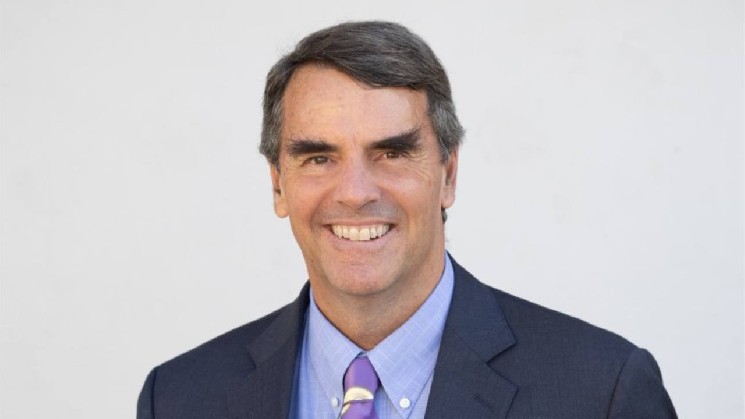
Venture capitalist Tim Draper had a different message on Sept. 22 for workers anxious that artificial intelligence will replace them: his team is growing as it uses the technology, rather than downsizing or replacing staff. In a post on X, the founding partner of Draper Associates argued that AI users could outcompete people who ignore the tools.
His opening line — "AI will take everyone's jobs" — set up his contention that people will invent new ones. "We're not cutting our team because of AI. We're GROWING it," Draper wrote.
Draper also asserted that his team can accomplish "10x more" with AI than without it. The figure is his own assessment of his team's productivity, and while the post reports team growth, it gives no hiring count. For readers tracking how AI is reshaping work, the post offers a public data point from inside an investment firm — though it remains one firm's self-reported account.
The investor qualified his opening claim immediately: "AI alone probably won't take your job. But someone using AI might." He argued that people would invent new jobs as AI changed existing work, and his warning focused on competition between workers who use the technology and those who ignore it. Draper pointed to his growing team as an example of adopting AI while expanding the workforce.
A Changing Market for AI Skills
Draper divided reactions to new technology into three groups: people who resist it, ignore it, or adopt it. He urged workers to experiment with AI in their own industries and warned that competing businesses could use the technology to serve customers faster and at lower cost. He compared the moment to workers adapting from horse-drawn transport to automobiles, presenting career change as a response to technological change rather than a guarantee that every existing job will survive.
In June, 75% of tech job postings requested AI proficiency, up from 67% in March. The figures show how often employers listed AI skills in tech openings; they do not measure how many people were hired.
The International Labour Organization's 2025 assessment found that one in four workers worldwide held an occupation with some exposure to generative AI — systems that produce content such as text, images, or code in response to prompts. Its researchers concluded that most affected jobs were more likely to change than disappear, given the continued need for human input. Exposure measures the potential for tasks to change; it is not a count of jobs lost.
Job Growth and Displacement Could Happen Together
Employers surveyed for the World Economic Forum's Future of Jobs Report 2025 expected AI and information-processing technologies to create 11 million jobs and displace 9 million by 2030. Those are projections across the surveyed labor market, not results already observed. With the projection window running to 2030, future labor statistics and updates to such reports serve as the natural checkpoints for comparing forecast against outcome. They nonetheless support a more qualified outlook than Draper's opening line: new roles and lost roles can emerge during the same transition.
Draper has also linked AI to changes beyond conventional workplaces. In January, he described a future in which robots and AI work alongside people and use bitcoin for payments. His latest post focuses on workers and businesses, but both sets of comments reflect his expectation that new technology will change how work is organized.
AI and robots also sit at the center of a broader economic forecast from Elon Musk. The SpaceX and Tesla chief predicted that AI and robots could more than double the global economy in less than 10 years, citing the potential for automation to increase production. Like Draper's "10x" figure, that projection describes anticipated change rather than measured results.
Draper's latest claim is more immediate and specific: he said his own team is growing while its use of AI increases what it can accomplish. His earlier comments about machines earning bitcoin payments also give a concrete example of the work he expects AI to perform. AI agents are software that can carry out tasks and make decisions, including transactions through cryptocurrency wallets.
Source: Bitcoin.com News

