Britain's Problem Isn't Too Much Thatcherism, But Too Little
Key Takeaways
- •Andy Burnham has argued that Britain took wrong turns in the 1980s under Thatcher, centralizing political power and privatizing economic power in ways he says harmed working people.
- •Prior to Thatcher taking office in 1979, Britain required an IMF bailout in 1976 and suffered the Winter of Discontent, with rampant public-sector strikes earning it the label of Europe's sick man.
- •Deindustrialization during the 1970s and 1980s was a structural shift that affected all advanced economies including West Germany, France, and the United States, driven by technology and global competition rather than domestic policy alone.
- •Thatcher-era reforms including the 1986 Big Bang deregulation helped raise Britain's manufacturing productivity from the lowest in the G7 to the highest and established London as a global financial capital.
- •The author argues Britain's current economic difficulties reflect insufficient free-market reform since Thatcher left office, as state spending has risen to approximately 45 percent of GDP compared with 35 percent when Tony Blair came to power.
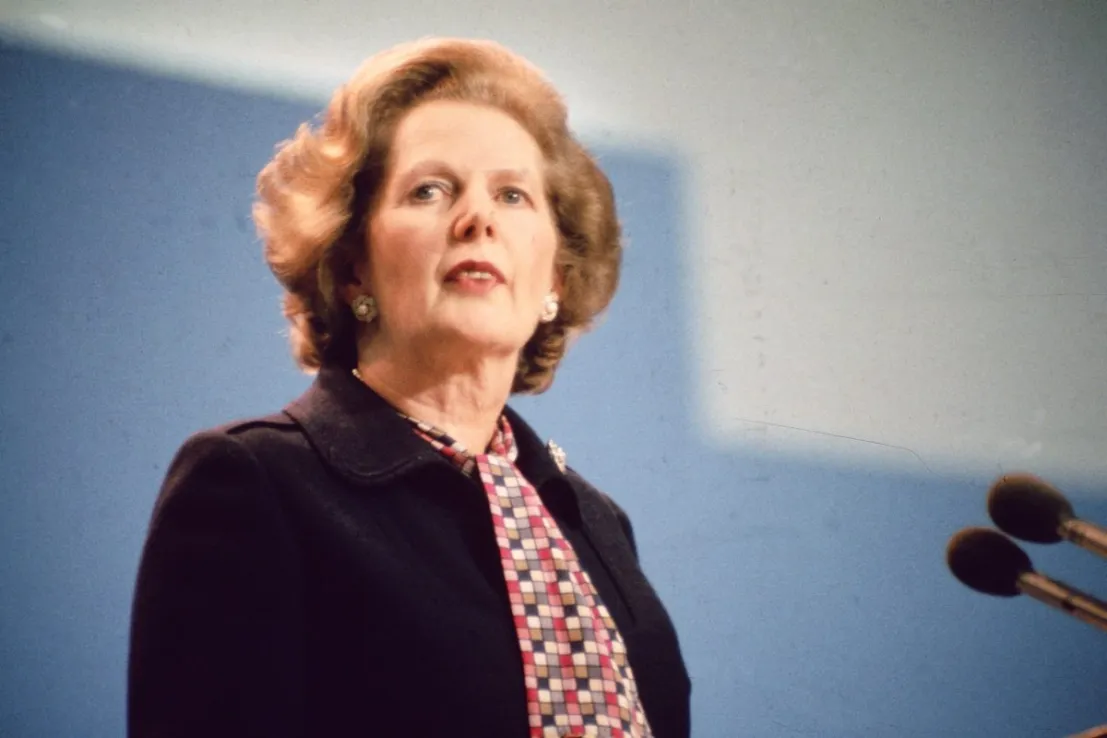
Margaret Thatcher remains a bogeyman for Andy Burnham and the British left despite having left Downing Street 35 years ago — but their critiques are wide of the mark, writes Emma Revell.
Everyone has someone or something they blame when things get tough. For the British left, that bogeyman is Margaret Thatcher. No matter that she first came to power half a century ago, or left Downing Street over 35 years ago. No matter that the Labour Party itself governed for over a decade in the interim, with Andy Burnham serving in a senior position during part of that time.
None of that stopped Burnham, the Mayor of Greater Manchester and a former Health Secretary under Gordon Brown, from reaching for familiar tropes once it became clear he would be the next occupant of Number 10. Britain, he argued, took "a series of wrong turns" in the 1980s. Political power was centralised, economic power privatised, and the country has been paying the price ever since. According to the new Prime Minister, Britain has endured 40 years of neoliberalism that "didn't work for most working people."
It is a powerful argument. On the evidence, however, it is entirely incorrect. The reality is closer to the exact opposite.
What Thatcher Inherited
It is worth recalling what Thatcher inherited when she became Prime Minister. By 1979, Britain was the sick man of Europe in more than rhetoric: humbled by an IMF bailout in 1976 — the first time a major Western economy had been forced to seek such assistance — paralysed by the Winter of Discontent, when rubbish went uncollected and the dead unburied amid a wave of public-sector strikes, and losing more working days to strike action than any of its neighbours. The post-war settlement that Burnham is seeking to revive may have marked the height of union power, but it was not an age of secure industry. It was a slow-motion bankruptcy, propped up by subsidies and paid for by the working population.
Deindustrialisation and public ownership are the areas where critics of Thatcher tend to focus. It is ground where Reform have found some electoral traction and where Burnham likely hopes to reclaim voters — bashing policies from a generation ago while promising a land of milk and honey in which the state owns services, runs them impeccably, and provides jobs for regions long branded "left-behind."
Yet the decline of heavy industry in the 1970s and 1980s was a structural shift that hit every advanced economy — a consequence of technology, global competition, and rising wages, not a policy invented in Downing Street. West Germany, France, and the United States all saw manufacturing employment fall over the same period. What Thatcher did was stop turning a blind eye to it. She ended the ruinous practice of pouring taxpayers' money into loss-making, badly run industries that drained resources from everything more productive.
That process was painful. One may readily critique her governments and those that followed for not foreseeing the impact on communities where the sole employer folded. But the alternative was not thriving factories or coal pits. It was a subsidised decline for which future generations would have picked up the tab.
Transforming Britain
The positive outcomes, however, were transformative. Britain's manufacturing productivity — the lowest in the G7 when Thatcher took office — became the highest. The economy pivoted towards services and high-value industry, producing the remarkable success of the booming financial services sector, with London becoming a capital of global finance. The Big Bang deregulation of 1986, which abolished fixed commissions and opened the City to foreign ownership, was central to that rise. Many of City AM's readers work for, or perhaps founded, businesses that generate significant chunks of GDP and compete on the global stage because of reforms undertaken by Thatcher's governments.
Privatisation did not lead to a situation where companies systematically exploit the public for profit. Burnham has claimed that the water industry is "run predominantly in the private interest rather than the public interest… [it's] an industry where the shareholders can never lose and the bill payers never win." Yet privatisation led to consistently higher investment in water infrastructure, to the point where Britain at times spent more on it than any other European country. This is a feature of privatised industry, not a bug — without having to compete for Treasury funding, companies could secure financing for necessary long-term investments. Where privatisation of water has faltered, it is largely because the regulator has refused to allow bills to rise even slightly so that water companies can cover the cost of upgrades.
The sell-off of shares in previously nationalised companies such as BT, and policies like Right to Buy, were not acts of vandalism. They represented the largest transfer of capital and property to ordinary Britons in modern history. The left may regard this as a wrong turn. Most of the people who bought those homes and those shares did not.
A Declared Interest
Here I should declare an interest. I work for the Centre for Policy Studies, the think tank Margaret Thatcher and Keith Joseph founded in 1974 to make the case for free enterprise when almost no one else would. Thatcher later described it as the place "where our conservative revolution began." So I am hardly a neutral witness. But that history is also the point: the ideas the CPS advocated when free marketeers were in the political wilderness went on to rescue a bankrupt country once they reached power. They did so by pushing back against a post-war consensus far more confident and assured than the Labour Party is today.
Burnham's prescription for what ails Britain — public ownership, a bigger state, and power pulled back to the centre while dressed up as devolution — is not a new path. It is the old one, the path the Labour Party already tried and abandoned because it failed.
The real lesson to draw from Thatcher's time in office is that decline is a choice. Unfortunately, it is a choice Britain seems to keep making. Wealth taxes and price controls are back on the political agenda. State spending sits at around 45 per cent of GDP, up from 35 per cent when Tony Blair came to power. The country is labouring under the highest tax burden in peacetime, and it has become increasingly difficult to build just about anything.
Britain in 2026 is not in its current position because of an excess of Thatcherism, but because since she left office there has not been nearly enough of it.
Emma Revell is external affairs director at the Centre for Policy Studies.

