Thailand's Crypto Travel Rule Will Require Sender and Recipient Details for Digital Asset Transfers
Key Takeaways
- •Thailand's travel rule requires regulated platforms to collect sender and recipient information, including names and account details, before transferring digital assets.
- •The requirement applies to licensed service providers and does not restrict which cryptocurrencies users can hold.
- •The rule stems from FATF standards and includes checks tied to self-custodial wallets, as set out by Thailand's securities regulator.
- •Exchanges will need stronger transaction-monitoring and recordkeeping systems, and users may face additional identity verification steps during transfers.
- •Thailand joins jurisdictions including South Korea, Singapore, and the EU in implementing travel rule requirements, meaning cross-border transfers may face information demands on both ends.
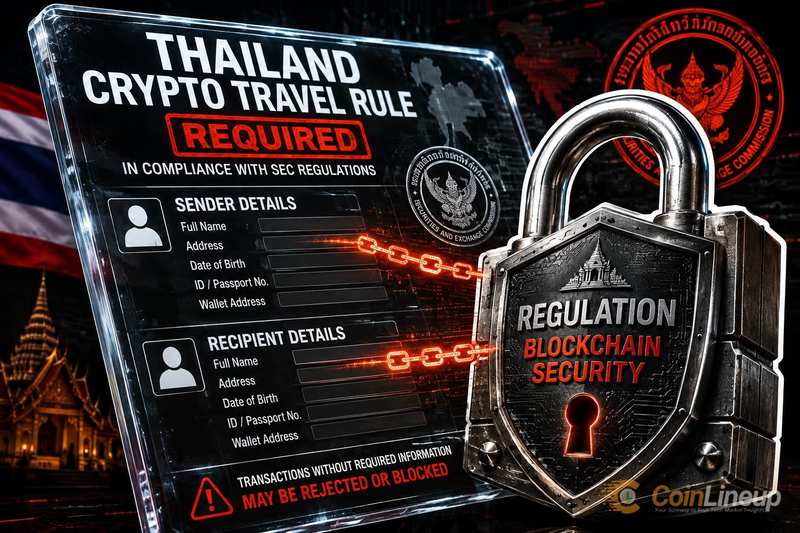
Thailand's new crypto travel rule will require regulated platforms to collect sender and recipient details for digital asset transfers, adding a new layer of compliance for licensed exchanges and their users.
What the crypto travel rule actually asks for
A "travel rule" means that certain identity information must "travel" alongside a transaction. In practice, the platform sending crypto has to record who is sending it and who is receiving it. The concept originates from the Financial Action Task Force (FATF), whose standards call on countries to require virtual asset service providers to pass originator and beneficiary information on transfers above certain thresholds. For related coverage, see SEC proposes transfer agent rule changes for tokenized securities.
Under Thailand's approach, regulated platforms must collect sender and recipient details before moving funds, including checks tied to self-custodial wallets, as reported. That covers names and account information linked to each side of a transfer. For related coverage, see Crypto Firms Oppose SEC Review Approach for Novel Crypto ETFs.
This is not a blanket ban on crypto. It is a data-collection requirement aimed at licensed operators, not a rule that changes what coins people can hold. For related coverage, see MEXC Launches Visa Crypto Card With USDT Cashback and Apple Pay Support.
How it affects regulated platforms in Thailand
The rule targets licensed service providers rather than the whole market. Thailand's securities regulator has laid out stricter conditions for digital asset business operators handling transfers.
Collecting both sender and recipient data means more compliance steps. Exchanges will likely need stronger transaction-monitoring workflows and better recordkeeping to satisfy the requirement, as legal analysts have outlined for transfers to and from wallets. The type of identity data involved under travel rule frameworks typically includes names, account or wallet identifiers, and in some cases physical addresses or national ID details, which is what makes recordkeeping requirements heavier than standard know-your-customer checks alone.
The extra checks can slow onboarding and transfers. For everyday users, that may mean a few more identity steps before a withdrawal or deposit clears.
Thailand has been tightening its digital asset rules on several fronts, including moves to target high-value USDT trades in a grey capital crackdown. The travel rule fits that broader pattern of closer oversight.
Why it matters for users and the wider market
For someone holding a small amount of crypto on a Thai exchange, the practical change is simple. You may need to supply more information about who you are sending to, or receiving from.
That raises a familiar trade-off. Regulators argue the data helps fight illicit flows, while some users worry about privacy when platforms log both ends of every transfer, a tension highlighted as Thailand put private wallets and offshore transfers on notice.
The update also signals where Thailand's policy is heading. It follows other recent steps such as proposed retail Bitcoin and Ethereum ETF rules favoring local funds, pointing to a more regulated but still active market. Thailand joins other jurisdictions that have implemented or moved toward travel rule requirements, including South Korea, Singapore, and members of the European Union under its Transfer of Funds Regulation, so cross-border transfers involving Thai platforms may face similar information demands on both ends.
The takeaway: if you use a licensed platform in Thailand, expect to share more transfer details going forward. The rule does not stop you from using crypto, but it does make compliant transfers a little more paperwork-heavy.
Disclaimer: This article is for informational purposes only and does not constitute financial or investment advice. Cryptocurrency and digital asset markets carry significant risk. Always do your own research before making decisions.

