Thai Police Arrest Chinese National Behind $74 Million Crypto Money Laundering Ring
Key Takeaways
- •Wu Chaoshuai is accused of controlling 133 bank and cryptocurrency exchange accounts that processed more than $74 million in illicit funds on behalf of a criminal organization.
- •He entered Thailand on a tourist visa in December 2019 and overstayed by more than three years, reportedly to avoid detection and possible extradition to China.
- •While evading capture, he frequently changed residences and used an altered car, fake license plates, and forged documents before police found him in Bangkok's Ramkhamhaeng area.
- •Wu will be charged with remaining in Thailand after his visa expired, and Thai police will coordinate his extradition with Chinese authorities.
- •The arrest reflects Thailand's intensified oversight of crypto-enabled crime, following a June operation that dismantled a mining-based laundering network moving over $300 million annually, and the probe also examined the conduct of several Thai immigration officers.
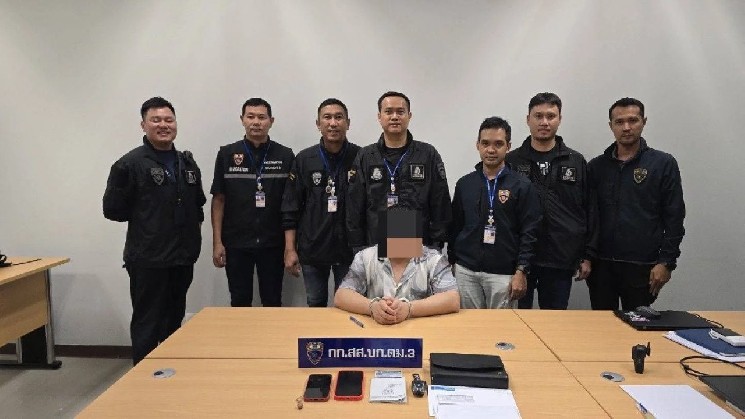
Thai authorities have arrested a Chinese national accused of operating a transnational money laundering network that used cryptocurrency to move illicit funds, concluding an investigation that also examined the conduct of several Thai immigration police officers.
The suspect, Wu Chaoshuai, allegedly fled China to evade arrest and overstayed his Thai visa by more than three years before being apprehended. According to the third division of the Thai Immigration Police, Wu entered Thailand on a tourist visa in December 2019 and remained in the country after it expired, likely to avoid detection by immigration authorities, who could arrange his extradition to China.
Chinese authorities allege that Wu served as an account mule for a criminal organization, recruiting other people to open bank accounts and cryptocurrency exchange accounts to obscure and facilitate the movement of illicit proceeds. Investigators say he controlled 133 accounts and processed more than $74 million in transactions. That structure is what makes mule networks a recurring target for financial crime investigators: distributing proceeds across a web of accounts opened in other people's names deliberately severs the visible link between illicit funds and the organization behind them, so identifying the individuals who operate these account webs is often the key to unwinding the broader network.
Years of Evading Detection
To avoid being tracked, Wu moved continually across Thailand and never stayed in one location for an extended period. Thai media reported that he frequently changed residences, renting houses and luxury condominiums in different communities. He also changed the color of his car and used fake license plates and forged documents to throw authorities off his trail.
Despite these precautions, police located Wu hiding in a luxury house in the Ramkhamhaeng area of Bangkok. At the time of his arrest, his visa had been expired for over three years.
Wu will be charged with remaining in Thailand after his visa expired, and Thai police will coordinate his extradition with Chinese authorities. The same investigation also examined the conduct of several Thai immigration police officers, making the outcome of that review a thread to follow alongside the extradition process as the case moves forward.
Thailand Tightens Oversight of Crypto Crime
The arrest comes as Thai authorities strengthen their oversight of cryptocurrency movements and crypto-related crime. In June, the Department of Special Investigation dismantled a crypto mining money laundering organization that laundered more than $300 million annually from online scams and gambling platforms. Taken together, the two cases illustrate the scale Thai authorities attribute to crypto-enabled laundering operations within their jurisdiction, spanning both exchange-linked account networks and mining-based schemes. The next procedural steps to watch are the extradition coordination with Chinese authorities and any further disclosures about the immigration officers whose conduct came under scrutiny during the investigation.

