Tesla's Cybercab Robotaxi Launch Triggers Same-Day NHTSA Audit as Musk Tests Regulatory Limits
Key Takeaways
- •Tesla began commercial Cybercab robotaxi rides in Austin on September 3, 2026, the same day NHTSA opened an audit covering approximately 1,000 vehicles.
- •Tesla self-certified the Cybercab as FMVSS-compliant, avoiding the production caps that come with regulatory exemptions — a path experts consider legally questionable.
- •As of early September 2026, Tesla had registered 45 Cybercabs in Texas, part of a broader autonomous fleet of about 420 vehicles in the state.
- •Cybercab production started at Giga Texas in April 2026, about 18 months after the prototype's October 2024 unveiling, with an EPA Certificate of Conformity secured in May 2026.
- •If NHTSA upholds Tesla's self-certification, it would set a precedent allowing at-scale sales of vehicles without steering wheels or pedals, while an adverse finding could bring recalls, fines, or forced production halts.
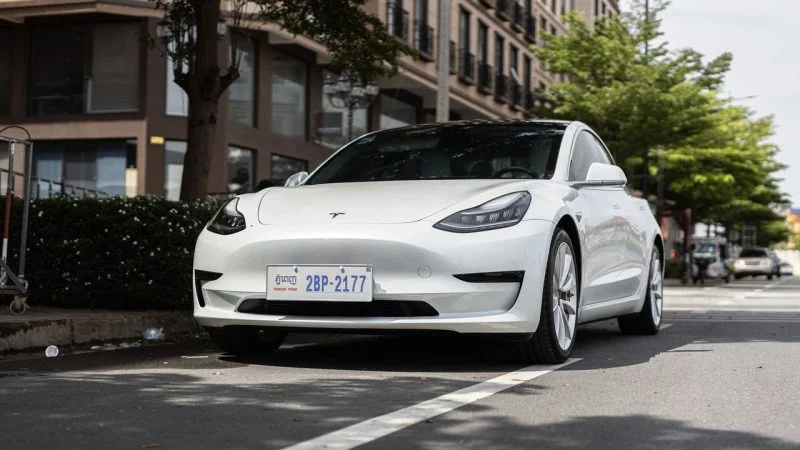
Tesla began offering commercial rides in its Cybercab robotaxi in Austin, Texas, on September 3, 2026 — the very same day the National Highway Traffic Safety Administration (NHTSA) opened an audit into the vehicle.
The Cybercab is a purpose-built robotaxi with no steering wheel, no pedals, and no rearview mirror, designed from the ground up for a world in which passengers sit back while software handles the driving. Tesla did not wait for regulators to endorse the concept before putting paying customers inside. The launch is not Tesla's first autonomous ride service in the city — the company began a small supervised robotaxi pilot in Austin in mid-2025 using Model Y vehicles with safety monitors aboard — but the Cybercab service marks its first using a vehicle built specifically for driverless operation and sold to the public as a commercial product from day one.
The Self-Certification Gambit
Most companies developing vehicles without traditional controls have sought exemptions from the Federal Motor Vehicle Safety Standards (FMVSS), the sprawling rulebook governing everything from airbag placement to brake pedal force. Such exemptions come with production caps — typically limiting manufacturers to a few thousand units while regulators study the safety implications. Those caps trace back to a 1970s-era provision intended for low-volume experimental vehicles, and despite years of discussion in Washington about raising them for autonomous vehicles, Congress has not done so.
Tesla chose a different route. The company self-certified the Cybercab as compliant with all relevant FMVSS requirements, a process that effectively allows manufacturers to vouch for their own vehicles without prior government approval. By self-certifying, Tesla avoided production limits entirely — a move industry experts have flagged as legally questionable. It is also a sharp departure from how rivals have proceeded: Waymo, the most established US robotaxi operator, runs its service with conventionally equipped vehicles equipped with manual controls, sidestepping the FMVSS question altogether while scaling paid rides across cities including Phoenix, San Francisco, Los Angeles, and Austin.
NHTSA's audit covers approximately 1,000 Cybercabs and will examine whether Tesla's self-certification holds up under scrutiny. The agency also has other tools it has used against Tesla before, including defect investigations and recall orders — its Autopilot investigation culminated in a December 2023 recall affecting more than two million vehicles.
What's on the Ground in Austin
As of early September 2026, Tesla has registered 45 Cybercabs in Texas. That figure is a fraction of the company's broader autonomous fleet in the state, which stands at roughly 420 vehicles.
Production began at Giga Texas in April 2026, roughly 18 months after the Cybercab prototype was first unveiled at an event in October 2024. Tesla secured an EPA Certificate of Conformity in May 2026.
Texas maintains one of the most permissive regulatory frameworks for autonomous vehicles in the United States, with no requirement for a human safety driver behind the wheel. That stands in contrast to states like California, where robotaxi operators must obtain permits from both the DMV and the California Public Utilities Commission — a reason Austin has become a favored proving ground for autonomous driving programs, including Waymo's own Texas expansion.
The Regulatory Chess Match
Tesla's approach puts NHTSA in an awkward position. The agency has been working to update its regulations to account for vehicles lacking traditional controls, but that process has been slow. In the meantime, the existing rules technically apply — and Tesla argues it meets them.
The stakes are considerable. If NHTSA determines Tesla's self-certification is valid, it would effectively set a precedent allowing any manufacturer to build and sell vehicles without steering wheels or pedals at scale, with no exemption required. If the agency finds the self-certification invalid, Tesla could face recalls, fines, or forced production halts.
For Tesla investors, the Cybercab is central to the company's long-term valuation story. Tesla has positioned itself not merely as a car manufacturer but as a future mobility platform, with robotaxis generating recurring revenue from rides rather than one-time revenue from vehicle sales. How the NHTSA audit resolves — and whether Tesla's same-day launch-and-audit pattern becomes its standard playbook in other states — will shape not just one company's rollout but the ground rules for the entire driverless vehicle industry.
