Tech Companies Urge U.S. Policymakers to Avoid Premature Restrictions on Open AI Models
Key Takeaways
- •The open letter asks U.S. policymakers not to impose premature limits on open AI models that could weaken competition or push innovation abroad.
- •Trump administration officials have raised concerns that Chinese open-weight models are gaining adoption and may involve theft of U.S. intellectual property.
- •Treasury Secretary Scott Bessent said sanctions and Entity List designations could be used against PRC firms involved in industrial-scale distillation attacks that amount to IP theft.
- •More than 75 companies backed the letter, including Nvidia, Dell, Hugging Face, IBM, Meta, Microsoft, Mistral, OpenAI and SpaceX.
- •Anthropic, Amazon and Apple were identified as notable companies that did not sign the letter.
A group of major technology companies has signed an open letter urging U.S. policymakers not to impose “premature restrictions on open models that stifle competition or drive innovation overseas.”
The letter, released on July 24, comes as Trump administration officials have signaled a possible crackdown on Chinese open models as they gain popularity. It reflects growing concern in official circles that Chinese open-weight models — which can be downloaded, modified and run on users’ own infrastructure — are attracting significant adoption at the expense of proprietary closed models from leading U.S. technology vendors.
That distinction is central to the dispute. Open-weight releases allow developers, researchers and companies to inspect, adapt and deploy AI systems outside the original provider’s hosted service, while closed models typically remain controlled through an API or platform. Supporters argue this makes open models important for competition, customization and national AI capacity; critics focus on the difficulty of controlling downstream uses once model weights are released.
The success of Chinese models has also prompted allegations of misconduct. The capabilities of Moonshot’s Kimi K3 model, for example, led Michael Kratsios, an adviser to the Trump administration, to accuse the Chinese company of a “large-scale effort” to steal proprietary U.S. technology in an X post.
Treasury Secretary Scott Bessent went further in describing the threat posed by China.
“We support open source AI and the innovation it unlocks,” Bessent posted on X. “But open source is not open season on American IP. When PRC firms conduct covert, industrial-scale distillation attacks that cross the line into IP theft, sanctions and Entity List designations will be on the table.”
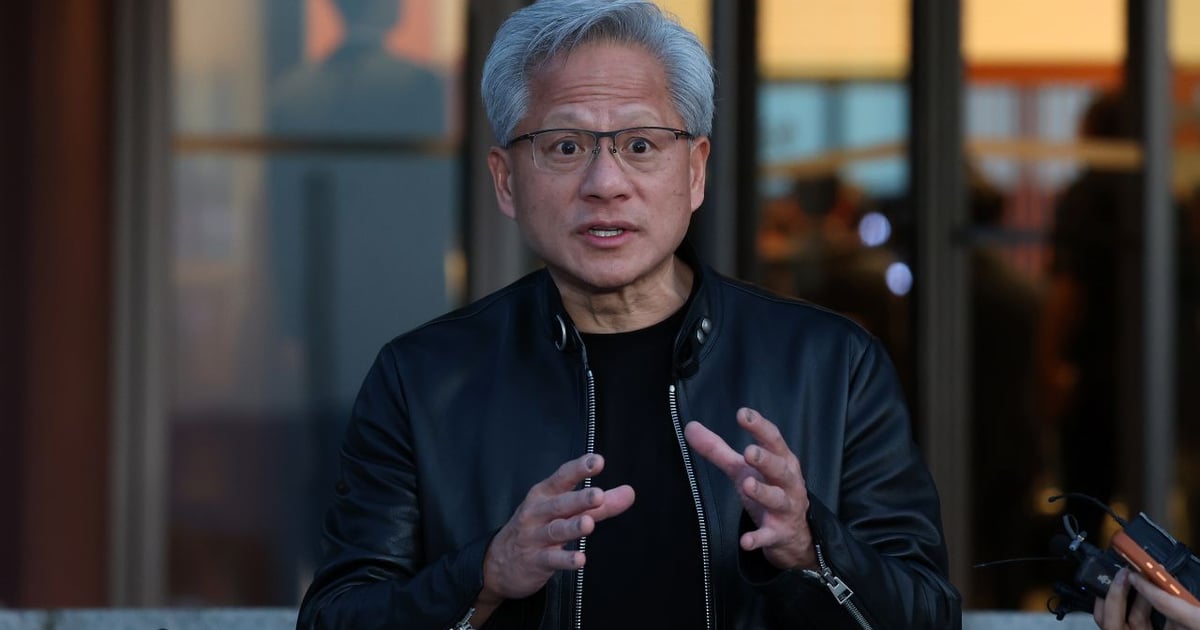
The sharp responses have raised concern in the technology community. Jensen Huang, CEO of Nvidia, also addressed the issue in an X post.
“AI will transform every industry, power every company, and be built by every country. Open models strengthen safety and cybersecurity, accelerate innovation and diffusion, and enable sovereignty. The world needs both frontier closed models and frontier open models,” Huang said.
The open letter is backed by more than 75 companies, including Nvidia, Dell, Hugging Face, IBM, Meta, Microsoft, Mistral, OpenAI and SpaceX. It was described as quickly gaining momentum, with additional companies adding their support, including OpenAI, Google, AMD, Cisco, GitHub and Cloudflare.
Notable companies that did not sign include Anthropic, Amazon and Apple.
The letter acknowledges that the spread of open models carries risks.
“To be sure, open weights carry real and distinct risks. Once released, the weights are beyond the original developer’s control, and modified versions are difficult to trace or reverse,” the letter states. “But the right response to this risk is not to prohibit open weights.”
Instead, the signatories argue that policymakers should recognize that open weights “strengthen competition and competition is what keeps the gains of AI broadly shared rather than concentrated in a few hands.”
“Relying solely on closed models is not inherently safe: they can be breached, misused or fail in ways that outsiders cannot detect. And concentrating advanced AI capabilities behind a small number of closed models compounds that risk,” the letter continued.
The debate now turns on whether U.S. officials try to target alleged IP theft and national-security risks through tools such as sanctions or Entity List designations, or pursue broader limits that could also affect open-weight development by U.S. companies and their customers.
The Trump administration has not formally responded to the letter.

