Nigerian House Urges Federal Support for Local Drone Manufacturing Amid Security Threats
Key Takeaways
- •The House of Representatives urged the federal government to support a formal national policy for Nigeria’s drone manufacturing sector.
- •Lawmakers said armed groups are using commercially available drones against Nigerian military forces, changing the country’s security challenges.
- •The motion calls for financing through institutions such as the Bank of Industry and DICON to help local manufacturers meet defence and government standards.
- •Proposed measures include defence industrial zones, technology transfer agreements, fiscal incentives, and a gradual reduction in imported drone components.
- •Terra Industries, which has a joint venture with DICON and has raised $34 million, welcomed the motion as support for Nigeria’s drone manufacturing ambitions.
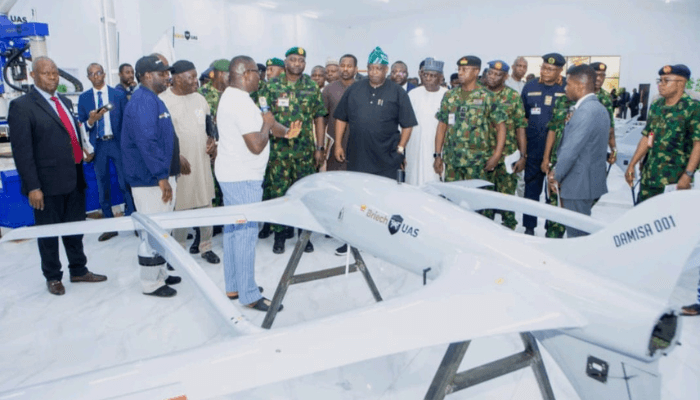
Nigeria’s House of Representatives has approved a motion urging the federal government to establish a formal national drone industrial policy, create designated defence industrial zones, and provide structured capital support for domestic drone manufacturers.
The motion reflects growing concern over the use of commercial drones by armed groups against Nigerian military forces. Debated on the floor of the House, it acknowledged that insurgent groups and bandits are now deploying commercially available drones against Nigerian troops, a shift lawmakers said has changed the nature of the security threat facing the country.
Lawmakers argued that if armed non-state actors are already using drones as weapons, Nigeria cannot afford to rely on imported military technology for its response. They said the country should instead build local capacity to design, manufacture, maintain, and deploy drone systems for defence and government use.
The legislators cited Nigeria’s existing engineering talent, its position as Africa’s largest economy, and the emergence of private-sector manufacturing firms as evidence that the country has the skills and industrial base needed to develop a viable drone manufacturing sector.
According to the motion, what is needed is a combination of state policy and capital to move the industry from a collection of entrepreneurial ventures into a recognised strategic national industry. That distinction matters because defence drone production depends not only on prototypes, but also on repeatable manufacturing, maintenance capacity, procurement standards, and trusted supply chains that government agencies can rely on.
The House highlighted the need for organised financial support for Nigerian drone manufacturers, including through institutions such as the Bank of Industry and the Defence Industries Corporation of Nigeria, or DICON. Lawmakers identified companies including Terra Industries and Proforce as among the domestic players that could benefit from such support.
The objective, according to the motion, is to help local manufacturers expand and meet the standards required for military and government contracts, reducing their dependence on private investment alone.
Nigeria is not starting from zero. The Nigerian Air Force Institute of Technology developed the “Amebo” UAV as far back as 2018, demonstrating that technical capability already exists within the country’s military-industrial ecosystem. Lawmakers said the missing element has been a policy framework capable of building on that foundation in a systematic way.
Beyond funding, the motion calls for several specific measures. It urges the federal government to adopt a drone nationalisation policy that sets out a clear pathway from the current private-sector-led model to a state-supported strategic industry, with milestones, oversight structures, and accountability mechanisms included.
On technology transfer, the House called on relevant agencies to identify and formalise agreements with reputable international drone manufacturers. Those agreements, according to the motion, should be structured around localising production and progressively reducing the use of imported components over time.
The underlying goal is for Nigeria to manufacture more of the constituent parts of drones domestically, rather than remaining indefinitely dependent on the assembly of imported components. For policymakers, the practical test will be whether local manufacturers can move from limited production and partnerships into consistent delivery of systems that meet defence and government requirements.
The motion also calls for dedicated defence industrial zones focused on drone manufacturing, research, and maintenance. These zones would be supported by fiscal incentives, infrastructure, and a regulatory framework designed to attract both local and foreign investors into the sector.
The House Committee on Defence, Industry, Commerce, and Security has been mandated to conduct a legislative review to support implementation of the proposed policy. Since the motion is a legislative call for action, the next steps would depend on how federal agencies, defence institutions, and financing bodies translate it into policy, funding, procurement, and oversight mechanisms.
Terra Industries has signed a joint venture agreement with DICON and raised $34 million from investors including 8VC and Lux Capital. The company welcomed the motion, describing it as a sign that Nigeria has the engineering skills, growing support, and existing military relationships needed to build a successful drone manufacturing industry. https://x.com/terraindustries/status/2081673313412141281?s=20

