Former Trump Official Miles Taylor Warns President Has Neutralized Key Legal Checks With New Appointments
Key Takeaways
- •Miles Taylor argues that the appointments of Will Scharf as White House counsel and Todd Blanche as Attorney General undermine two roles historically designed to check presidential overreach.
- •Will Scharf, set to become White House counsel on September 1, previously chaired the National Capital Planning Commission, where he expedited Trump's construction projects including a proposed 250-foot arch exempt from Washington's building height cap.
- •Todd Blanche, who served as Trump's personal attorney in criminal proceedings, was named Attorney General after legally defending the demolition of the White House East Wing for a ballroom as a national security matter.
- •Taylor contrasts the current appointments with Trump's first term, when officials such as Don McGahn and Jeff Sessions reportedly resisted or delayed directives they considered legally problematic.
- •Taylor warns that Trump spent his years out of power identifying the officials who had formed a legal barrier and has now replaced them with loyalists unlikely to challenge his directives.
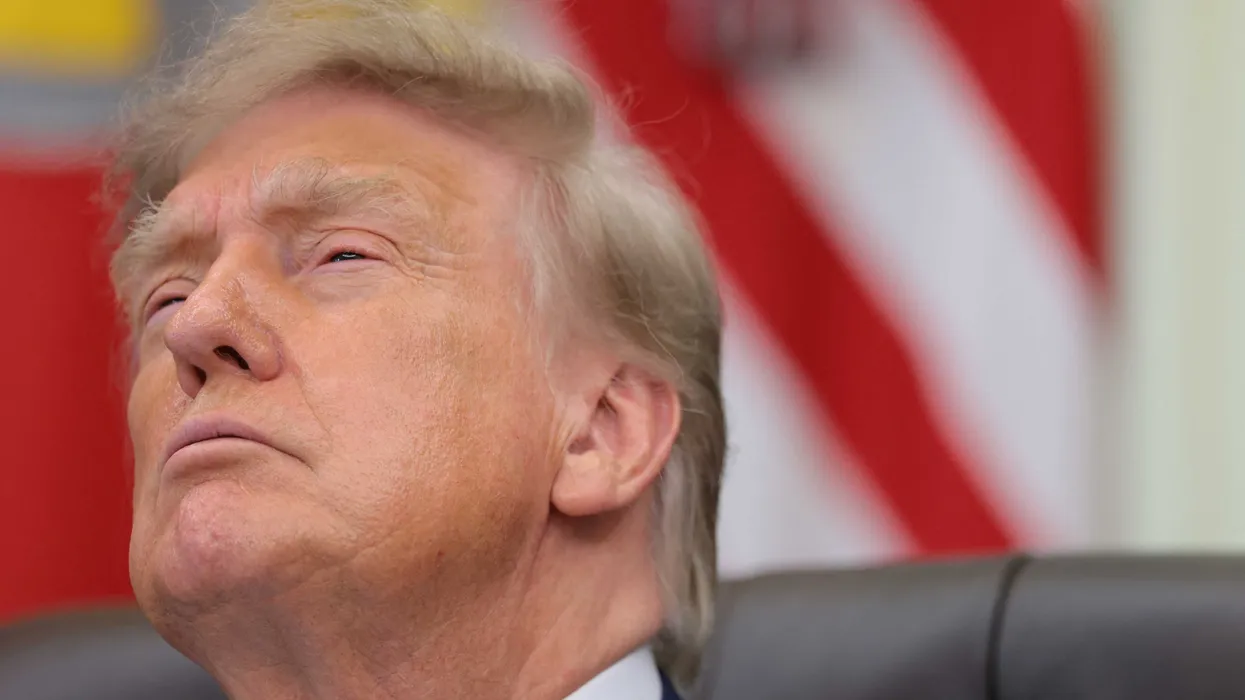
Miles Taylor, a former Department of Homeland Security chief of staff who served during President Donald Trump's first administration, is warning that the president has effectively neutralized the two government offices primarily responsible for providing legal pushback against executive overreach.
Taylor, who gained national attention for an anonymous op-ed published in the New York Times detailing what he described as abuses behind the scenes and later authored the book "A Warning," has been a vocal conservative critic of Trump since departing government in 2029. In a piece published Tuesday in The i Paper, he argues that two recent appointments — Will Scharf as White House counsel and Todd Blanche as Attorney General — represent the systematic corruption of roles designed to keep the president within legal bounds. The White House counsel traditionally serves as the president's top in-house legal adviser, expected to flag ethical and constitutional concerns, while the attorney general heads the Justice Department and is historically expected to maintain a degree of independence from direct presidential direction in law enforcement matters.
"The attorney general and the White House counsel," Taylor wrote. "Those jobs exist to keep the president on the right side of the law. This weekend, two men were elevated into America's top legal jobs after working to build literal monuments to their boss."
Taylor characterized both appointees as "monument men" — officials who advanced Trump's ambitious construction projects in Washington and were rewarded with the nation's highest legal positions.
According to Taylor, the President announced on Sunday that Will Scharf, currently Trump's staff secretary, will assume the role of White House counsel on September 1. Scharf is publicly recognizable as the aide who stands beside Trump in the Oval Office narrating executive orders as the President signs them. He also chairs the National Capital Planning Commission, the federal body overseeing construction and land use in the capital.
In that capacity, Taylor wrote, Scharf "fast-tracked the White House ballroom" and "expedited review of the President's planned triumphal arch — a 250ft 'Arc de Trump' — and personally argued it should be exempt from the century-old law capping Washington's buildings at 130ft," a reference to the Height of Buildings Act of 1910, which has governed the District's skyline for over a century.
Taylor's assessment was blunt: "Approve the arch, and the leader makes you his lawyer."
The appointment of Todd Blanche as Attorney General drew similar scrutiny. Blanche, who served as Trump's personal attorney and represented him in criminal proceedings, replaced an attorney general whom Taylor said "was fired for not weaponizing the Justice Department fast enough."
"Blanche is a 'monument man,' too, which is evidently a requirement for elevation," Taylor added. He noted that when preservationists sued over Trump's demolition of the East Wing — torn down, Taylor wrote, to construct a 90,000-square-foot ballroom dedicated to himself — Blanche took on the case. "He argued in court filings that construction must resume, portraying the President's party palace as a matter of national security urgency."
Reflecting on his own experience in the first administration, Taylor emphasized the historical importance of independent-minded lawyers in those two roles. During Trump's first term, figures such as White House Counsel Don McGahn and Attorney General Jeff Sessions were reported to have resisted or slow-walked directives they believed were legally problematic, contributing to a pattern of high-profile departures from the Justice Department and the counsel's office.
"When I served in the first term, the lawyers willing to say 'no' were the last line of defense. The president would demand something illegal... It was a wall that held — barely — a hundred times over. Trump remembers that wall as vividly as I do. He spent his four years out of power studying where it stood and who manned it. This weekend, he finished solving the problem."
"The next time he goes hunting for a lawyer with an answer he likes, he won't have to look very far," Taylor concluded. "The two men who should've been whispering 'no' into the President's ear got his attention by whispering 'yes, sir.' Now they're seated at his right hand."
