Armenia-Azerbaijan Peace Plan Stalls One Year After Washington Breakthrough
Key Takeaways
- •On the first anniversary of the Armenia-Azerbaijan peace declaration, US Secretary of State Marco Rubio reaffirmed American commitment to the agreement and cited progress including railway surveying work and the creation of a $201 million Trans-Caspian Enterprise Fund.
- •Critical operational details about TRIPP remain unresolved, including total project costs, financing structure, the US security role, and customs procedures for Azerbaijani people and goods transiting Armenian territory.
- •Azerbaijan has conditioned a finalized peace agreement on Armenia amending its constitution to explicitly recognize Azerbaijani sovereignty over Nagorno-Karabakh, a demand Pashinyan's government may support but cannot guarantee given its lack of a two-thirds parliamentary majority.
- •The ongoing US-Iran war and Tehran's firm opposition to TRIPP introduce additional geopolitical uncertainty, though Armenia and Iran have separately discussed bilateral trade and transport cooperation.
- •No proposed constitutional amendments have been released for public discussion and no timetable has been announced for a referendum or a formal peace agreement signing ceremony.
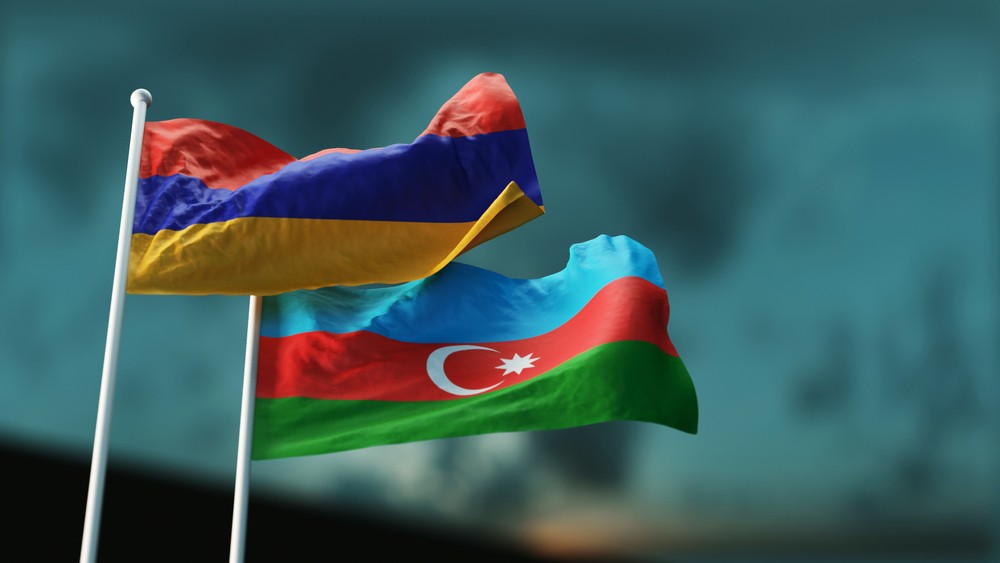
One year after the signing of a provisional peace deal in Washington, DC, American, Armenian, and Azerbaijani officials continue to express optimism about the prospects for stability and prosperity in the South Caucasus. Even so, progress on implementing the joint declaration has been uneven, underscoring how much of the framework still depends on unresolved political and logistical details.
On August 8, the first anniversary of the declaration signed by Armenian Prime Minister Nikol Pashinyan and Azerbaijani leader Ilham Aliyev, US Secretary of State Marco Rubio issued a statement reaffirming Washington’s commitment to advancing the agreement.
“
This declaration ended decades of conflict in the South Caucasus and launched the trailblazing Trump Route for International Peace and Prosperity –TRIPP,
” Rubio said. “Over the past twelve months, the United States has worked side-by-side with Armenia and Azerbaijan to turn that promise into progress.”
Rubio pointed to several TRIPP-related developments, including the beginning of surveying work for a railway that would cross Armenian territory to support freight traffic from Azerbaijan to Turkey and beyond, and the creation of a Trans-Caspian Enterprise Fund with initial capitalization of $201 million.
“
This progress reflects a simple truth: peace and prosperity reinforce one another,
” Rubio said. “TRIPP is more than an infrastructure project – it is a vital link in the Trans-Caspian Trade Route, a driver of commercial opportunities for the United States and others, and a model for how economic cooperation can cement peace following the resolution of long-standing disputes.”
In an August 8 letter to Trump, Aliyev praised TRIPP’s “tremendous potential” and said bilateral US-Azerbaijani relations “have now reached their highest point in the 34-year history of our diplomatic relations.”
Trump also held positive phone calls with both Pashinyan and Aliyev, reiterating his desire for TRIPP construction to begin in the “near future.” Pashinyan said in a statement that TRIPP could “help Armenia and Azerbaijan begin to perceive each other not as an obstacle, but … as neighbors.”
There is no question that enthusiasm for the deal remains strong. All sides want it to move forward. However, many key operational questions about TRIPP have still not been resolved, including the US role in securing the route and possible customs procedures for Azerbaijani people and goods using the planned road and railway. Despite the existence of the Enterprise Fund, uncertainty also remains over TRIPP’s cost and how construction will be financed. Armenian officials have sought additional investors this year but have not yet secured firm commitments, leaving the project short of the concrete financing structure usually needed to move from political agreement to construction.
Another factor complicating TRIPP’s future is the ongoing war between the United States and Iran. That conflict has drained US financial resources and distracted the Trump administration. Iranian leaders remain firmly opposed to TRIPP, arguing that it could obstruct Tehran’s own trade interests. Whether Iran has the geopolitical leverage to disrupt the project remains unclear. The proposed TRIPP corridor would lie just north of the Armenian-Iranian border.
Armenian and Iranian officials recently met in Tehran to discuss trade and transport. According to Iranian sources, the two sides drafted a memorandum of understanding aimed at streamlining border-crossing procedures and opening “parallel” trade corridors in the region. A July 31 report in the Tehran Times quoted Armenian Deputy Infrastructure Minister Kristine Galachyan as saying that “the development of transit infrastructure is on the right track.”
Separately, Armenian Foreign Minister Ararat Mirzoyan met with an Iranian Foreign Ministry delegation in Yerevan on July 31 to review bilateral issues. The official Armenian readout stayed general and did not mention TRIPP specifically. It also gave no indication that the two sides share a common position, saying only that “the importance of the opportunities created by the implementation of new connectivity projects was underscored.”
Beyond TRIPP, the provisional peace framework between Armenia and Azerbaijan has not yet been finalized, and there is no sign that a signing ceremony will take place soon. Azerbaijan has made a constitutional change in Armenia a condition for a peace agreement. Baku wants Armenia to amend its constitution to explicitly recognize Azerbaijan’s sovereignty over Nagorno-Karabakh, which Azerbaijani forces regained control of in 2023.
Pashinyan’s government has indicated it may be open to such a change, but it remains uncertain whether it has enough political support to secure approval in parliament and among the public. Pashinyan won a clear victory in June’s parliamentary election, with voters backing his reform agenda. However, his Civil Contract party did not win the two-thirds majority needed to guarantee passage of a constitutional amendment.
Pashinyan has also said he plans to hold a national referendum on a draft of a new constitution, which would presumably include provisions intended to help finalize a peace treaty with Azerbaijan. So far, however, no proposed amendments have been released for public discussion, and no timetable has been announced for a referendum.
By Eurasianet
More Top Reads From Oilprice.com
Libya Weighs Force Majeure After Drone Attacks on Zawiya Oil Hub
Indian Refiners Cut LPG Losses in August
Russia Rebuilds Nuclear Workforce at Iran’s Bushehr Plant
