Conservative Commentators Warn Trump Allies Are Acting as If His Power Will 'Go on Forever'
Key Takeaways
- •Charlie Sykes and Tom Nichols criticized Trump and his allies for acting as if they will remain in power indefinitely.
- •Nichols said Trump administration figures including JD Vance and Pete Hegseth are behaving as though Republicans will never lose control.
- •Trump has repeatedly urged Senate Republicans to eliminate the legislative filibuster, while John Thune has warned against doing so because the party could later be in the minority.
- •Sykes said the post-Trump tradition of political restraint has largely disappeared and that the current approach is either delusional or dangerous.
- •The next nationwide electoral test of congressional power is scheduled for November 2026, when all House seats and about one-third of the Senate will be on the ballot.
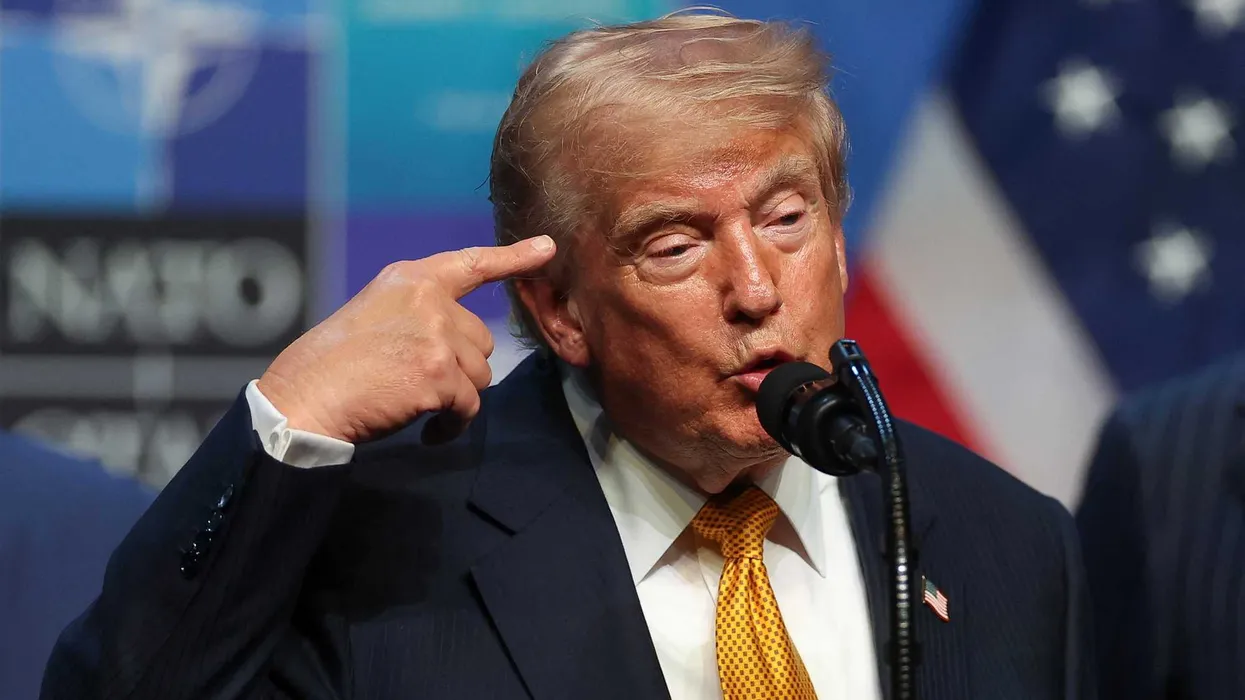
President Donald Trump and many of his allies are behaving as though his power will "go on forever," two prominent conservative commentators argued, warning that the administration is pushing forward with ideas that could blow up in their faces if Democrats win power in the near future.
Over the weekend, The Atlantic's Charlie Sykes welcomed fellow conservative and security expert Tom Nichols as the latest guest on his podcast, "To the Contrary." The two men — Sykes, a former Milwaukee conservative talk radio host who founded the anti-Trump outlet The Bulwark, and Nichols, a professor emeritus of national security affairs at the U.S. Naval War College and author of "The Death of Expertise" — are both noted as strongly and vocally anti-Trump conservatives, and they discussed "the frightening delusions of the Trump team," with Nichols in particular excoriating the administration and its allies, among them Vice President JD Vance and Defense Secretary Pete Hegseth, for advancing ideas that ignore the possibility of Republicans ever losing power again.
"I think the other thing that's remarkable about the way they talk and the way they're acting, and this brings us not just to JD Vance but to Pete Hegseth and... you know, all the rest of that clown car, they're acting as though this is going to go on forever and no one else is ever going to [hold power]," Nichols said. "You know, the people that aren't like that, I'll give them this much credit: some of the Senate Republicans when Trump says things like... they're going to blow up the filibuster, do this crazy stuff, you know, and guys like [Senate Majority Leader John] Thune are going, 'uh, there's going to come a day where we might not be in the majority and we might not like this.'"
The disagreement Nichols described has been a live one in the Senate: Trump has repeatedly urged Senate Republicans to abolish the legislative filibuster — the 60-vote threshold that currently applies to most Senate legislation — while Thune, whose party holds a 53-47 majority in the chamber, has publicly cited the possibility of Republicans one day returning to the minority as a reason for caution.
Nichols added that some people within Trump's administration are likely to see the writing on the wall and "sense that the party is winding down, that the party's going to be over soon, and nobody wants to be there when the check comes."
Sykes, for his part, suggested that there are "two ways of looking at" this worldview — and he believes both are true at the same time.
"They're acting as if they will always be empowered. So... there's two different ways of looking at that," Sykes explained. "One is these people are delusional. Number two, they are extremely dangerous because, you know, they don't intend to give up power easily. They do not intend to simply walk out the door, and I think both those things are true at the same time."
He continued: "I mean, one of the reasons why, you know, pre-Trump, there had been some tradition of restraint is because of exactly what you're talking about is the belief that, okay, if we abuse our power, if we do X, Y, and Z, what's going to happen when the other guy has the same power that I am using? Will they use that against me? Which built in that sense of restraint? That is completely gone now. So, either they are completely living in an alternative reality, or they are quite serious about the project of never turning over power again."
The pre-Trump "tradition of restraint" Sykes invoked echoes what Harvard political scientists Steven Levitsky and Daniel Ziblatt have called "institutional forbearance" — the deliberate self-restraint in exercising legal powers that, they argued in their 2018 book "How Democracies Die," has long kept partisan competition from escalating into constitutional crisis. The next scheduled nationwide electoral test of the current balance of power arrives in November 2026, when all 435 House seats and roughly a third of the Senate will be on the ballot.

