5 reasons MVNOs are struggling to launch in Nigeria
Key Takeaways
- •The NCC licensed 46 MVNOs across five tiers between April 2023 and January 2024, but only two have officially launched so far.
- •Vitel Wireless became Nigeria’s first MVNO to launch and later rolled out 50,000 SIM cards and eSIMs after receiving a dedicated numbering series in January 2025.
- •Lebara Nigeria announced a soft launch in March 2026 after missing its planned Q3 2025 launch target, while targeting 1 million users in its first year.
- •A telecoms expert cited in the article says many MVNOs cannot launch because they have not secured wholesale access agreements with host mobile network operators.
- •The article says prospective MVNOs need new business models, including long-term naira-priced agreements and a focus on underserved niches such as embedded IoT or diaspora eSIM services.
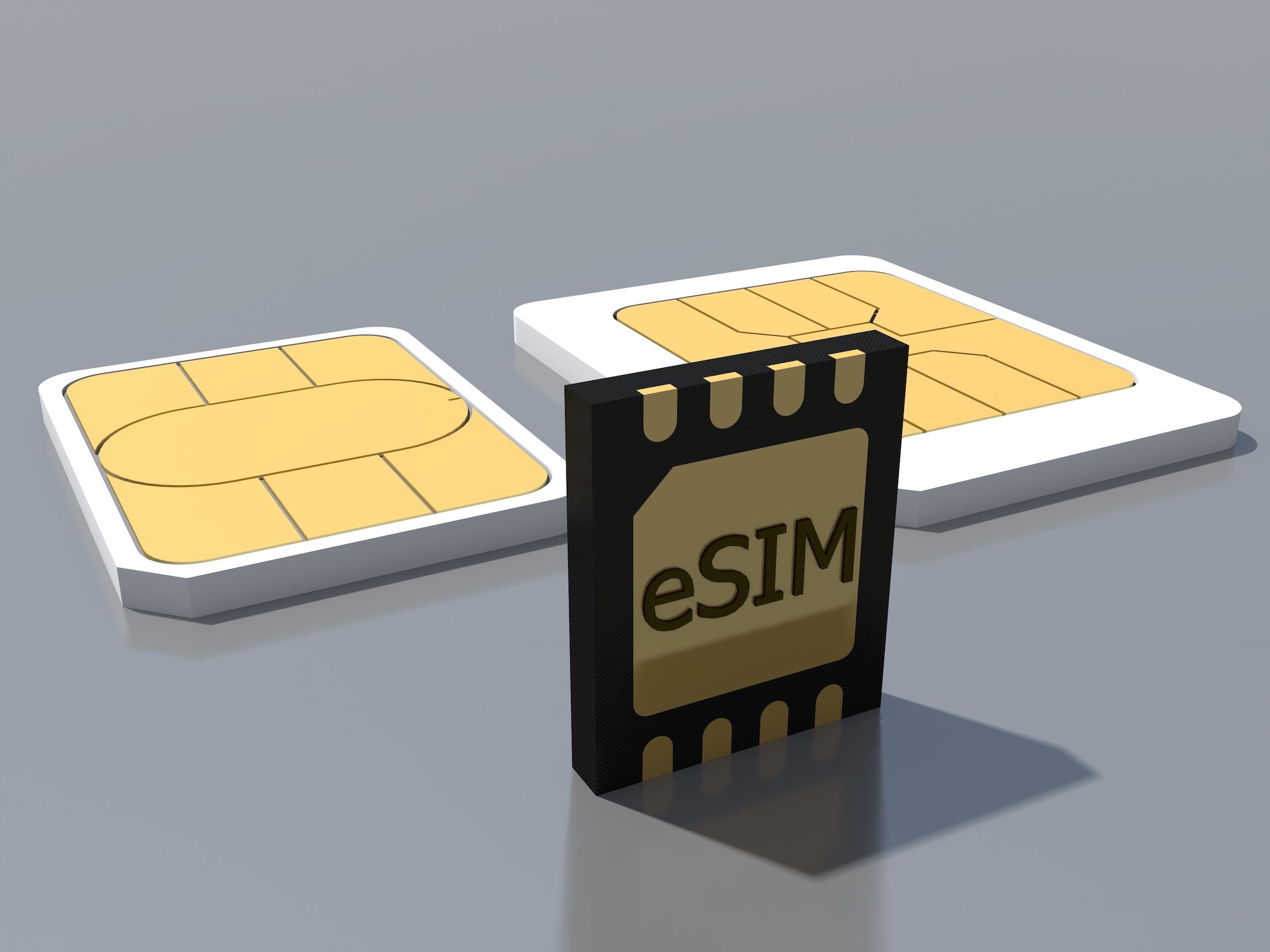
Between April 2023 and January 2024, the Nigerian Communications Commission (NCC) issued licenses to 46 Mobile Virtual Network Operators (MVNOs) across five tiers. Nearly three years later, only two have officially launched, with one recently announcing a soft launch.
Even the NCC did not anticipate such a poor outcome. When it promoted the idea in 2022, the goal was to create smaller operators that would support mobile network operators (MNOs) by extending service to underserved communities nationwide.
By comparison, South Africa has 23 MVNOs, and the market is projected to triple from 4.4 million active users in 2025 to 14.4 million in 2030. The sector is so active that MTN South Africa linked the decline in its prepaid revenue during the 2025 financial year to competition from MVNOs.
As MVNOs struggle to launch in Nigeria, the country’s target market remains trapped in the coverage gap.
The operational challenges have been severe enough that Vitel Wireless, the first MVNO to launch in Nigeria, received a dedicated numbering series (0712) in January 2025, two years after obtaining its operating license. It later officially launched in August 2025 with the rollout of 50,000 SIM cards and eSIMs.
EmoSIM, the second MVNO to launch, also entered the market in 2025. It was Nigeria’s first digital travel eSIM service, allowing travellers to access voice, SMS and data without a physical SIM.
Lebara Nigeria, which holds a tier 5 MVNO license, has also moved slowly toward a full launch. After laying the groundwork in June 2025 and missing its Q3 2025 launch target, Lebara announced a soft launch in March 2026 and is targeting 1 million users in its first year.
With about 43 MVNOs yet to show signs of entering the market, Nigeria’s connectivity gap remains difficult to close.
In an exclusive conversation with David Onyeke Ameh, a Nigerian telecoms expert who has worked with MTN Nigeria, Etisalat, now T2mobile, and Globacom, this article examines five reasons MVNOs are struggling to launch in Nigeria.
It also outlines possible areas for the NCC and operators to explore in order to make market entry more viable.
The challenges include misreading the market, industry competition, and macroeconomic and foreign exchange pressures.
1. Wholesale access negotiation
A key obstacle preventing licensed MVNOs from going live is securing a fair, two-sided wholesale access agreement with their host MNOs.
David said wholesale pricing shapes critical operational variables such as tariff structures, financial modelling, capital raising and distribution strategy. Without an agreement, these operators cannot launch.
“The wholesale access agreement and more precisely, the fact that until very recently it was a purely bilateral negotiation with the one party that has every commercial reason to slow it down,” he added.
A major problem is that host operators often delay negotiations by demanding aggressive revenue-sharing terms. For now, he said, MNOs see prospective MVNOs as direct competitors that could take existing subscribers away from them, which makes access terms a commercial flashpoint before any service can reach customers.
2. Misunderstanding market conditions
When the 46 MVNOs paid a combined ₦8.6 billion to secure licenses, that amount represented only a small fraction of the capital required to run a telecom business. When the NCC opened applications, many rushed to obtain licenses without understanding market conditions or the full financial requirements.
David explained that a viable MVNO must build and maintain full commercial capabilities, including charging and billing systems, SIM provisioning, NIN-linked registration, customer care and interconnect settlements.
“A good number of licensees bought a licence, not a business. The word virtual did real damage; it suggested an API call and a brand name,” he said, adding that capital limitations have made their licences effectively irrelevant.
This misunderstanding of the telecom market has contributed to undercapitalisation. In fact, each operator is estimated to need between ₦5 billion and ₦20 billion to be ready for launch.
3. Macroeconomic vulnerability and FX mismatch
Nigeria’s telecom industry already faces foreign exchange pressure. Operators buy most of their infrastructure in dollars but earn revenue in naira, which reduces average revenue per user (ARPU). For new operators, paying for infrastructure in dollars while earning in local currency creates serious financial strain.
David said foreign exchange volatility can damage MVNO business models before launch. Technical vendor fees, software licensing and negotiations with host networks are priced in dollars.
With many MNOs insisting on bulk payment instead of pay-as-you-grow arrangements, prospective operators face additional difficulty.
4. Direct competition with major MNOs
Another major weakness in MVNO planning is entering the same market as the large players: MTN, Airtel and Globacom. Launching with standard prepaid voice and data packages places MVNOs in direct competition with the dominant MNOs.
According to David, trying to win customers in a saturated market of roughly 188 million active lines, where multi-SIM behaviour is already common, is the wrong approach. He said this is one reason MNOs continue to impose rigid terms, in an effort to make launching difficult.
Asked what he would avoid if he owned an MVNO, David said:
“What I would avoid entirely is general prepaid retail. With 188 million active lines in a country of roughly 230 million people, and multi-SIM behaviour everywhere, you are not competing for a new customer. You are competing for a slot in a wallet that already holds two or three SIMs.”
Building a nationwide retail and distribution network from scratch requires years of field execution and capital expenditure, which is another cost burden MVNOs may struggle to bear.
He also noted that MVNOs often lack a fully digital onboarding framework for the mandatory linkage and verification of NIN-linked biometric registration for SIM activation, and building such a system from scratch is expensive. As a result, customer acquisition costs remain high.
“The incumbent trade channel of trade partners, sub-dealers, retailers, the whole recharge value chain took two decades and enormous working capital to build. No MVNO is going to fund that, and none should try,” he added.
5. The need for a different business model
Compared with South Africa, Nigeria remains a difficult market for MVNOs, but David said that does not mean success is impossible. His advice is to “cut your coat according to your size.”
For a successful launch, he said prospective MVNOs must give up either price competition or subscriber competition with MNOs. He also said agreements with host operators should be based on long-term, naira-denominated pricing structures.
He argued that host operator agreements should focus on payment per subscriber rather than expensive infrastructure commitments. He added that MVNOs should target markets that MNOs have not fully exploited, such as embedded IoT or diaspora eSIM services, to support immediate and sustainable profitability.
He also said market regulation must account for constraints that are beyond the control of virtual operators, which is where the NCC comes in.
Recognising the difficulties facing virtual operators, the NCC released a Draft MVNO Business Rules document in May 2026 to address operational bottlenecks between major host networks and virtual operators.
Beyond implementation, David said the NCC must ensure enforcement of the rules, including the 120-day agreement window between host and virtual operators and automatic interim terms if negotiations stall. He also called for enforcement of a “use-it-or-lose-it” policy to remove inactive licenses from the register.
“It’s one recommendation that will be unpopular: use it or lose it,” David said, adding that “Licences that have not launched within a defined window should lapse and return to the pool. A register showing forty-six licensees and two operators misrepresents the market to investors and to policymakers alike.”
Ultimately, he said, virtual operators must understand the ecosystem and know what works for them before approaching an MNO and planning a launch.

