Sweetgreen to Pay Top Managers More Than $200,000 to Train Its Next Generation of Restaurateurs
Key Takeaways
- •Sweetgreen's top-performing general managers, known as Head Coaches, will be eligible for salaries exceeding $200,000 along with revenue-sharing bonuses and stock starting in the first quarter of 2027.
- •Qualification for the top pay tier requires at least three years at the company and leadership of its busiest stores, a combination met by an estimated 10% to 12% of head coaches.
- •Managers in the restaurateur program earn an uncapped $10,000 bonus for every employee they develop into a head coach, making their potential earnings tied directly to how many leaders they train.
- •Sweetgreen continues to lose money, with comparable-store sales falling 6.4% in the third quarter, and the company expects the new pay plan to reduce its restaurant margins next year.
- •CEO Jonathan Neman said a few dozen managers immediately qualify for the top tier, many will receive raises of roughly 30% to 50%, and he pointed to chains like Costco and Chick-fil-A as evidence that higher pay yields better service.
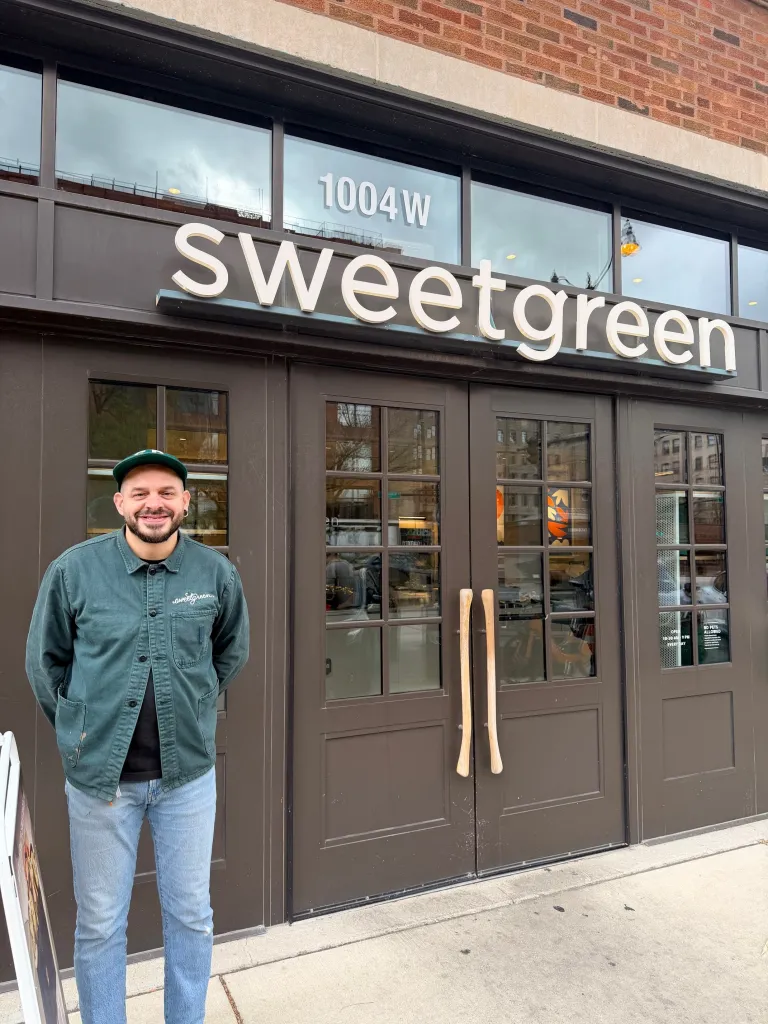
Ramsess Salazar was 20 years old when he left Caracas, Venezuela, alone in 1999. After settling in Minnesota, he missed the family dinners he had grown up with and began cooking for friends—a habit that eventually led him to culinary school, a stint in fine dining, and a job offer from Sweetgreen in 2018 that sent him to Boston.
Eight years later, Salazar runs the chain's bustling Fulton Market location in Chicago and trains the managers who will operate its next wave of restaurants. Last month, he received a phone call from Sweetgreen CEO Jonathan Neman with news that his work would come with a new compensation package.
“I couldn't believe it,” Salazar told Fortune. What surprised him even more was that the company's leadership called him personally. “Which CEO really does that?” he said.
Starting in the first quarter of 2027, Sweetgreen's top managers will be eligible to earn more than $200,000 a year in salary, in addition to a revenue-sharing bonus and stock. The top tier is reserved for “Head Coaches”—Sweetgreen's title for general managers—who have spent at least three years with the company and lead its busiest stores. Chief Operating Officer Jason Cochran estimated that 10% to 12% of head coaches meet all of the criteria. Managers selected for the company's restaurateur program, like Salazar, will also receive $10,000 for every employee they develop into a head coach, with no cap. Because the bonus is uncapped, a restaurateur's potential earnings scale directly with the number of future leaders they develop.
“The idea is now you're a talent factory,” Neman told Fortune. “You've demonstrated you're good at your job. Now can you train someone else? Future leaders? Train them up, and we'll pay you $10,000 every single time you do it.”
‘100 grand used to be a big number'
Neman, who cofounded Sweetgreen with Nic Jammet in 2007, said the plan grew out of the hundreds of store visits he has made over the years. He spends roughly half of his time in restaurants, and the difference between a strong location and a weak one “always comes down to a great leader,” he said.
“A hundred grand used to be a big number, but it really isn't as much anymore in today's world,” Neman said. “We wanted the best to be able to make north of $200,000, to be really disruptive to the marketplace.”
The plan is also personal for the CEO. Neman's parents immigrated in 1979 “to start a new life and had to start all over,” he said.
“I truly believe in the American dream. I believe that this is the land of opportunity where you can work hard and get far,” he said, adding that he believes that dream is “under attack” among younger people—and “I understand why.” Working in food, however, offers a route to achieving it, in his view.
“I think the restaurant industry is one of these amazing engines of opportunity,” Neman said. “It's one of those places where anyone can come and get a job without really much education or skills. And if you work hard, for us, within like two to three years, we have team members that can grow into store managers, or head coaches.”
A few dozen managers will immediately qualify for the top pay tier, Neman said, and “a lot of people are going to get like 30%, 40%, 50% raises.” When he announced the plan to roughly 300 managers on a video call, there were “tears on pretty much every call.” He described the rollout as “the proudest moment in my 19 years at Sweetgreen.”
He had hoped to introduce the higher pay years earlier, he said, but the company was “scared” of what such spending would do to its finances. Sweetgreen is still losing money: comparable-store sales fell 6.4% in the third quarter, and the company expects the new pay plan to trim its restaurant margins next year. With the top-tier salaries not taking effect until the first quarter of 2027, the chain's quarterly reports on margins and comparable-store sales are the numbers to watch as the rollout approaches. Neman said the tradeoff did not matter, pointing to Costco, Trader Joe's, In-N-Out, and Chick-fil-A as companies that pay workers well and are rewarded with better service.
Becoming a restaurateur is not automatic. A manager is first nominated by a regional leader. Then Neman and the COO spend a day at the candidate's store, and Neman interviews the staff before sitting down with the manager. He also makes what he calls “unannounced visits,” ordering food without revealing who he is. Afterward, he tells employees he works at “the support center.”
Building the bench
Salazar has trained about five managers who now run their own stores. A year ago, he promoted an assistant manager whose rise from the kitchen he had watched closely. “I mean, she deserved it,” he said. “She worked really hard for that, and me being part of that, it made me feel really good.”
His advice to anyone starting out is to share the load. “At the end of the day, your people make it, or break you,” he said. “Always focus on your goal, and always teach someone along the way with you.”
Maddie MacCoun, a head coach restaurateur in Northern California, followed a similar path from the bottom rung when she joined Sweetgreen's Berkeley store in 2017. “Sweetgreen was actually my very first job, so I was about 18 years old,” she told Fortune. She became a shift leader in less than a year, then a trainer, and then an assistant coach at the busy San Francisco SoMa store in 2020. She was promoted to head coach in 2022 and became a restaurateur this year.
When she learned about the new pay structure on a call with Neman and other executives, “it was shocking for me,” she said. She now has three employees she wants to promote to shift leader within the next three weeks. “We're kind of going on rapid fire,” she said.
MacCoun sees the plan primarily as a motivator for those below her. For assistant coaches, she said, “it gives them a goal to work on their personal development plan and set higher goals for themselves.”
For Salazar, the money means stability. His mother left Venezuela and now lives in Argentina, and he said the new pay could allow him to visit her more than once a year—and perhaps buy her a house there. “She took care of me for so long,” he said.
This story was originally featured on Fortune.com.

