High court standing ruling makes Trump White House ballroom lawsuit harder to revive
Key Takeaways
- •The Supreme Court ruled 5-4 that the National Trust for Historic Preservation lacked standing to sue over the White House ballroom project.
- •The majority rejected the claim that the plaintiffs suffered an aesthetic injury, saying the alleged harm was too broad and amounted to personal distaste.
- •The decision allows the ballroom project to continue after a lower court had previously blocked construction without congressional approval.
- •The Hill reported that future legal challenges would likely require a plaintiff with a much more direct injury or an institutional challenge from Congress.
- •Legal experts cited in the report said a congressional challenge appears unlikely under the current political balance, leaving President Trump with a win.
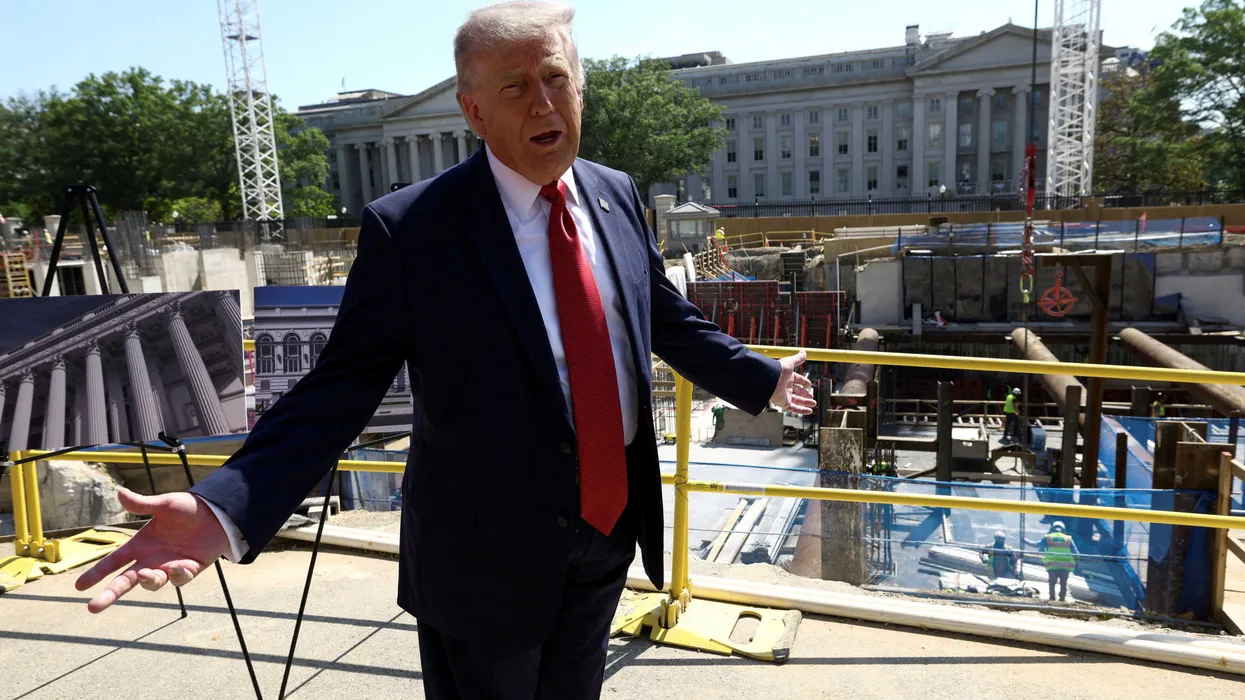
The Supreme Court shot down a lawsuit seeking to block President Donald Trump's widely criticized White House ballroom project, and according to a new breakdown from The Hill, a "complicated" legal rule makes it highly unlikely that anyone else will be able to stop it.
In a 5-4 decision earlier this week, the Supreme Court ruled that the lawsuit brought against the Trump administration by the National Trust for Historic Preservation lacked legal standing, allowing the project to continue. A lower court had previously ruled in the case, blocking construction from moving forward without congressional approval, something that appears unlikely given the ballroom's toxic reputation with voters.
As reporters Zach Schonfeld and Sophie Brams explained for The Hill on Wednesday morning, it is possible that a future plaintiff could fare better if the court found that plaintiff had stronger standing. They also explained in detail why that outcome appears highly unlikely.
"Courts have historically understood that to mean that a plaintiff must prove a concrete, particularized injury to have the right to sue in federal court. That injury must be imminent or already happening," the pair wrote. "In other words, the alleged harm must be real and specific, not abstract. As the late Justice Antonin Scalia famously put it, 'what’s it to you?' That can be a high hurdle ... Standing doctrine is complicated, with many different tracks."
The lawsuit argued that the preservationist plaintiffs had standing to challenge the ballroom because of "aesthetic" injury, claiming that a "historic preservationist is aesthetically injured by the transformation of a historic building like the White House, just like an environmentalist suffers from an animal’s extinction." The majority rejected that argument, saying it amounted to mere "distaste" and could open the door for any U.S. citizen to sue over any project they personally dislike.
In light of that ruling, Schonfeld and Brams wrote that "it’s not clear anyone will" be able to convince the Supreme Court that they have sufficient standing.
"The court has occasionally allowed some pretty exotic forms of standing," Georgetown Law professor David Super told The Hill. "But I think the greater likelihood is that this will only be litigated if a majority of at least one chamber of Congress decides that it is offensive."
That detail matters because the ruling did more than end one lawsuit; it also narrowed the realistic paths for future challenges to the project, which now appear to run through Congress or through a plaintiff with a far stronger, more direct injury than the preservation groups argued here. Even then, the article notes, the current political landscape makes a congressional challenge unlikely.
"With Republicans in control of Congress, there’s no current political will for Congress to try to assert standing as an institution," the pair explained further. "And for any Democrats who want to try it alone, they’ll have to grapple with the limits the Supreme Court placed on individual lawmaker suits in its 1997 Raines v. Byrd decision. It leaves President Trump taking the win."

