South Korea plans sweeping mergers of state-run power, port and energy companies
Key Takeaways
- •Five state-run power generators will be merged into a single company tentatively called Korea Power Generation.
- •Busan, Incheon, Ulsan and Yeosu Gwangyang port authorities will be combined into a new Korea Port Authority.
- •Korea National Oil Corp. and Korea Gas Corp. will be merged into Korea Energy Resources Corp., while Korea Coal Corp. will be liquidated after its mines close.
- •Korea Land and Housing Corp. will be split into two entities focused separately on development and housing welfare functions.
- •The government said it will seek legislative backing quickly and proceed in phases, while guaranteeing job transfers and existing pay and working conditions.
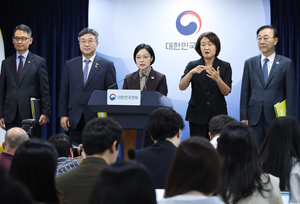
The Korean government unveiled a sweeping public-sector overhaul Thursday that aims to merge major state-run power, port and energy companies while splitting Korea Land and Housing Corp., or LH, into two.
The Public Institution Functional Reform Plan seeks to reduce the number of public entities by 109 through strategic restructuring, consolidation of overlapping functions and absorption of subsidiaries and small agencies.
The five state-run power generators — Korea South-East Power, Korea Midland Power, Korea Western Power, Korea Southern Power and Korea East-West Power — will be combined into a single company tentatively named Korea Power Generation.
The government said the companies' separate operations had led to overlapping investments and limited economies of scale. The new company will have dedicated divisions for major renewable energy projects and a transition away from coal, along with three or four regional units overseeing local solar and onshore wind projects.
The Busan, Incheon, Ulsan and Yeosu Gwangyang port authorities will also be merged into a tentatively named Korea Port Authority. The four existing operators will become regional branches responsible for locally specialized projects.
Korea National Oil Corp. and Korea Gas Corp. will form a new Korea Energy Resources Corp. The government expects the merger to improve Korea’s response to supply chain disruptions and strengthen its bargaining power with oil-producing countries and global energy companies.
Korea Coal Corp. will be liquidated after the closure of all its mines.
The government will not immediately merge Incheon International Airport Corp. and Korea Airports Corp. It will first pursue measures to promote cooperation between Incheon and regional airports before reconsidering consolidation.
It also plans to unify the high-speed rail operations of Korea Railroad Corp., or Korail, and SR Corp. to increase seat availability and improve fares, mileage programs and passenger convenience.
LH, meanwhile, will be split into two entities. Its land development and home construction operations will become a tentatively named Korea Housing and Urban Development Corp., while housing welfare and property reserve functions will be assigned to Korea Housing and Urban Asset Corp.
Part of the development company’s profits will be channeled through the Housing and Urban Fund to finance the welfare-focused entity. The Land Ministry will announce further details separately.
Eleven entities will be removed by merging organizations with overlapping roles, while another 83 will be cut through the consolidation of subsidiaries and small agencies.
The government said it would seek swift legislative support and immediately proceed with mergers that do not require legal revisions. It pledged to guarantee employment transfers and prevent any deterioration in pay or working conditions. The plan’s scale suggests a broader effort to streamline state-backed operations across energy, transport and housing, sectors that often require long planning horizons and coordinated investment, even as the government said the changes would be carried out in phases depending on legal and organizational requirements.

