BlackRock, VanEck, and Virtus InfraCap ETFs Invest $756 Million into Strategy's STRC Preferred Stock
Key Takeaways
- •A combined $756 million has been invested in Strategy's STRC preferred stock, making it the largest holding across three major U.S. preferred stock ETFs: BlackRock's PFF, Virtus InfraCap's PFFA, and VanEck's PFXF.
- •STRC was trading at $86.88 at publication, remaining below its $100 per-share liquidation preference, meaning it trades at a discount to what investors would receive in a liquidation scenario.
- •Strategy CEO Phong Le acknowledged a decline in retail participation in STRC, even as institutional ETF demand has grown.
- •Strategy increased its USD holdings by an additional $225 million, bringing total cash reserves to $3.2 billion, while Bitcoin declined 2.28% to $63,934.94 over the past 24 hours.
- •As long as STRC remains below the critical $100 level, Strategy's ability to raise new capital through its at-the-market equity program for additional Bitcoin purchases remains constrained.
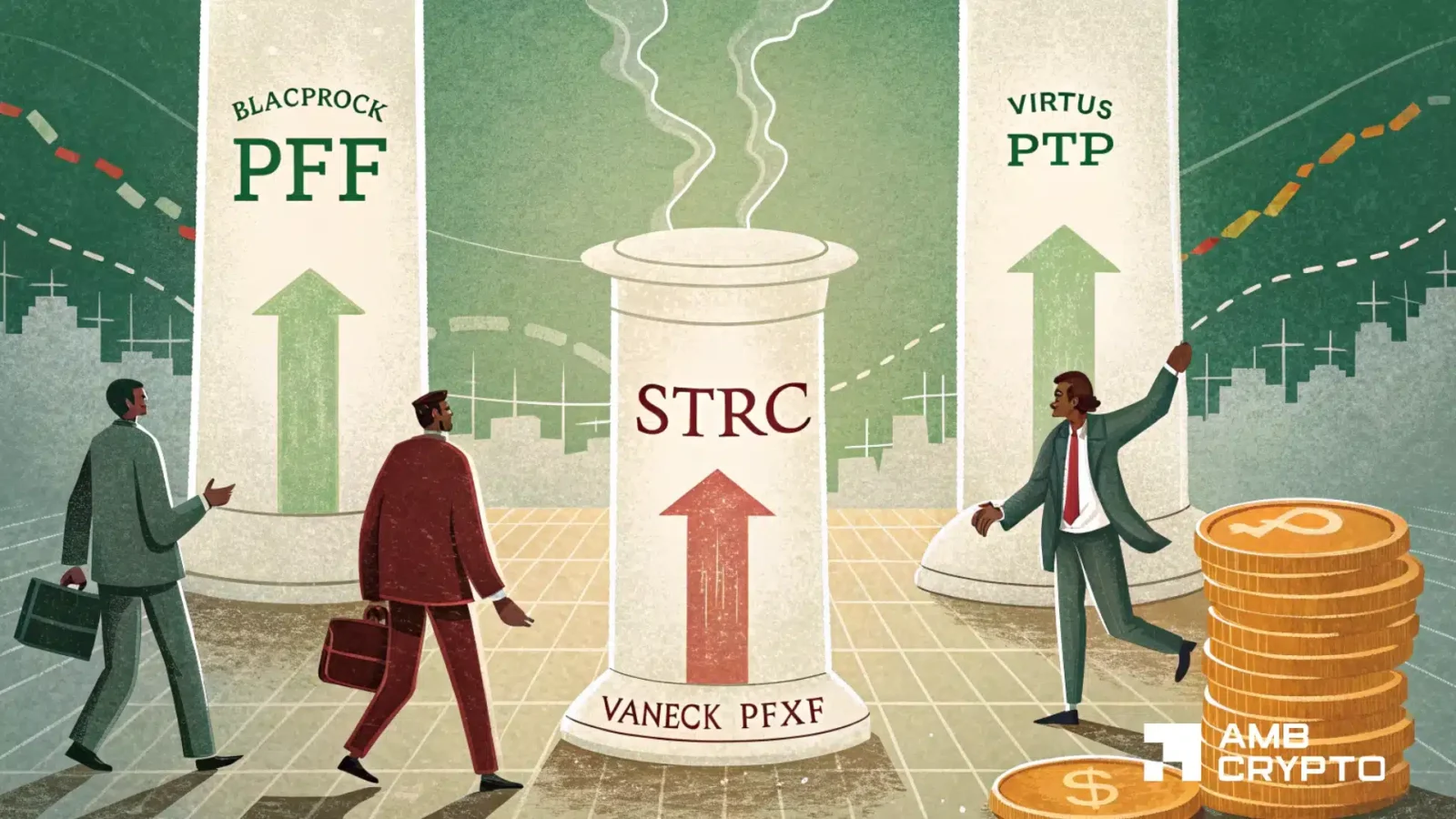
Institutional investors are increasingly treating Strategy's STRC preferred stock as a mainstream income product rather than a specialized cryptocurrency-linked investment, marking a notable shift in market perception.
A combined $756 million has been invested in STRC, making it the largest holding across three major U.S. preferred stock exchange-traded funds (ETFs): BlackRock's PFF, Virtus InfraCap's PFFA, and VanEck's PFXF. This is a striking placement for a Bitcoin-linked issuer, as these funds traditionally concentrate their holdings in preferred shares from banks, insurance companies, utilities, and REITs—sectors with long track records in fixed-income markets.
Institutional Demand Signals Growing Confidence
The significance of this allocation lies in the investment objectives of these ETFs, which typically seek steady income streams from preferred stock dividends. By dedicating a substantial portion of their portfolios to STRC, ETF managers have effectively exposed millions of retail and institutional investors to Strategy's credit products. This suggests that, despite Strategy's well-documented ties to Bitcoin [BTC], the broader market is beginning to recognize the company as a credible issuer of fixed-income securities.
Concerns and Criticism Persist
This institutional enthusiasm comes at a time when STRC was trading at $86.88 at publication, remaining below the key $100 threshold—its per-share liquidation preference—meaning the stock trades at a discount to the value investors would receive in a liquidation scenario. Compounding the concern, Strategy CEO Phong Le acknowledged a decline in retail participation.
Longtime Bitcoin critic Peter Schiff seized on these developments to question the narrative around STRC's institutional inflows. In a post on X, Schiff stated:
"Yes, but that means retail investors sold for a loss. My guess is the institutional buyers bought in for a short-term trade only. Or maybe they shorted MSTR and bought STRC as a spread trade. Maybe they bought STRC and shorted Bitcoin. None of those trades are bullish bets." (Source)
Broader Market Context
Meanwhile, Bitcoin, which had been trading near $65,000, declined 2.28% over the past 24 hours and was at $63,934.94 at press time.
This downturn coincided with Strategy's decision to increase its USD holdings by an additional $225 million, bringing its total cash reserves to $3.2 billion. Rather than reassuring the market, this move has fueled further concern. According to AMBCrypto's recent analysis, as long as STRC remains below the critical $100 level, Strategy's ability to raise new capital through its at-the-market (ATM) equity program for additional Bitcoin purchases remains constrained.
Summary
The $756 million institutional investment in STRC by major ETF providers demonstrates that Strategy's preferred stock is gaining real traction in traditional fixed-income markets. However, declining retail participation, STRC's sub-$100 trading price, and vocal criticism from figures such as Peter Schiff continue to cast a shadow over the company's broader fundraising and Bitcoin acquisition strategy.

